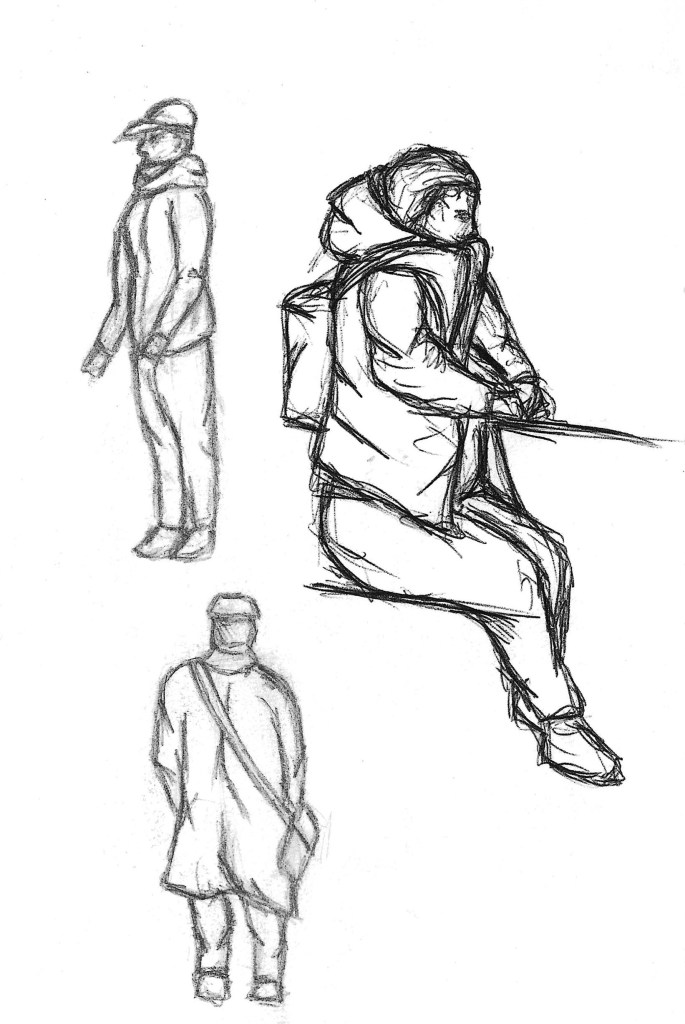
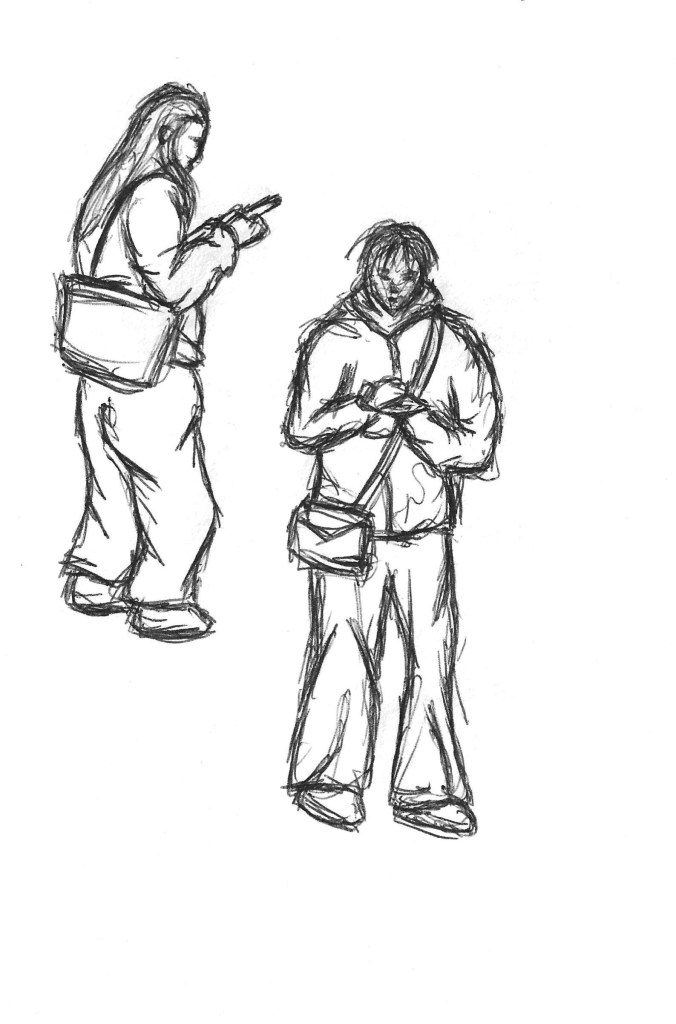
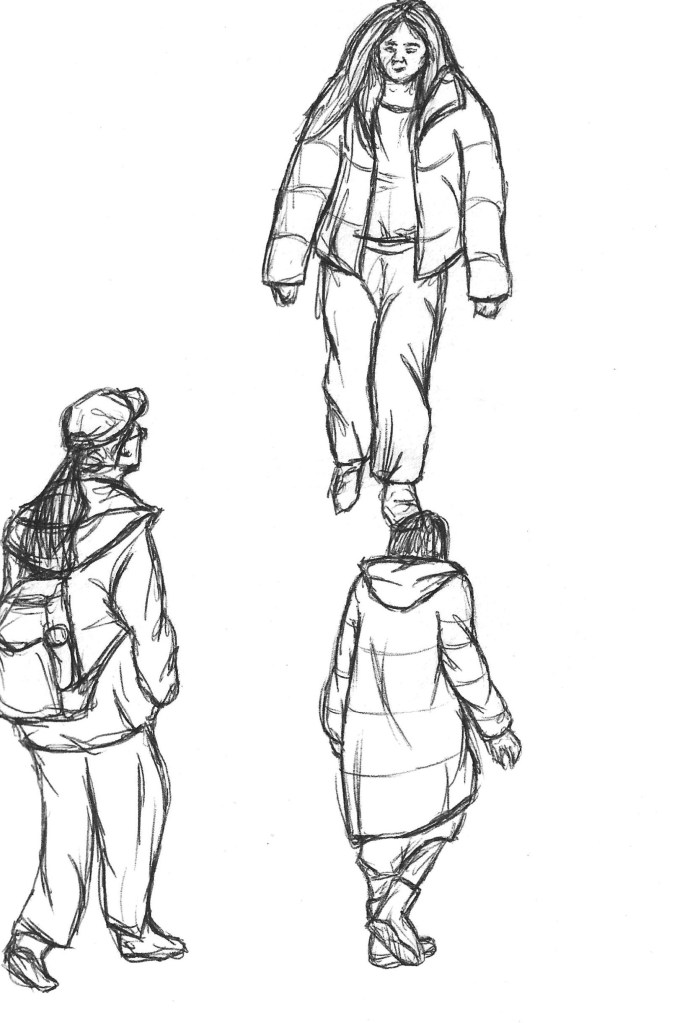
This week we went to a trip to various places in London such as the Royal Festival Hall and Tate Modern to practice our documentary illustration skills. For the trip I solely focused on drawing people on sight so none where done from photos.
We were given a series of tasks including sketching people in 2 materials. I chose pencil and biro and decided that biro would be more beneficial because of the permanence of the marks, making me be more bold with the marks I made.
These sketches where from the Tate Modern. I think the sketches improved throughout the day as I became more confident in drawing in such public locations.
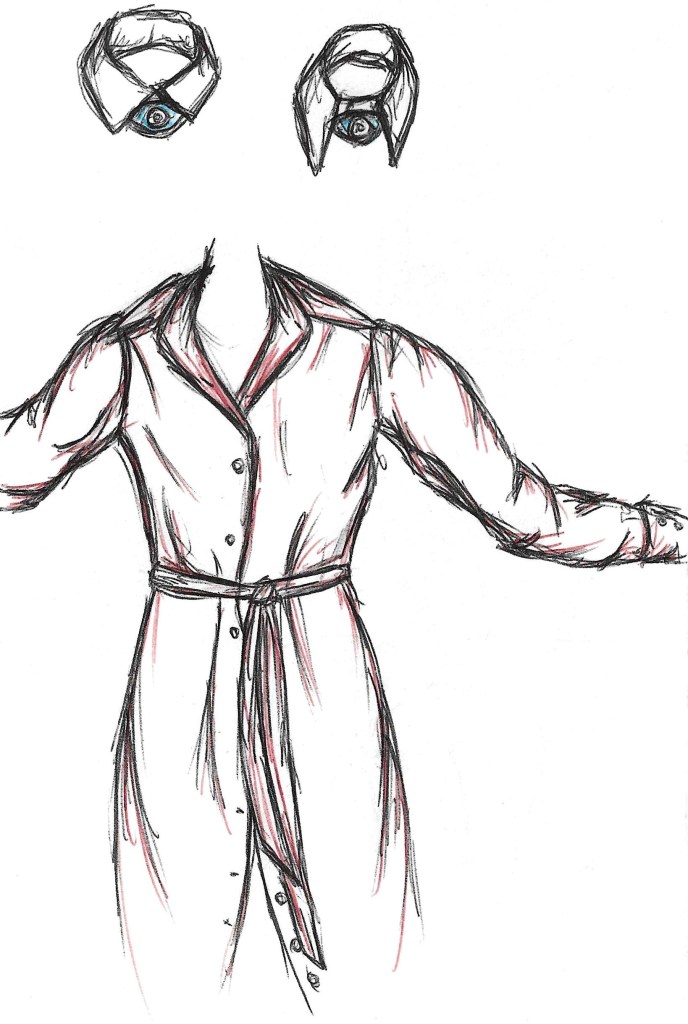
At the ‘Poets in Vogue’ exhibition we had to sketch a couple objects that interested us so I chose these collars with eyes in the middle and a dress. I loved the boldness of their colours and wanted to add a hint towards that by layering some of those colours over the black biro sketch.
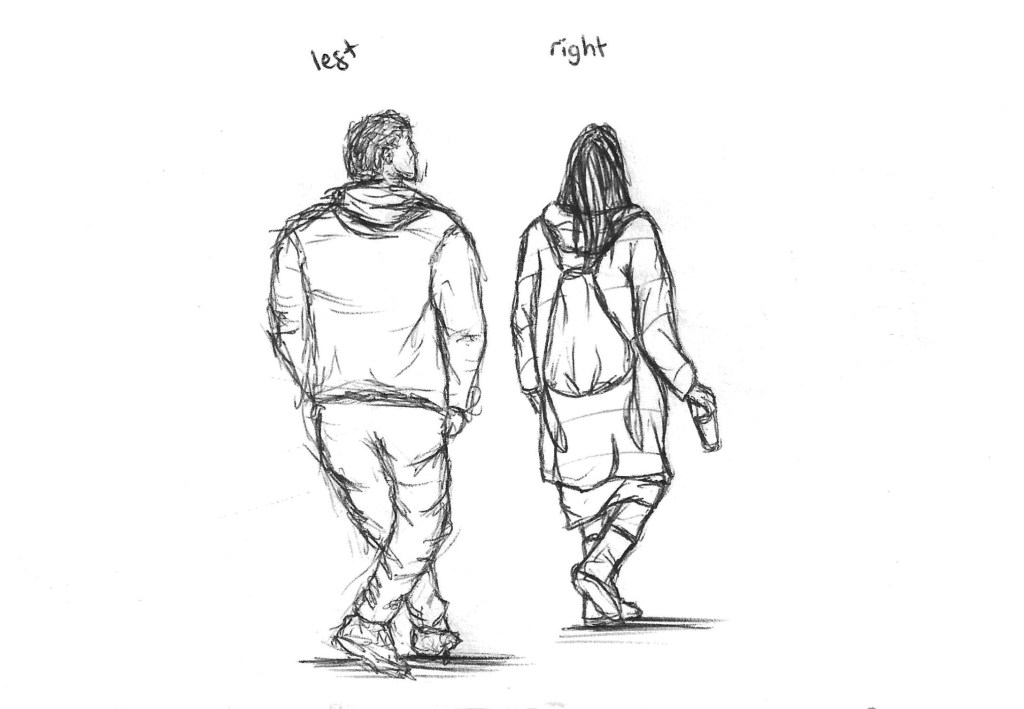
This exercise tested me as we had to draw 1 figure with our right hand and 1 with our left hand. I’m right handed and rarely try using my left hand so considering this I’m pleased with how the figure turned out.
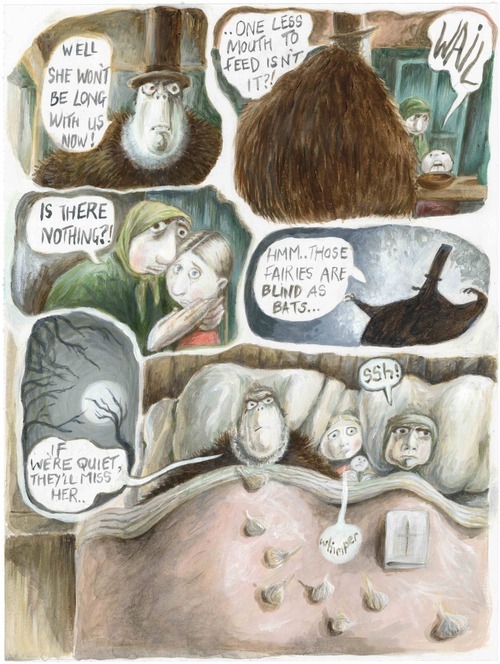
In this session we had Graphic Novel illustrator Rachel Ball come in and deliver a workshop about a different type of documentary illustration. This type is all about visually documenting a memory or experience in the form of a comic strip. This is something that really interests me as I enjoy reading comics and like the process of character design. This is an example of a page from one of Rachael’s Graphic novels.
We began the session with Rachael explaining about her own work and creative process. Then she began giving us exercises that she uses when beginning her process. For example think about things such as weird dreams, embarrassing moments, favourite films, advice for your younger self. These were all a way of generating inspiration and thinking about things we like. After this we got into the main focus and that was to think about some early memories. From these we began to develop them into stories by changing bits, adding fantasy elements and just generally playing around with a memory to turn it into an interesting story. I had a few different ideas but the memory I chose to use was of me and my sister (Eloise) meeting our baby sister (Hannah) for the first time. I wanted to play on this and how me and Eloise loved to play made up games and try to capture this childish imagination. The rough idea for the story would be our parents come and tell us they’ve got a surprise and me and Eloise start thinking of what it could be and end up shocked when they introduce us to our new baby sister. I want to included images to illustrate our imaginary ideas such as dragons and aliens.
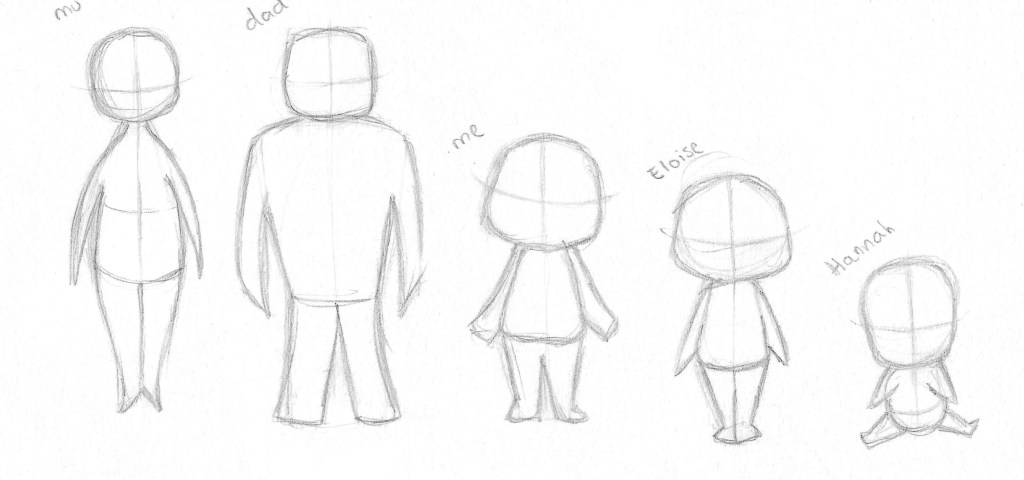
So for this story there are 5 characters I will need to design, Me, Eloise, baby Hannah and my parents. Designing these was the focus of the afternoon session.
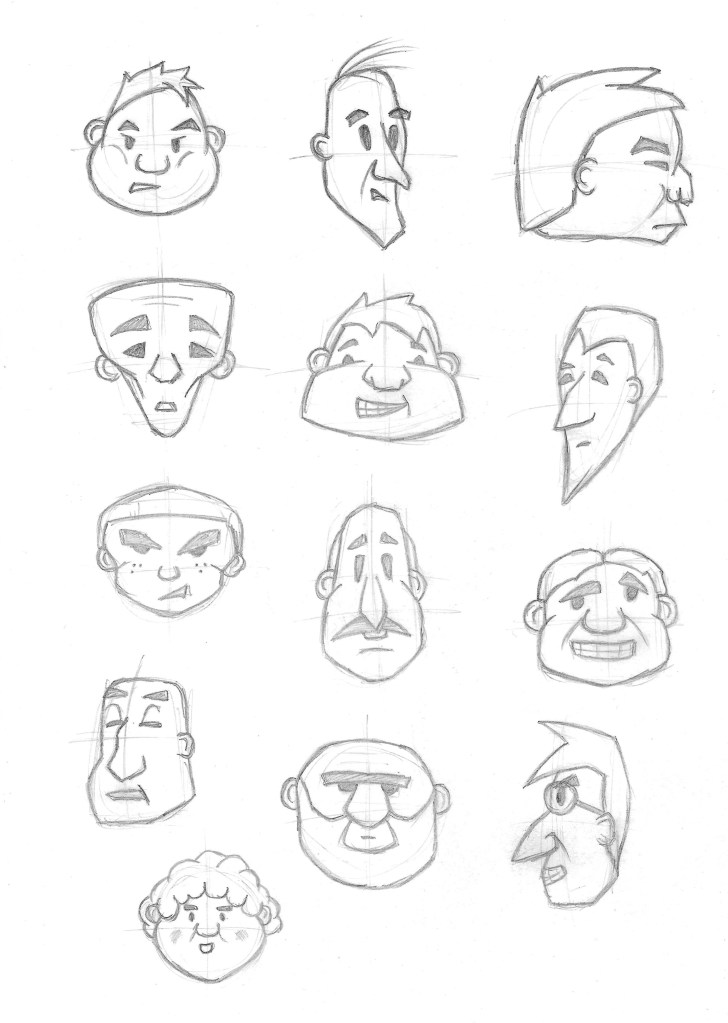
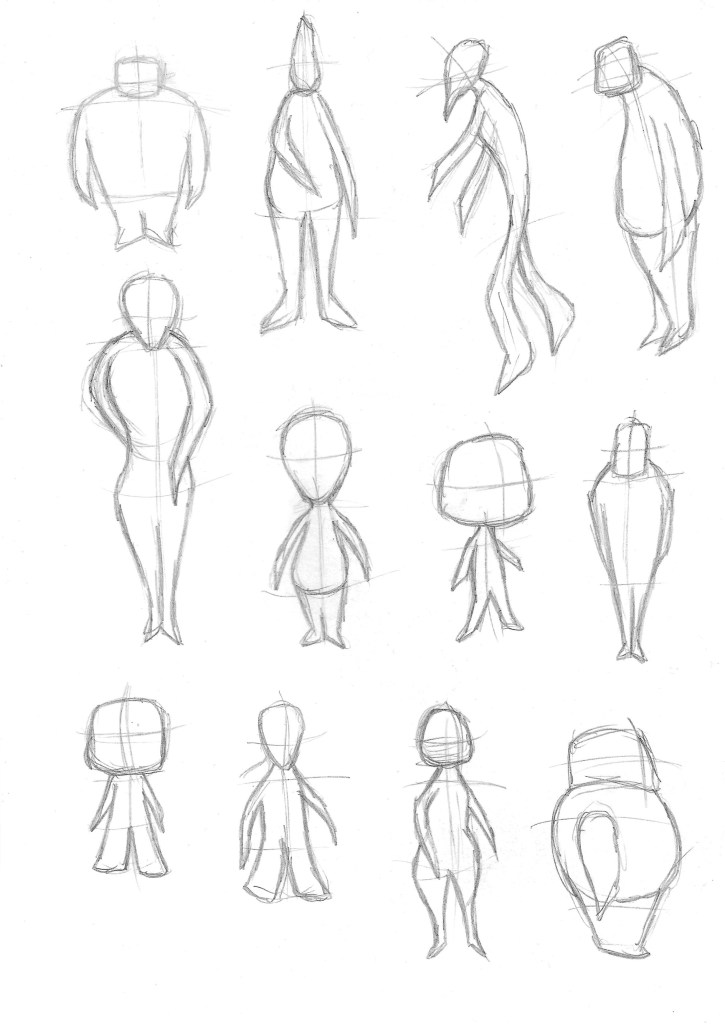
Rachael taught us some ways to being the process of designing a character such as creating fluid lines and turning them into animals or people, drawing people from observation, researching other artists. One in particular that stood out to me was the idea of caricature which is where you exaggerate features to capture someone’s essence. I to ok this into our first exercise where we had to draw characters faces from different shapes such as ovals and triangles. I enjoyed just picking a shape and turning it into a made up character.
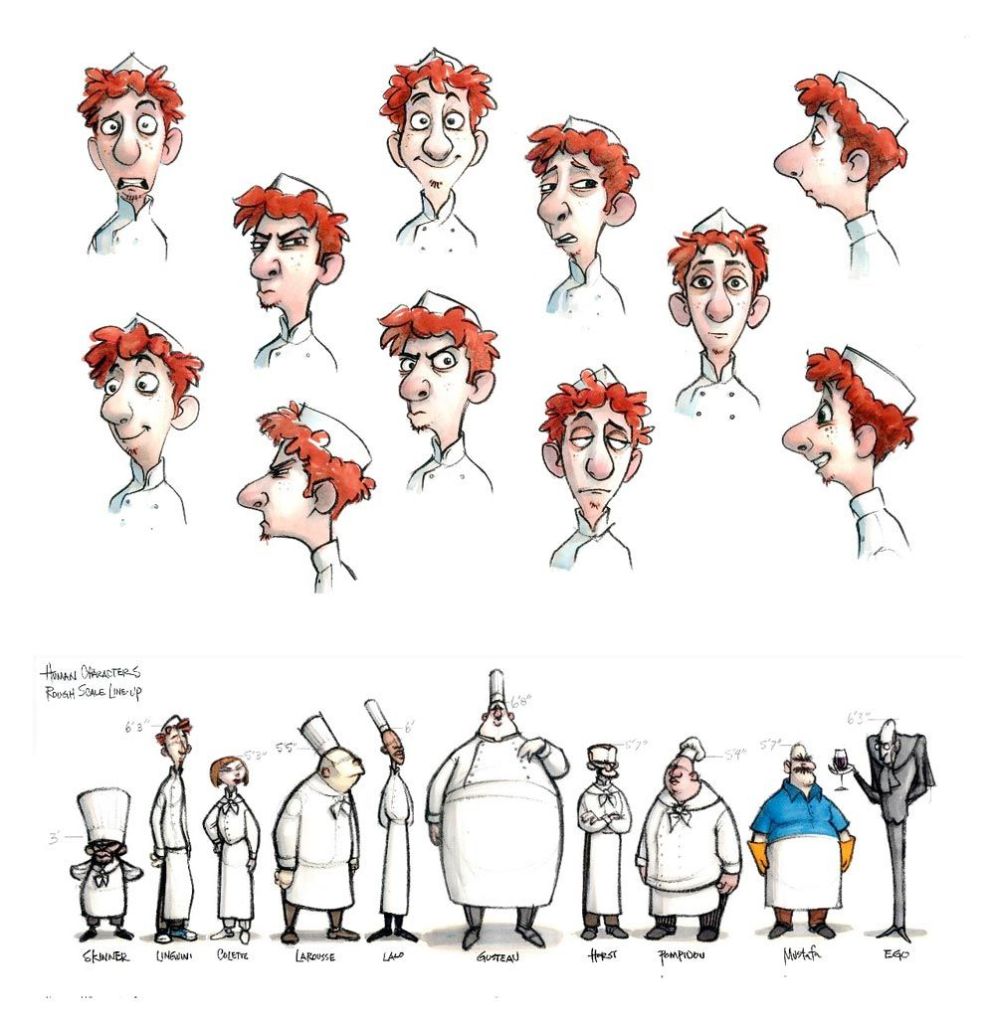
When designing my characters faces and body shapes I took a lot of inspiration from Disney Pixar’s character designs such as Deanna Marsiglise. It’s an art style I’ve loved since I was a child and have always admired how well the artists are able to convey emotions and personality through the facial expressions and dramatic body shapes.
Then we moved onto creating figures out of shapes. I tried to caricature the figures by really exaggerating the proportions or certain body parts.
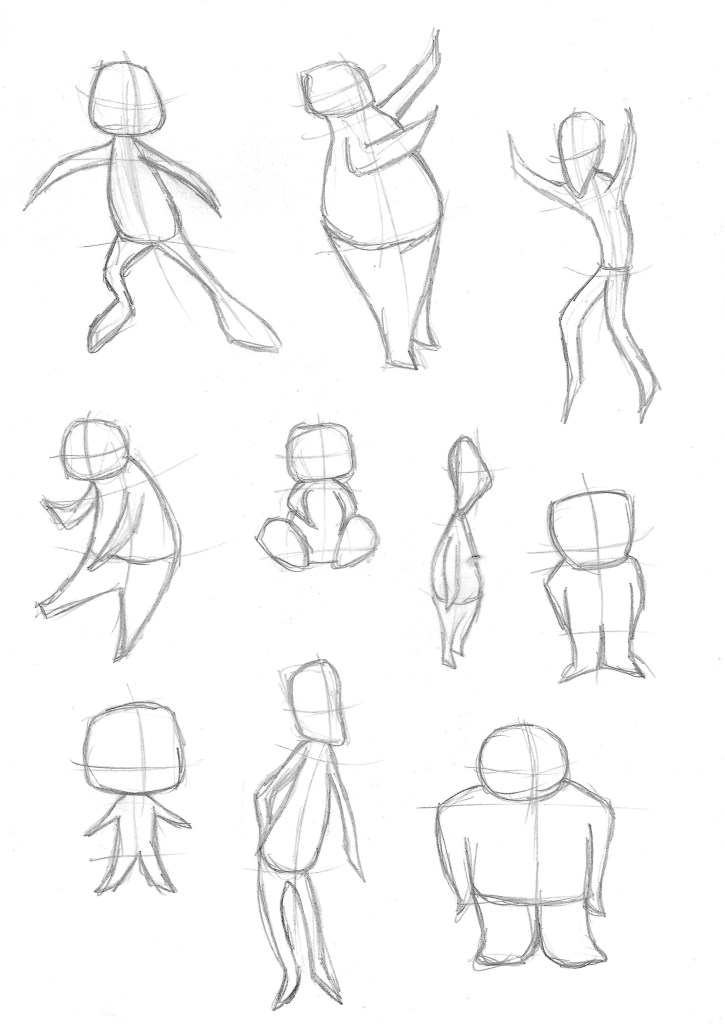
I started these with bendy stick figures to create more dynamic figures to try to express movements or emotions which are key to graphic novel art.
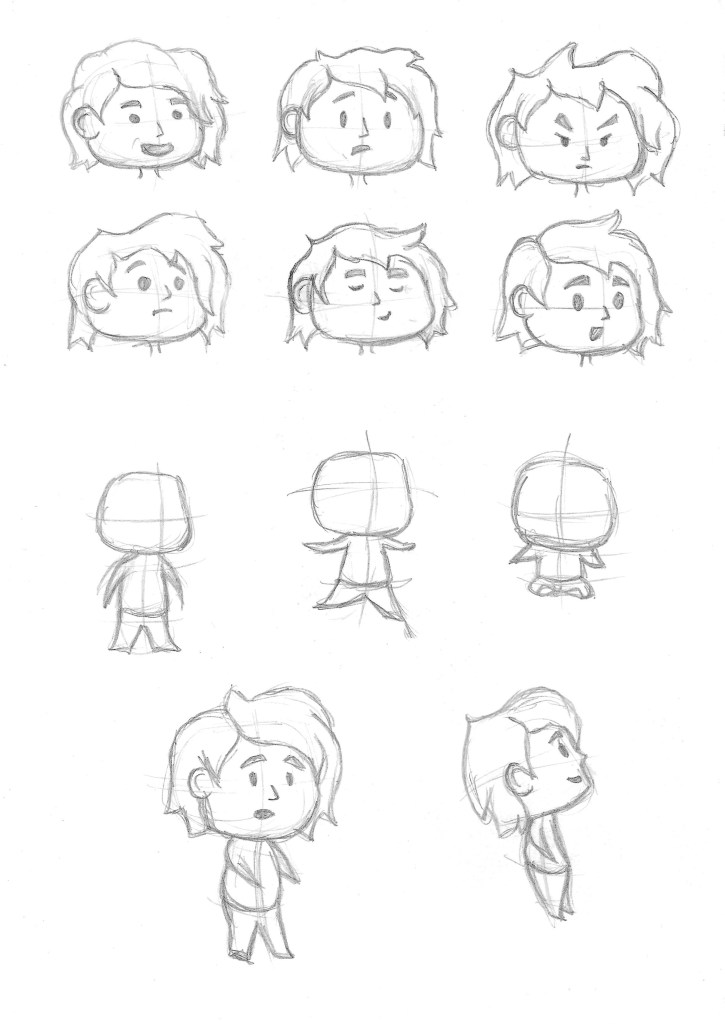
Then I started to develop one of the characters that I wanted to use in the comic strip (myself). I tested out different expressions, angles, and poses to begin to get an essence of the character.
I digitally sketched the face and body shape for one of the characters and started to think about colours for the face, hair and clothes.
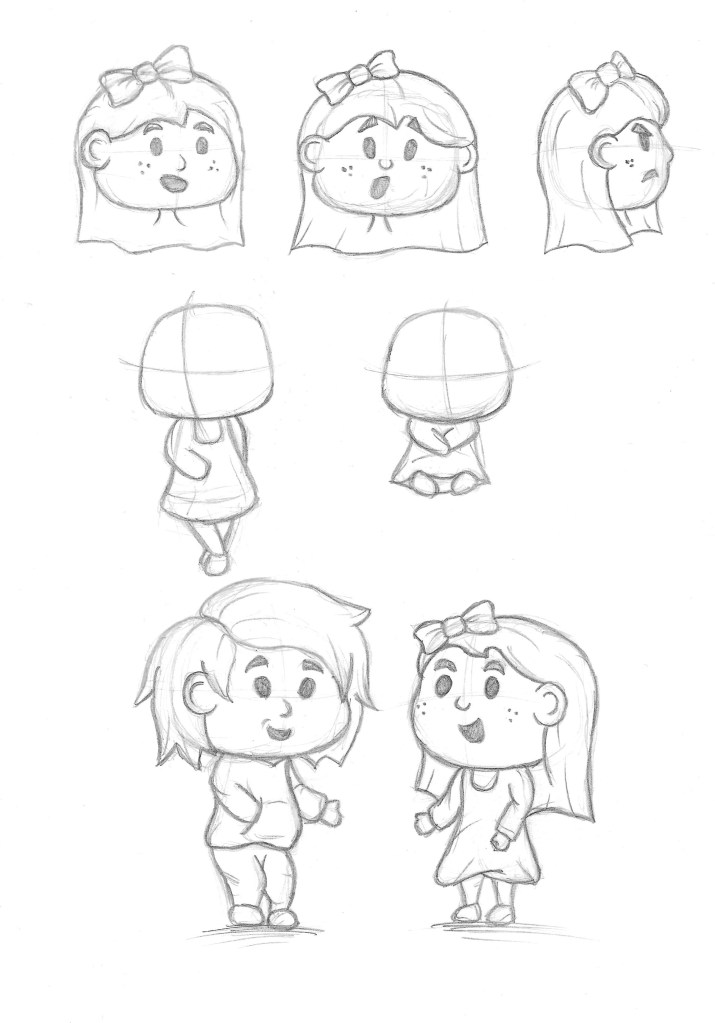
I then made another character sheet for my older sister (Eloise). I aimed to keep the shapes of the body and face consistent to both characters. At the bottom of the page is a full sketch of the 2 characters I’ve worked on so far.
After try out lots of body shapes these are the ones I’ve decided to go with for each character. They have a similar style that makes them look cohesive but each figure has key differences to make the easily distinguishable and recognisable.
I really enjoyed this session about graphic novels and character design. Rachael Ball gave lots of good advice that I’ll try to implement into my own work such as building bodies and faces from shapes caricaturing someone to exaggerate features. I look forward to expanding upon my characters in the next session.
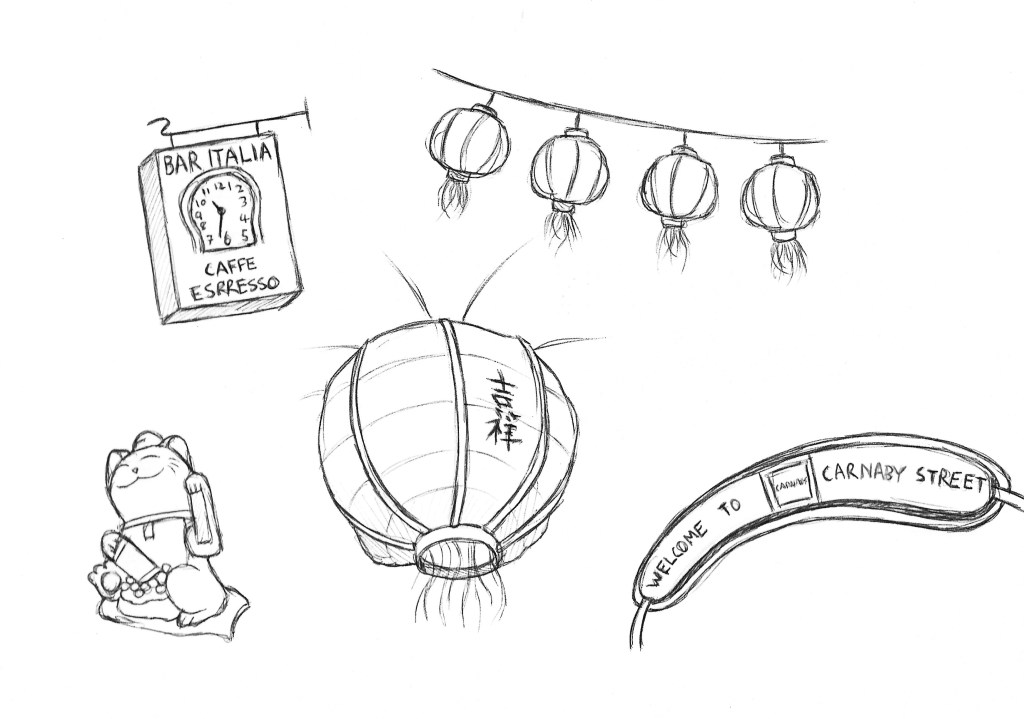
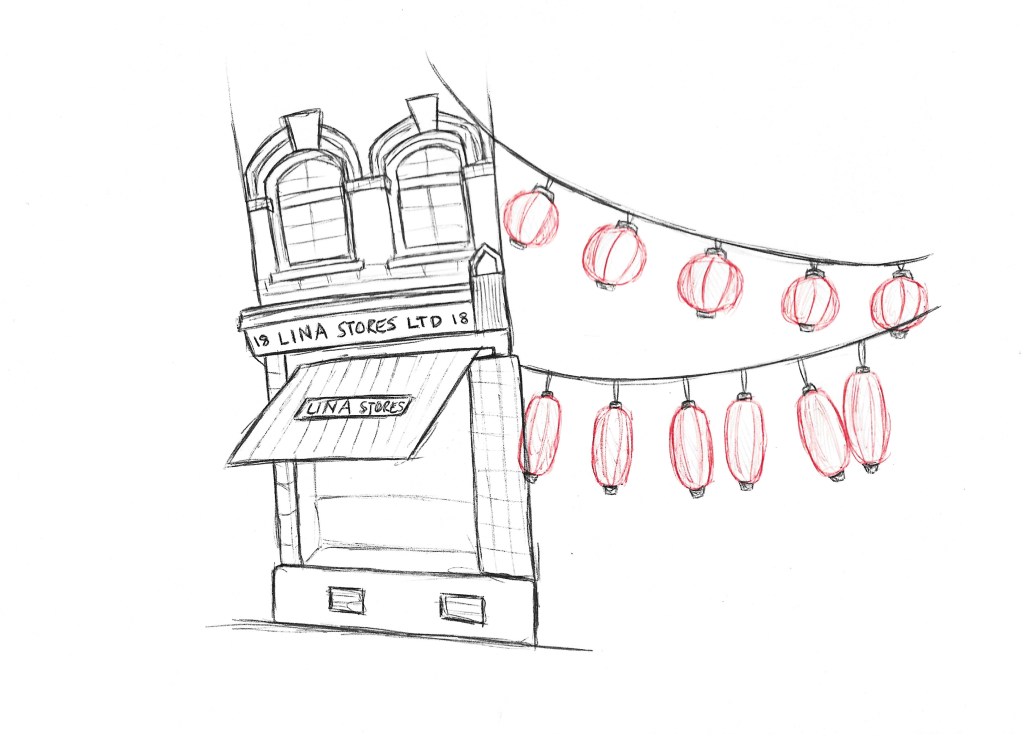
In the afternoon we had to go to the ares around the Photography gallery in London as document the communities. To the South and East of the Gallery there is China Town which is home to London’s largest Chinese community and east beyond that there is a large Italian Community centred around the famous Bar Italia. I wanted to expand my documentary illustration skills by looking at a combination of people, objects and buildings from the various locations. For my sketches I used pencils and biros as they’re medium I’m comfortable with even when having to work fast.
I think through these sketches I was able to capture the important bits of the communities that give them their identity. Generally documentary illustration is something I’m growing more confident with and I think the next step will be to expand on the mediums I use.
In the Lighting Darkness workshop we had illustrator Anna Steinberg come in to talk to us about her process and the industry in general. I found the talk very informative and interesting. Anna shared tips on her creative process from when she is approached about the project to sending of her work. One thing in particular that stood out to me was how she recorded her initial ideas with thumbnail sketches. Anna created a set of illustrations for a poetry book about genocide which is a very difficult topic to work on as there’s lots of technical and moral questions. She taught us good way of handling topics like this and we where able to put these into practice is the afternoon.
Below are some of her illustrations. The style is very minimalistic yet conveys strong messages. This idea is something I wanted to carry into my work in this workshop.
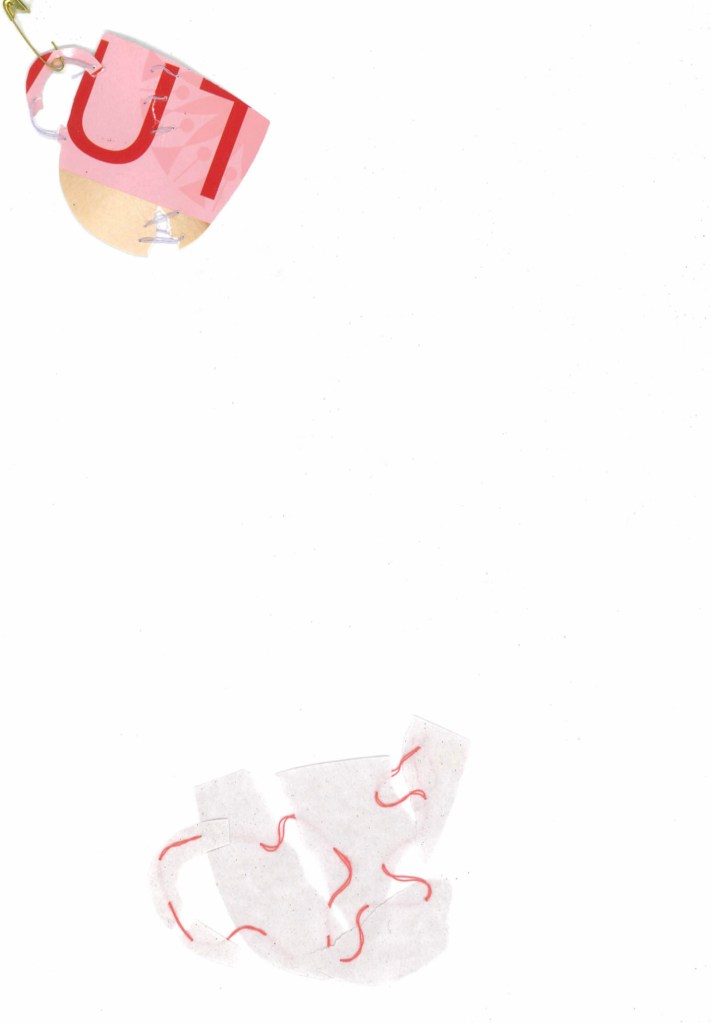
We where given as choice of 2 texts to work with and I chose the one about domestic violence. To begin this activity we read through the text to understand it and all the themes and ideas in it. We did a warm up activity involving collating shapes and altering them in different ways. Then we moved onto the main activity. One of Anna pieces of advice was to work with inanimate objects rather than people when dealing with sensitive topics as it often makes it easier to communicate the message. So for my idea I chose to use tea cups as they’re an easily recognisable silhouette and are quiet fragile therefore easily broken so worked well with the topic of domestic violence. I tested out a couple different versions but both involved the idea breaking the cup silhouette and loosely stitching it back together. This is a technique I’ve never tried before but really liked it so it’s something I’d like to further experiment with. For me this shows the damage that domestic violence cause and how it can break people. I thought is was a good metaphor and a more powerful way of communicating it than a more literal depiction of domestic violence.
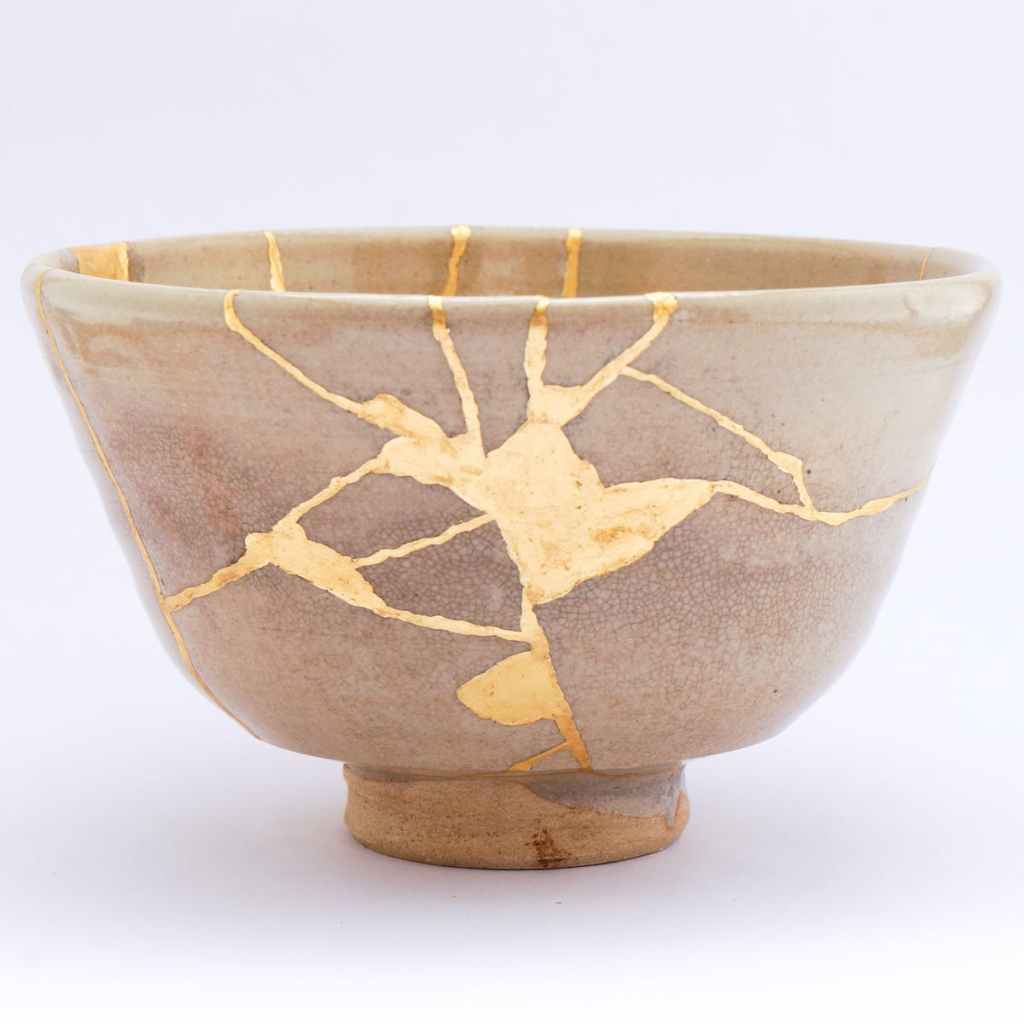
I took inspiration from the Japanese term Kintsugi which is an art form about repairing pottery. What I found so interesting about this art form was how it treats breakage and repair as part of the history of an object, rather than something to disguise so leaves them visible.
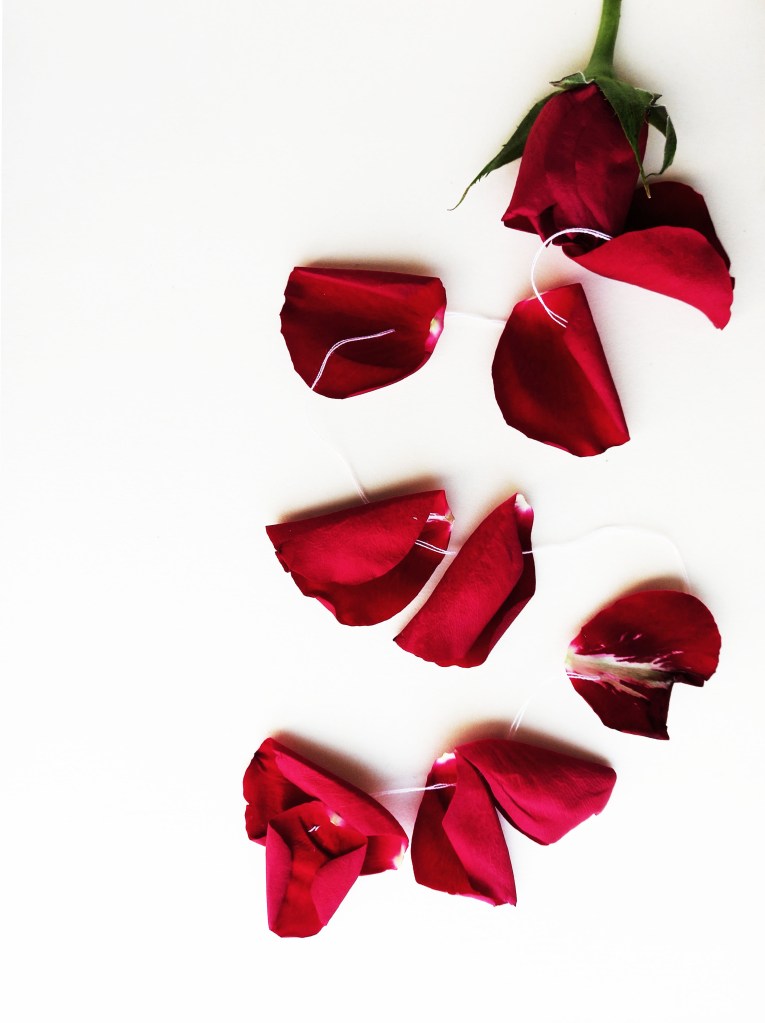
This is a piece I did at home continuing on with the theme of domestic violence. I wanted to develop on my idea of attaching something broken using thread. This time I chose a rose and I wanted to make a more mixed media piece by incorporating an organic element. I think this piece successfully represents the theme as is more visually striking than my previous attempts due to the powerful red of the rose.
For the second week of this module we went off campus to develop our reportage illustration skills. We went to multiple different location including a private school and a shopping centre. These 2 locations are very close to each other but are very different in atmosphere and aesthetic so are interesting to compare. We were tasked with making quick observational sketches of people, activities and locations.
This task took me out of my comfort zone as drawing in public places is something I’m not confident with. It meant I had to draw fast and discreetly and making sure to capture the essential information. All the on location sketches I did where using a HB pencil as it’s my favourite medium and one that allows for quick mark making.
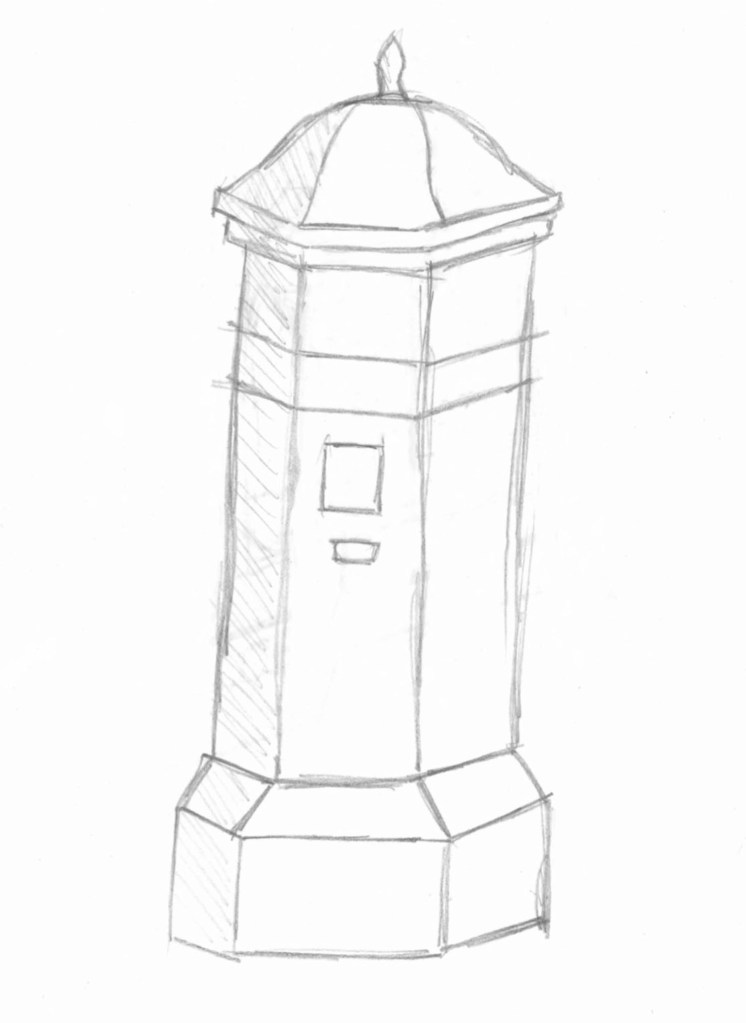
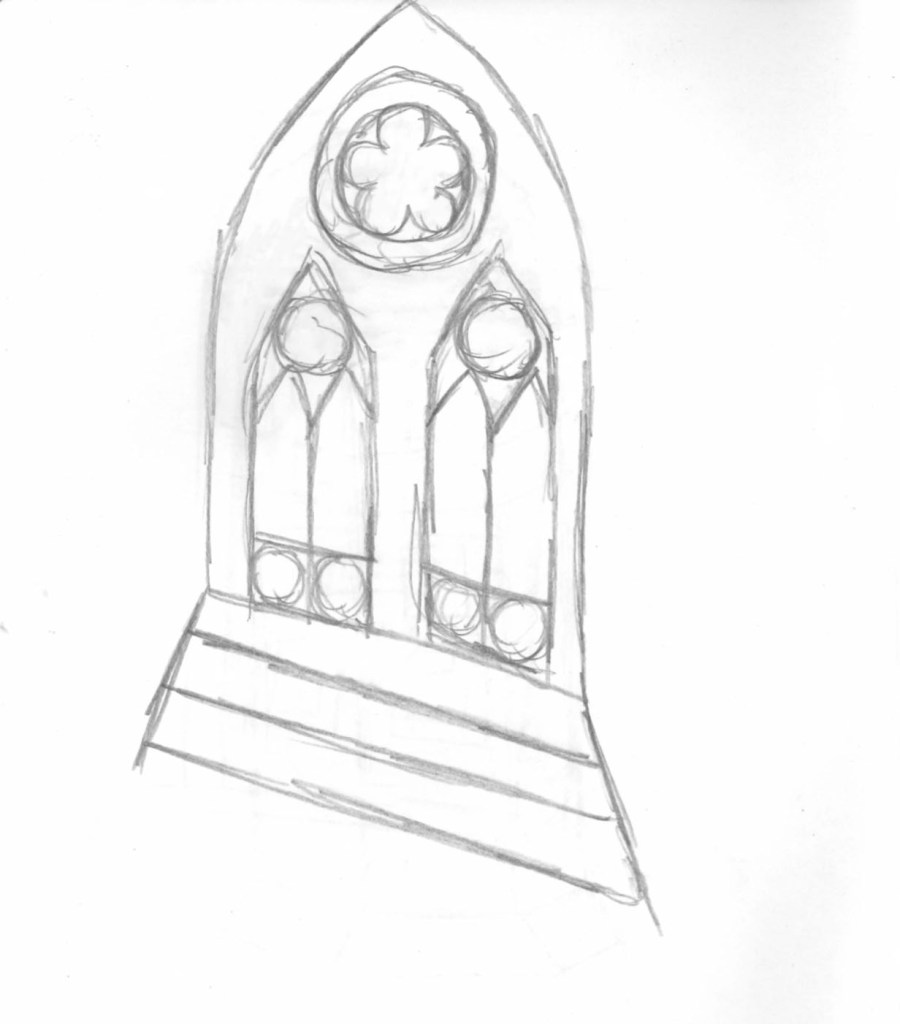
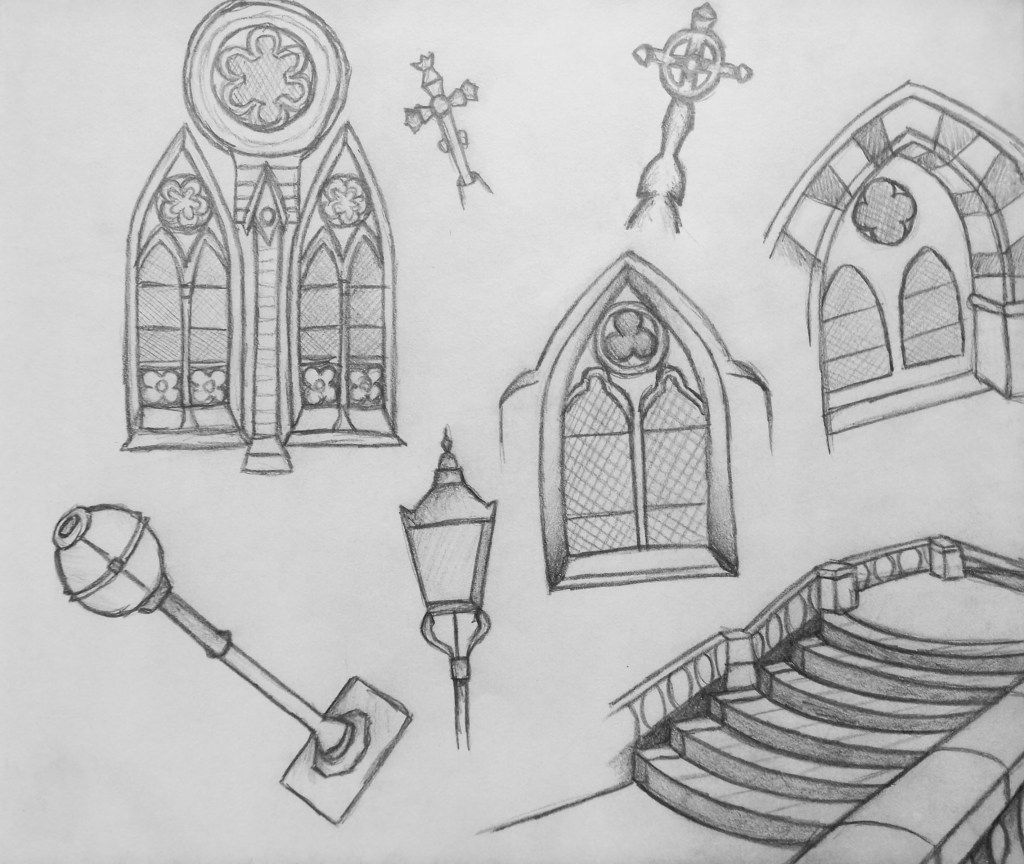
In the first location I mainly focused on the architecture and objects around the private school and they interested me. Also I felt that it was a good way to ease myself into drawing in public as I could be a bit than if I started with sketching people. For these sketches I captured the main details and also took picture so I could use my observational sketch and the photo to develop an image further.
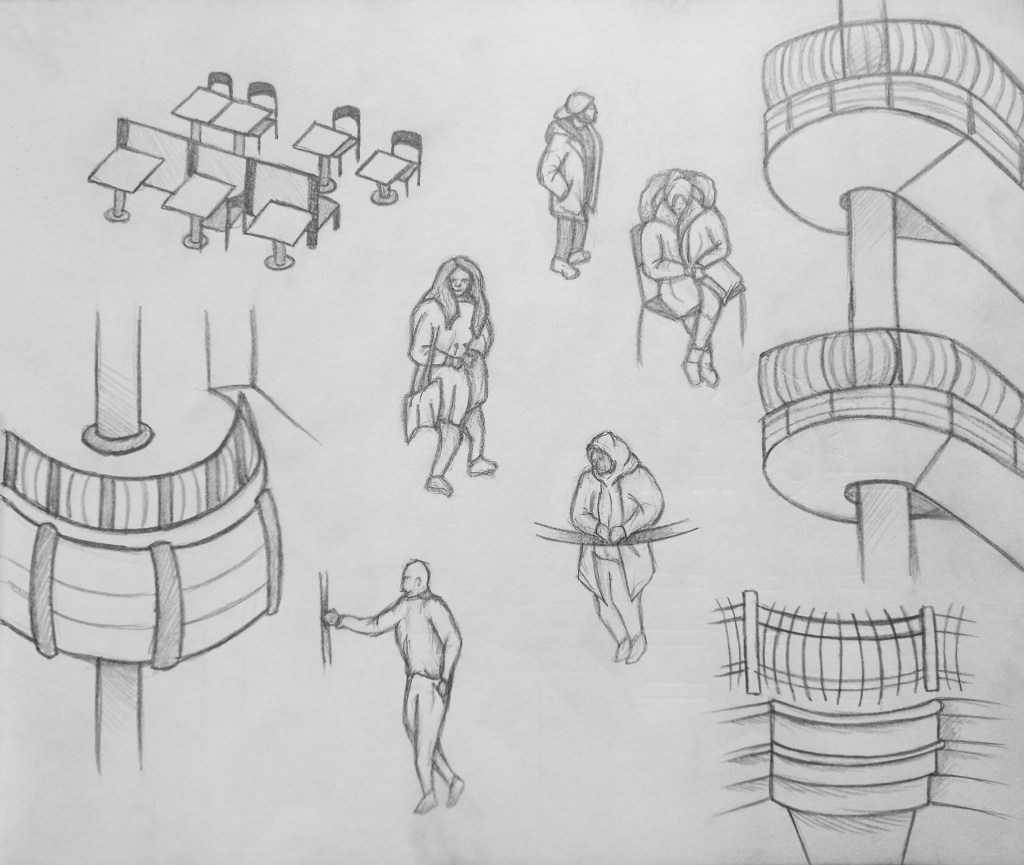
The second environment we went to was Harrow shopping centre. The 2 areas had completely different atmospheres and demographics of people. For this location I decided to focusing on sketching people. Prior to the session I watched a video with tips about gesture drawing and how to capture a person movement and body language quickly. The most helpful where to start with a line of action that runs from the head to the feet, this helps get the overall position of the person and then draw in 3 axis. One at the shoulders, hips and knees. This information alone is enough as from there, with a good understanding of prorations you can sketch a more complete figure. This was especially helpful as people where either constant moving or stopping for brief periods of time.
I became more comfortable with drawing in public as the day went on and it’s something I will continue to practice as it’s a good form of documentation.
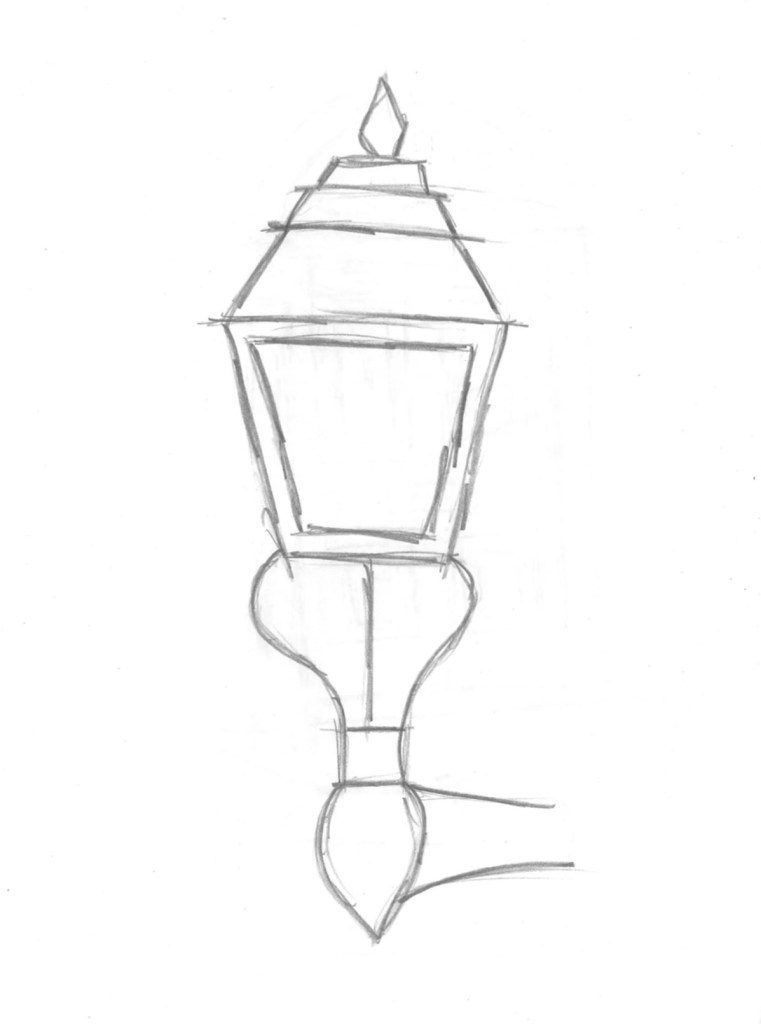
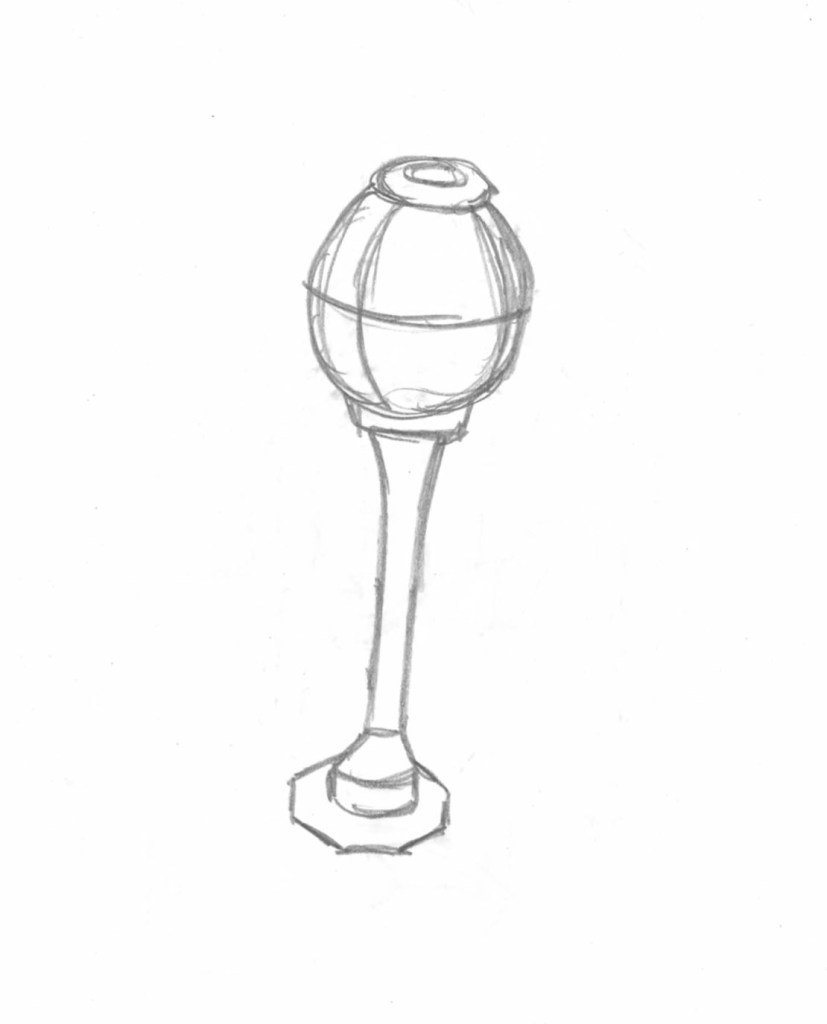
After the session I used my observational sketches and photos to make more developed sketches from the different locations. From the private school I focused on the architecture as it was what I was drawn to most.
One area at the private school that particularly interested me was the church in the cemetery. So from a photo I took I made this more developed biro sketch to try and and capture the texture of the building as well and the detailed, rich architecture.
These are more detailed sketches from the shopping centre. I did some of the architecture to be able to compare the 2 locations as well as developing some of the sketches of people.
A technique I enjoy is using a base of watercolour the overlapping that with biro. I like the aesthetic of them overlapping particularly when the watercolour doesn’t completely fit within the biro lines so this is something I’d like to test out.
Overall I found the experience of drawing from observation in public to be both challenging and enjoyable. It had practical challenges such as having to work fast as well as me just initially feeling a bit uncomfortable but I quickly began to adjust. I plan to continue doing this as I can see it’s uses within documentary illustration and as a quick way of recording ideas and inspiration.






 Samuel Green Illustration