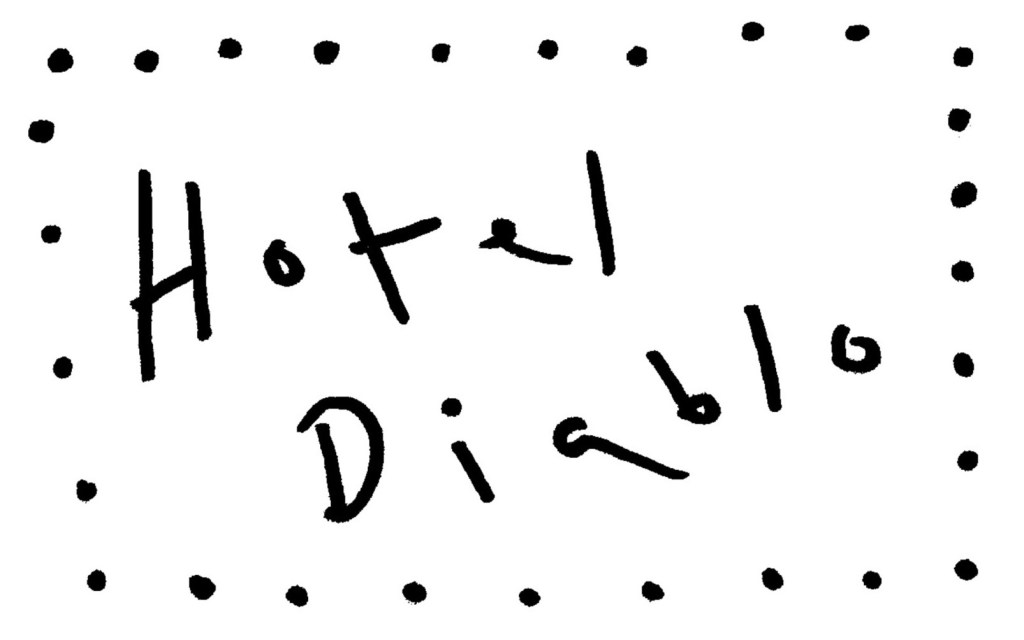
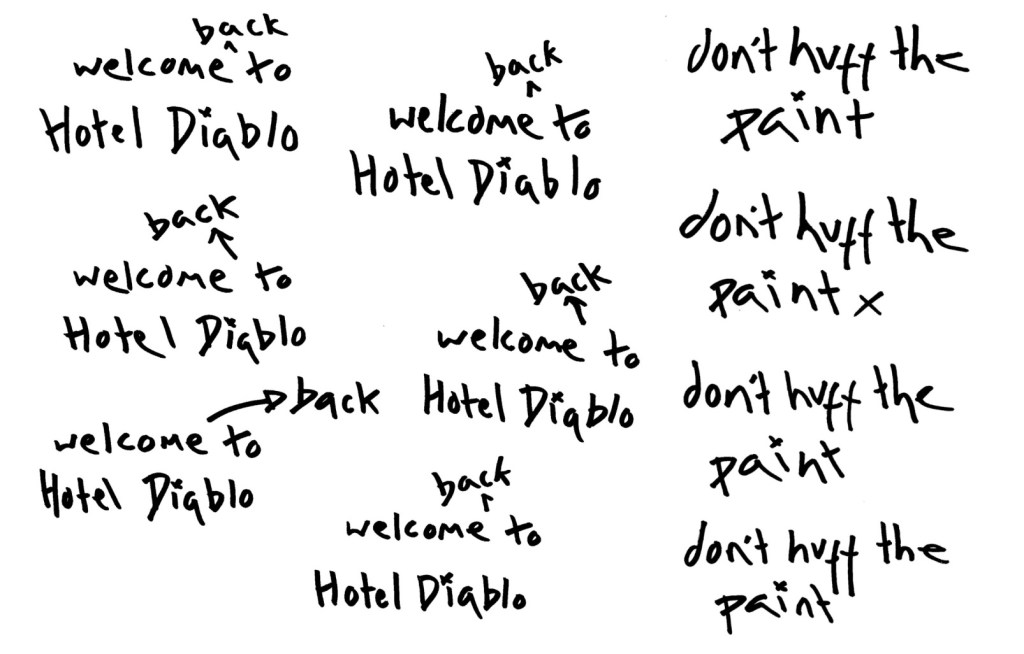
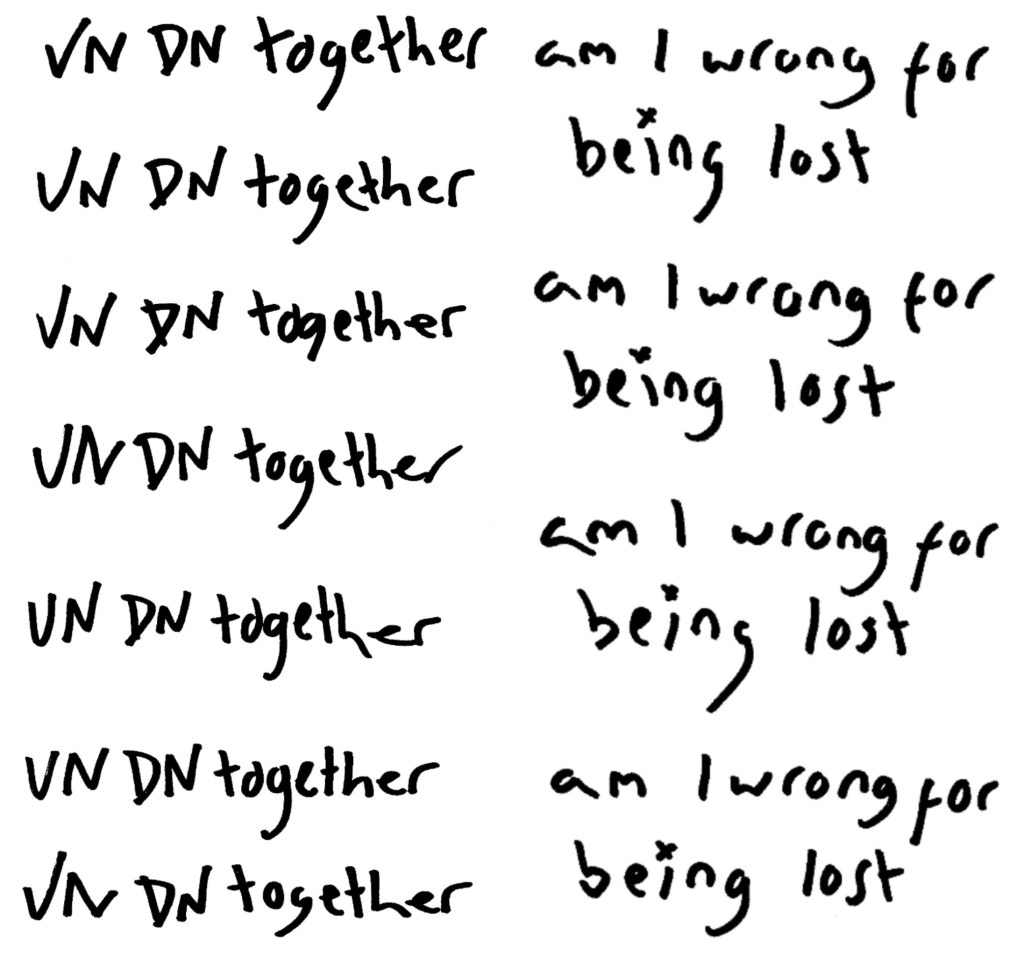
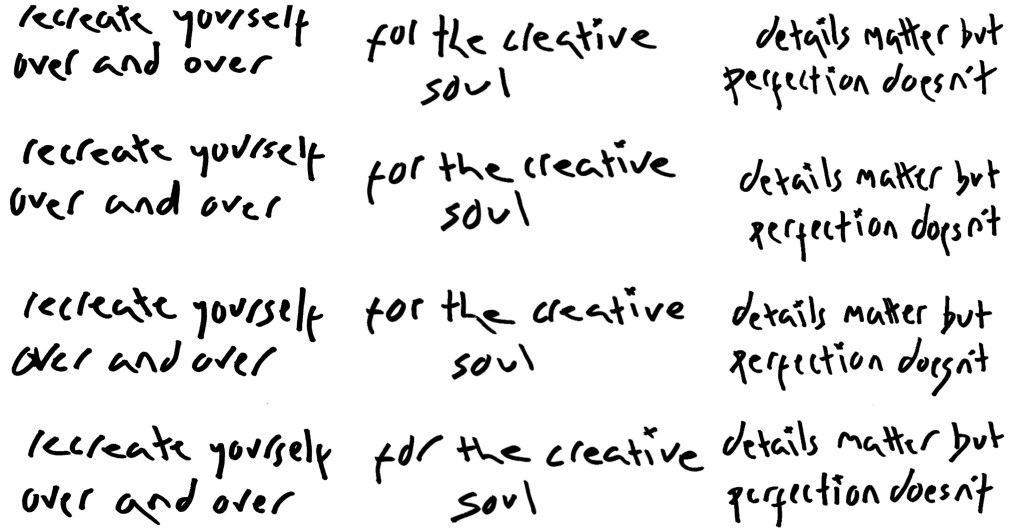
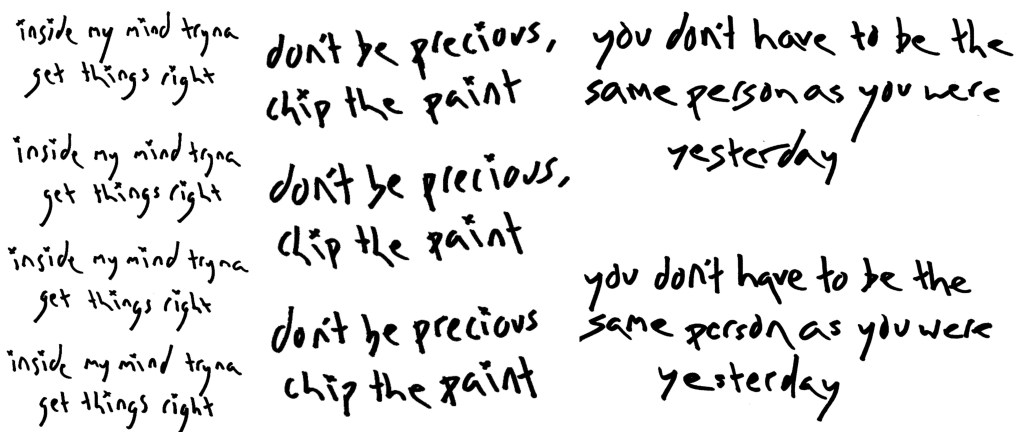
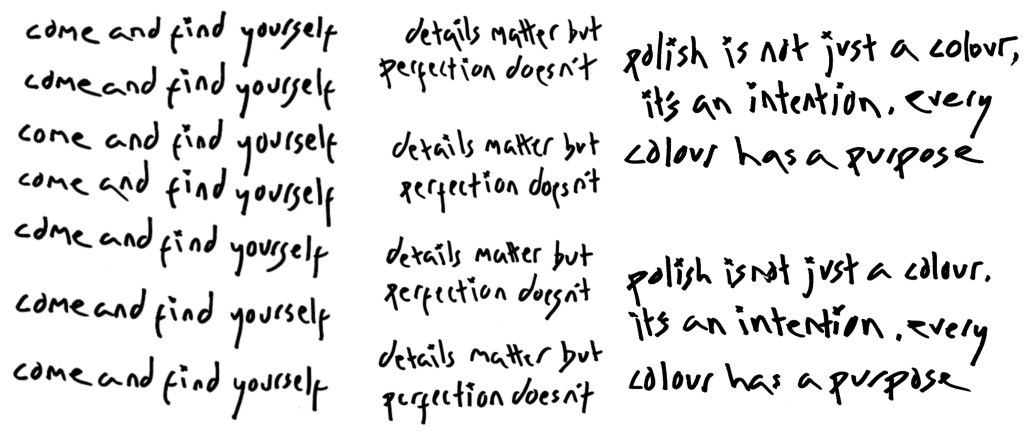
I continued to develop my ideas for the projects typography. I decided to have the main, recognisable typefaces for the advertising to be in a rough, loose, hand written style. This is key to the visual identity of my event and will be seen across the static, sequential and interactive pieces. As I mentioned previously this is a stylised version of my handwriting, created with black markers. I chose to do them all in black for convenience and will digitally a,tee the colours if necessary. I experimented with the idea of writing out an alphabet in this style and constructing the text from that. I felt that this would make it too rigid and wouldn’t have the authentic and personal style that I was aiming for. The inspirations for this style was to try combine the typography used by both UN DN and Hotel Diablo to find a balance. It has the careless style of Hotel Diablo combined with the thick, bold line weight used by UN DN. More about this typography style can be found in my post about the event details and my work on ‘Bloody Valentine’.
Logo:
Hotel Diablo tracklist:
Hotel Diablo lyrics and UN DN slogans:
Reflection: I’m really happy with this typographic choice. While it was a more time consuming process than just using a digital typeface such as one available with Adobe, I think it was worth the extra time. I now have a unique typeface that will make my visual identity stand out from other nail polish companies or similar events. I did multiple versions of each word or phrase so that I had variation and options. Also I would like to try and create a similar stop motion effect that the Young V&A use in their visual identity.
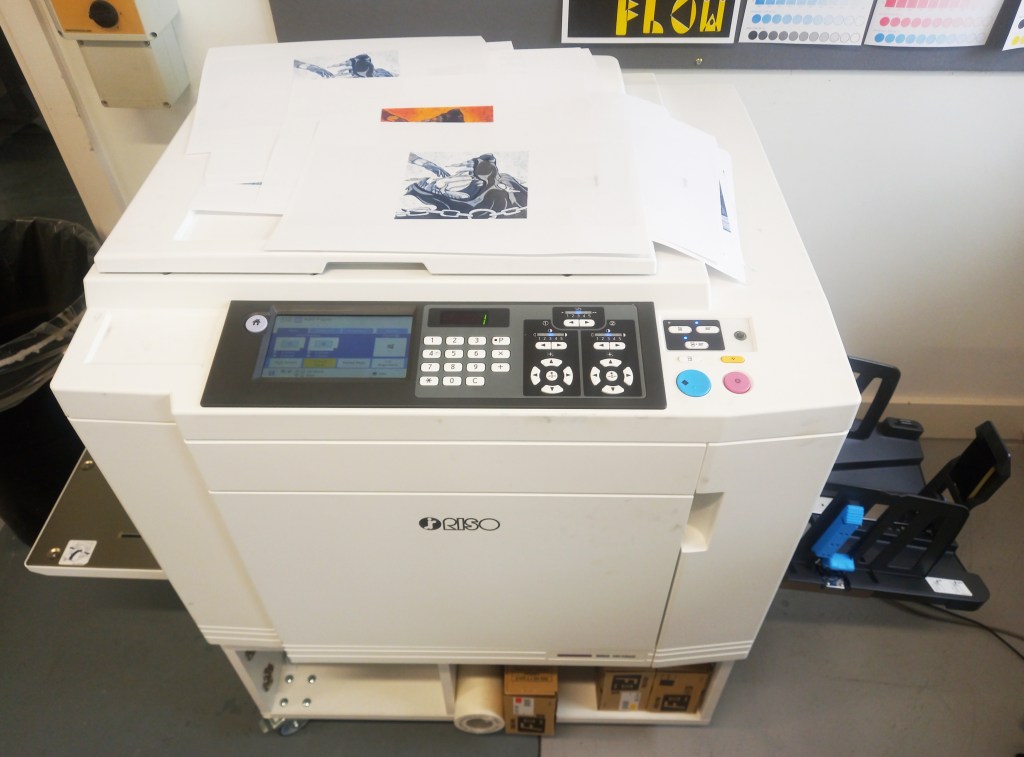
Photos from printing studio session: I booked a day in the printing studio to create my Riso prints. Before the session I prepared all the colour separations I needed as greyscale PDFs. Due to time constraints I chose only 2 illustrations to print, ‘Binding of Fenrir’ and ‘Ragnarok’.
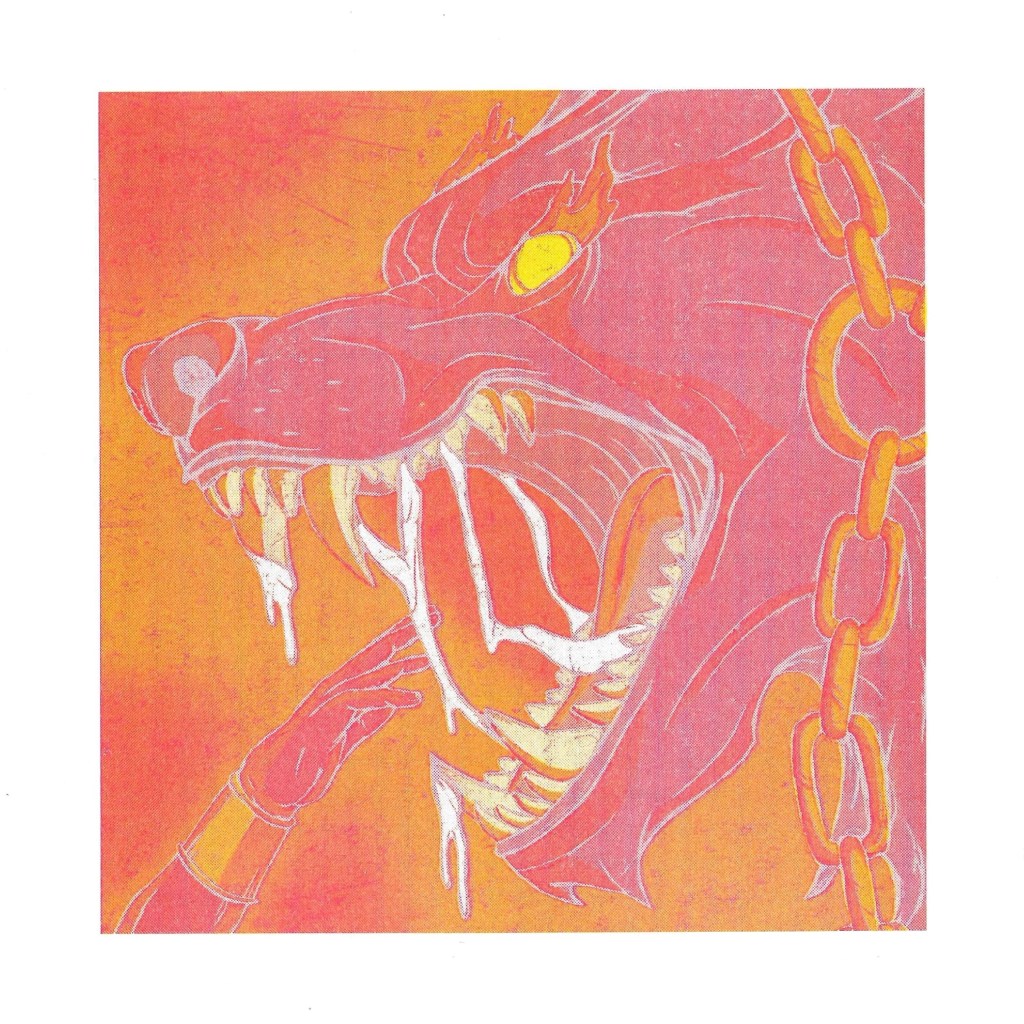
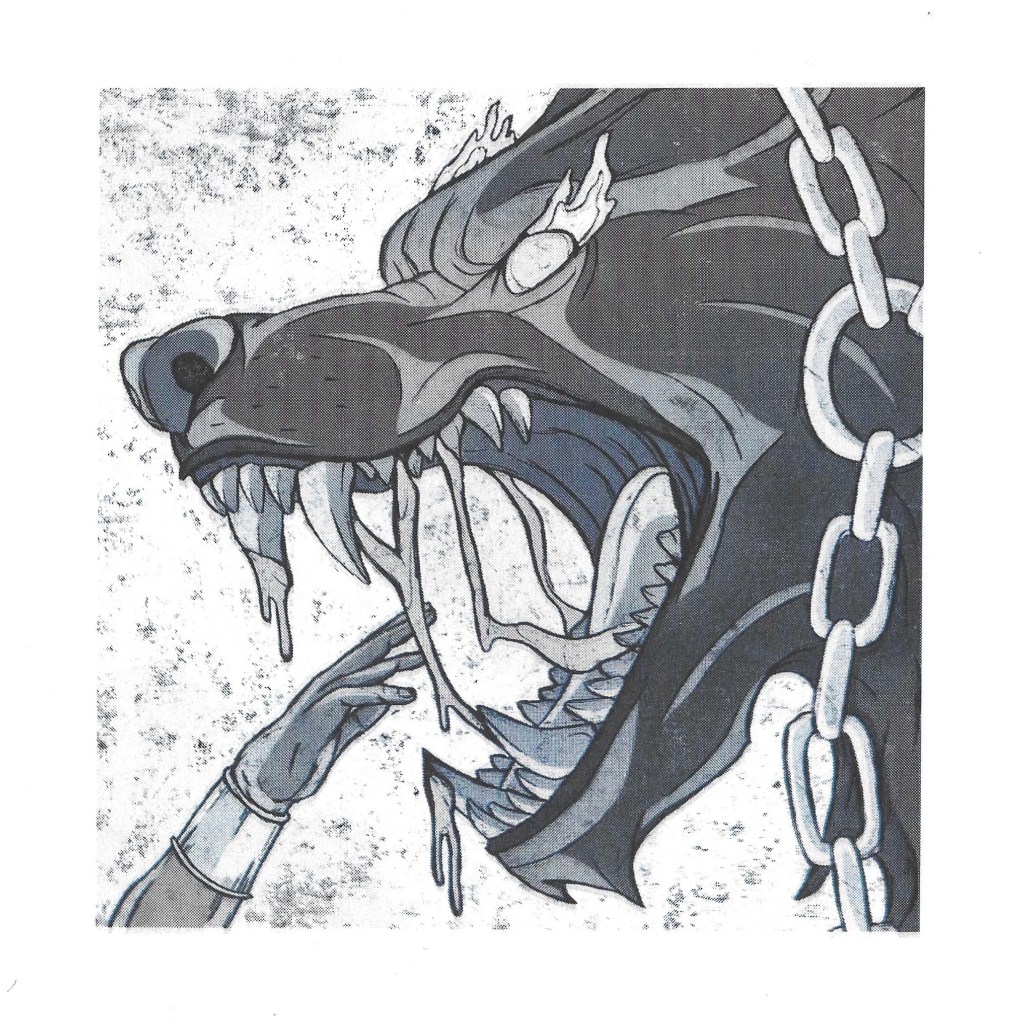
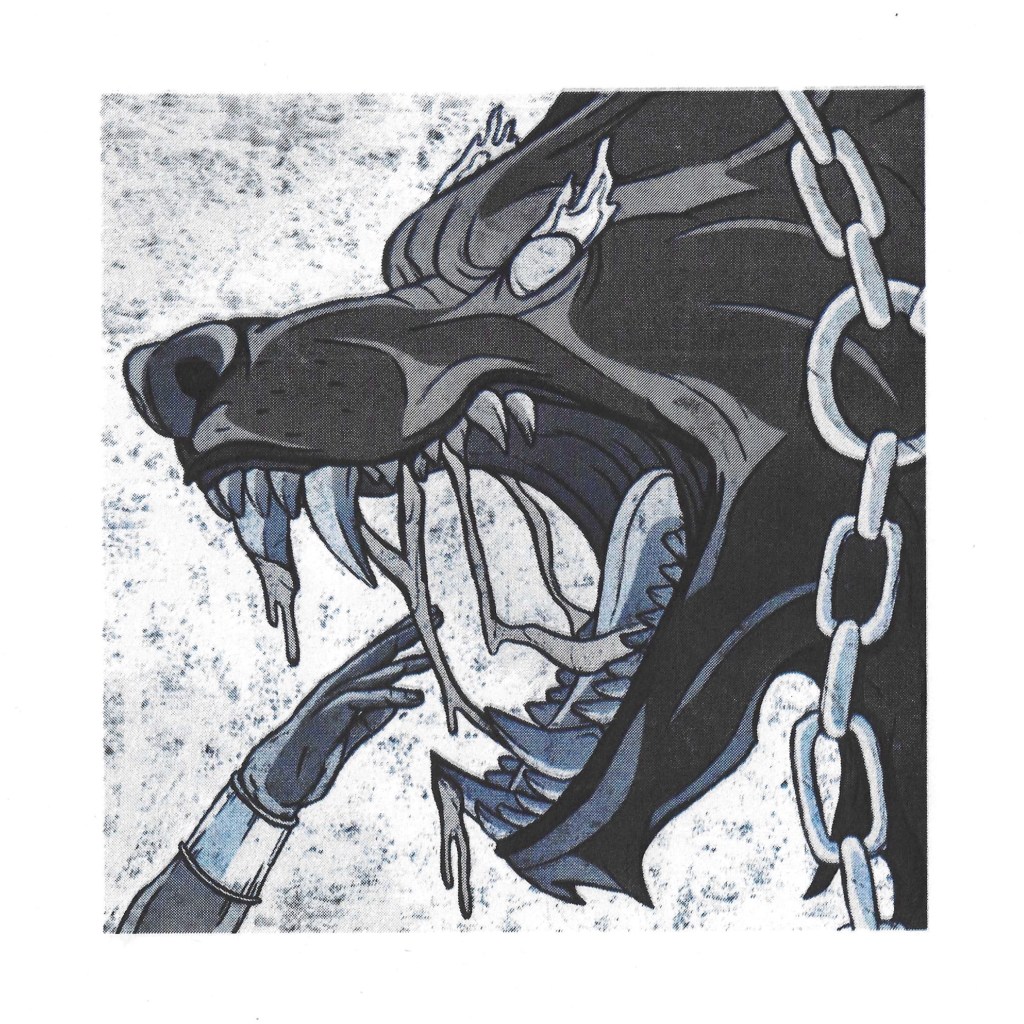
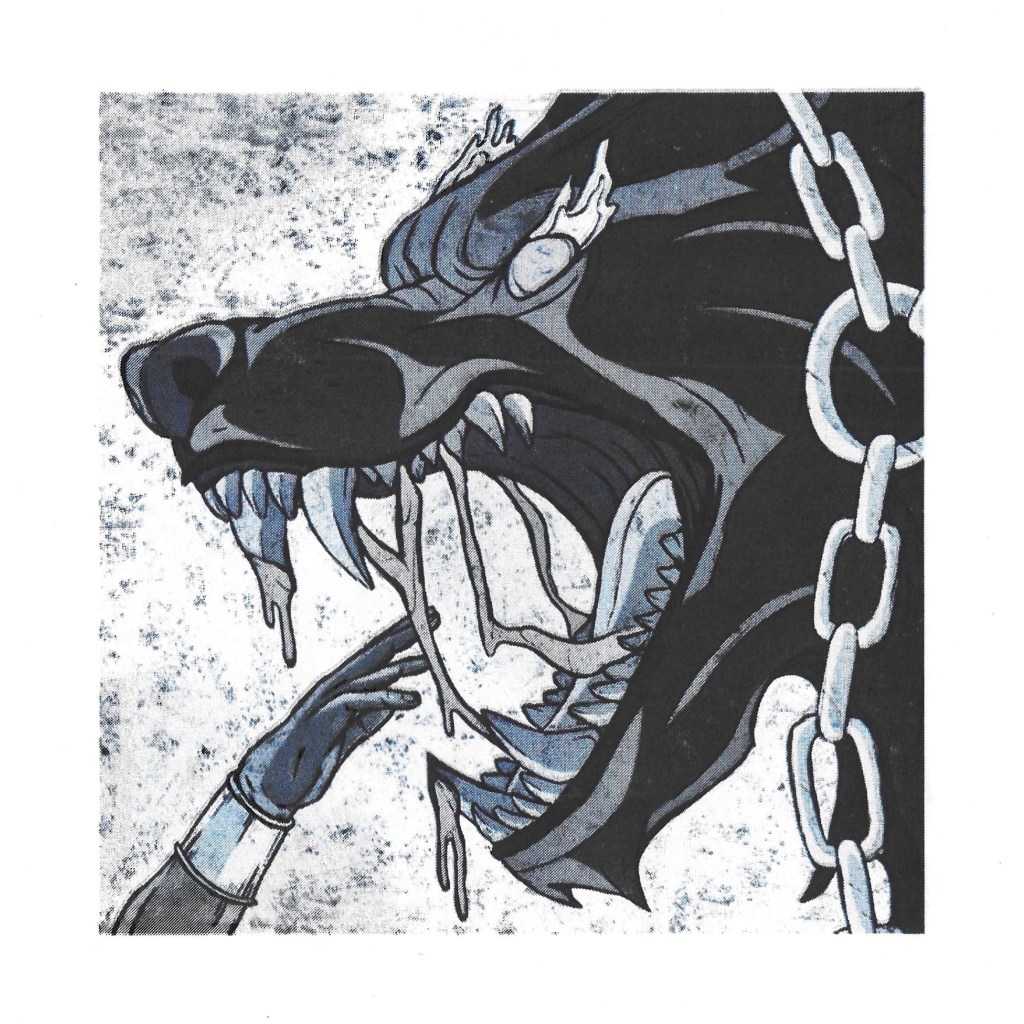
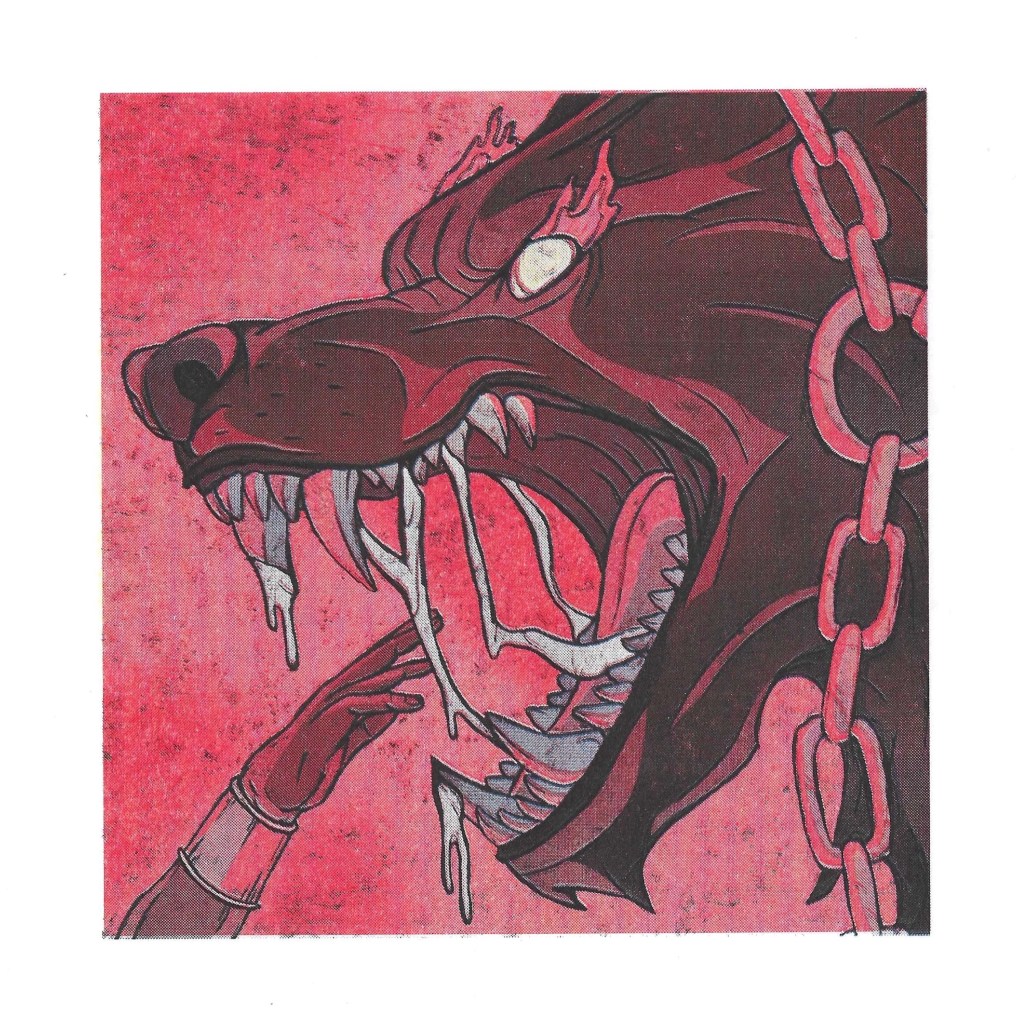
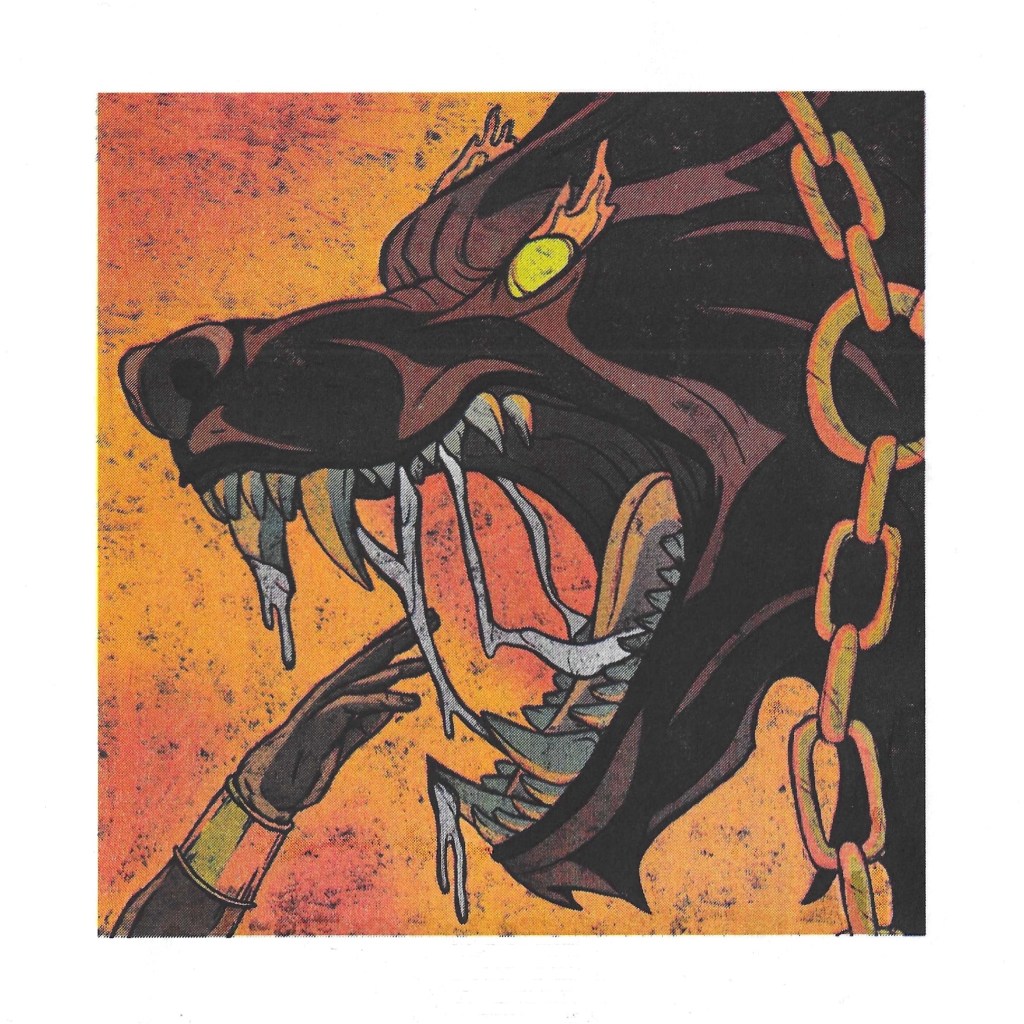
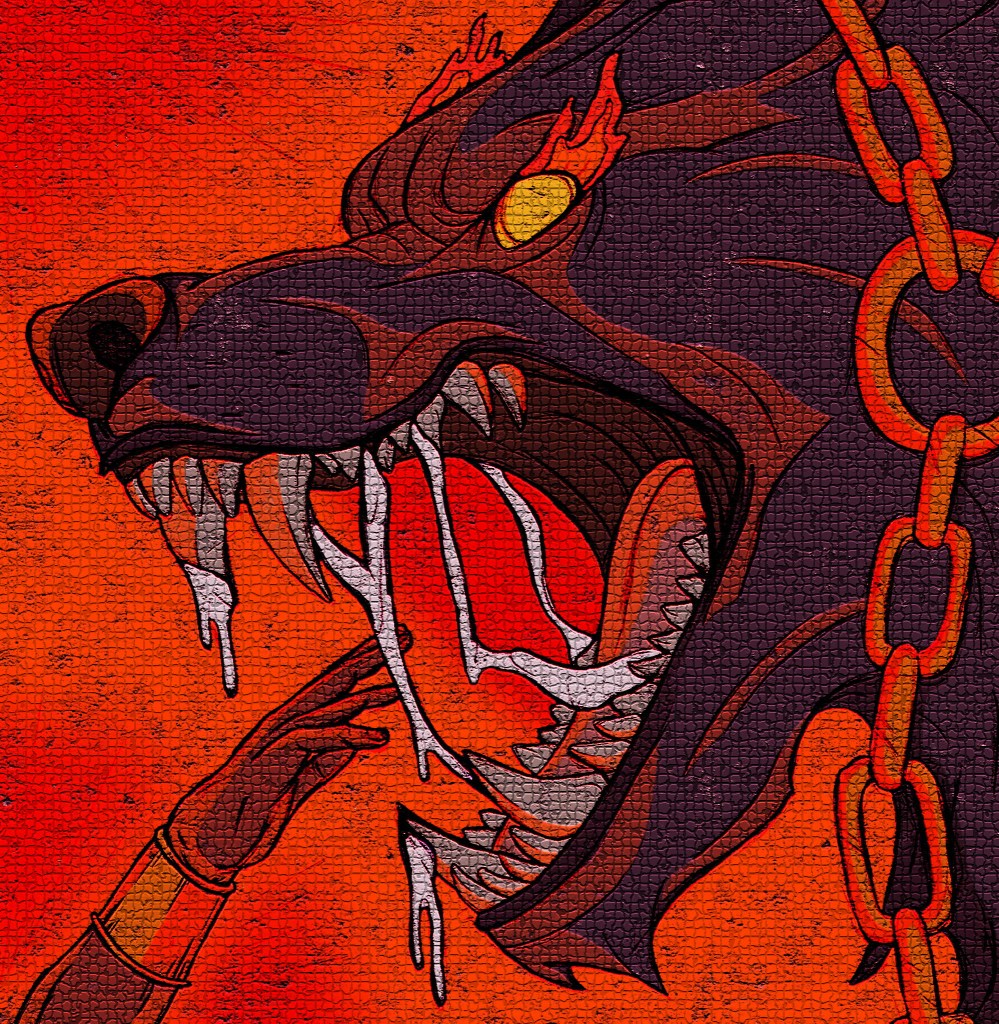
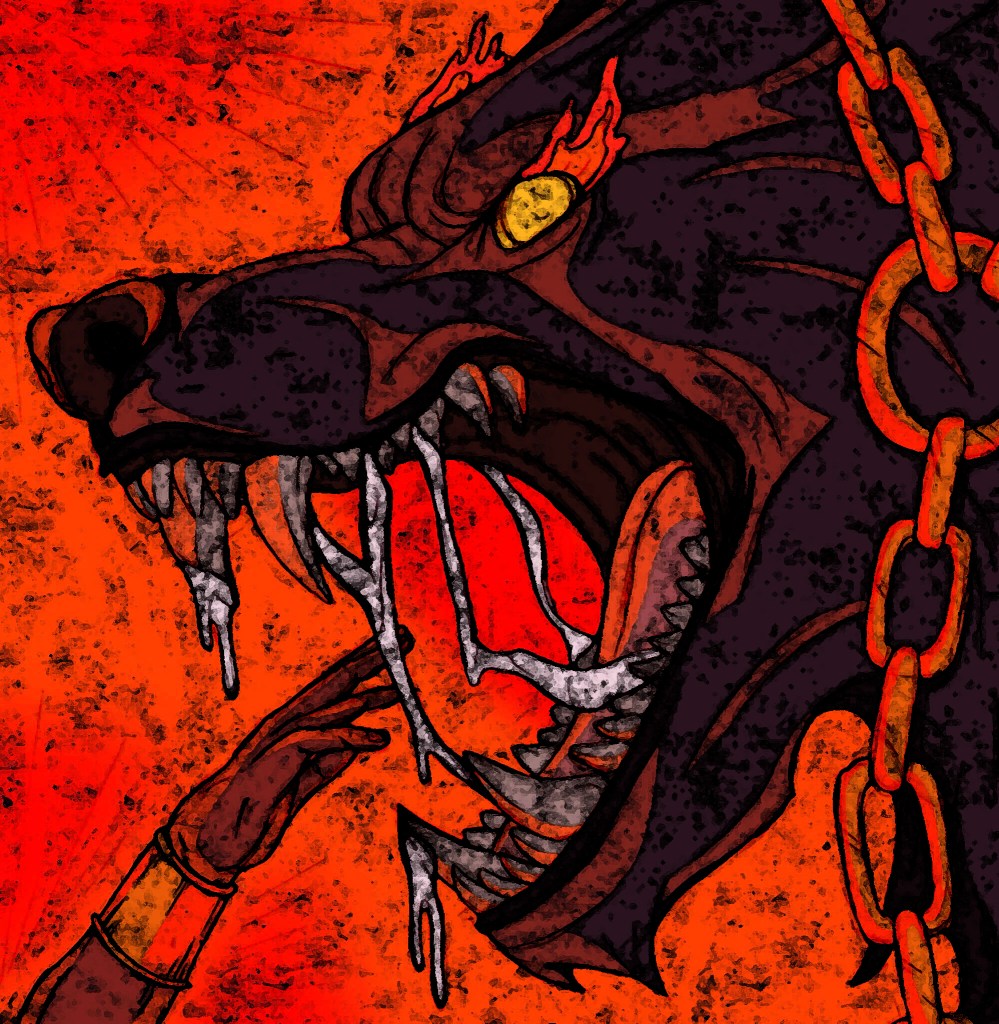
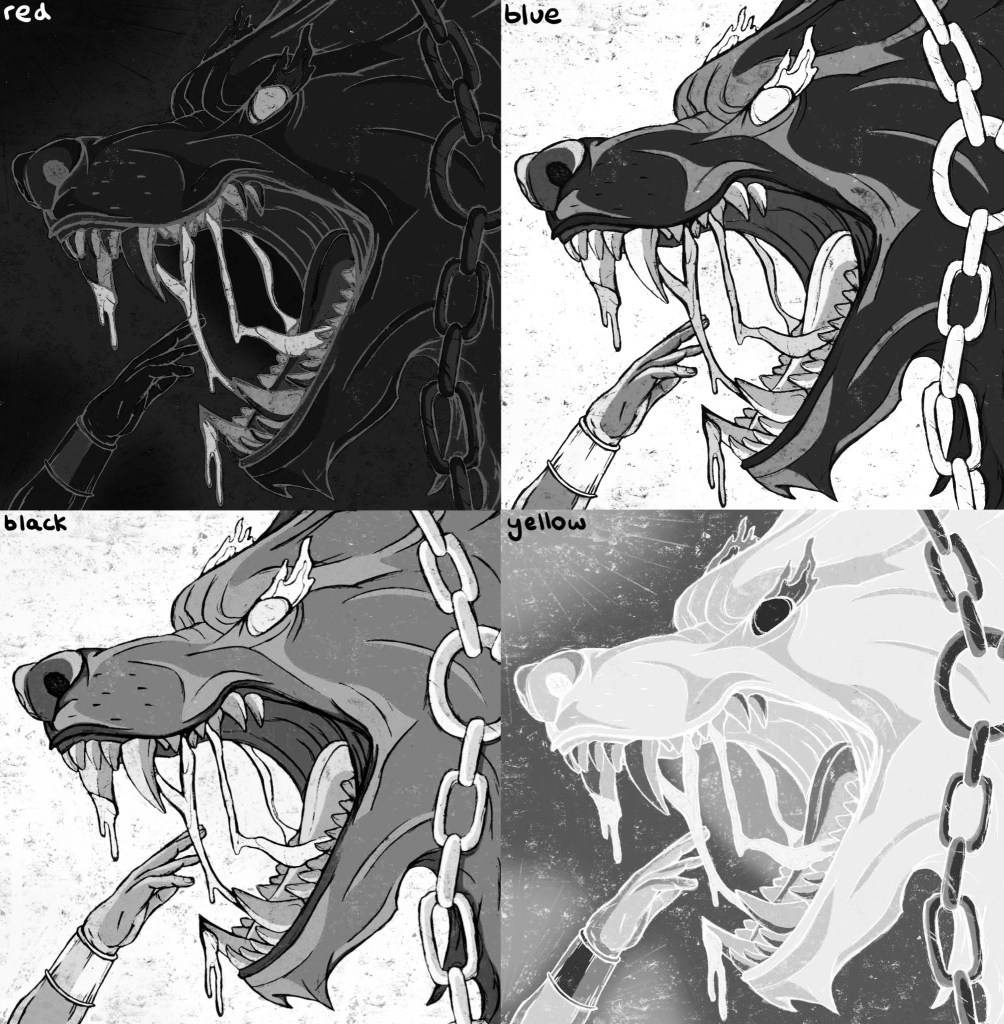
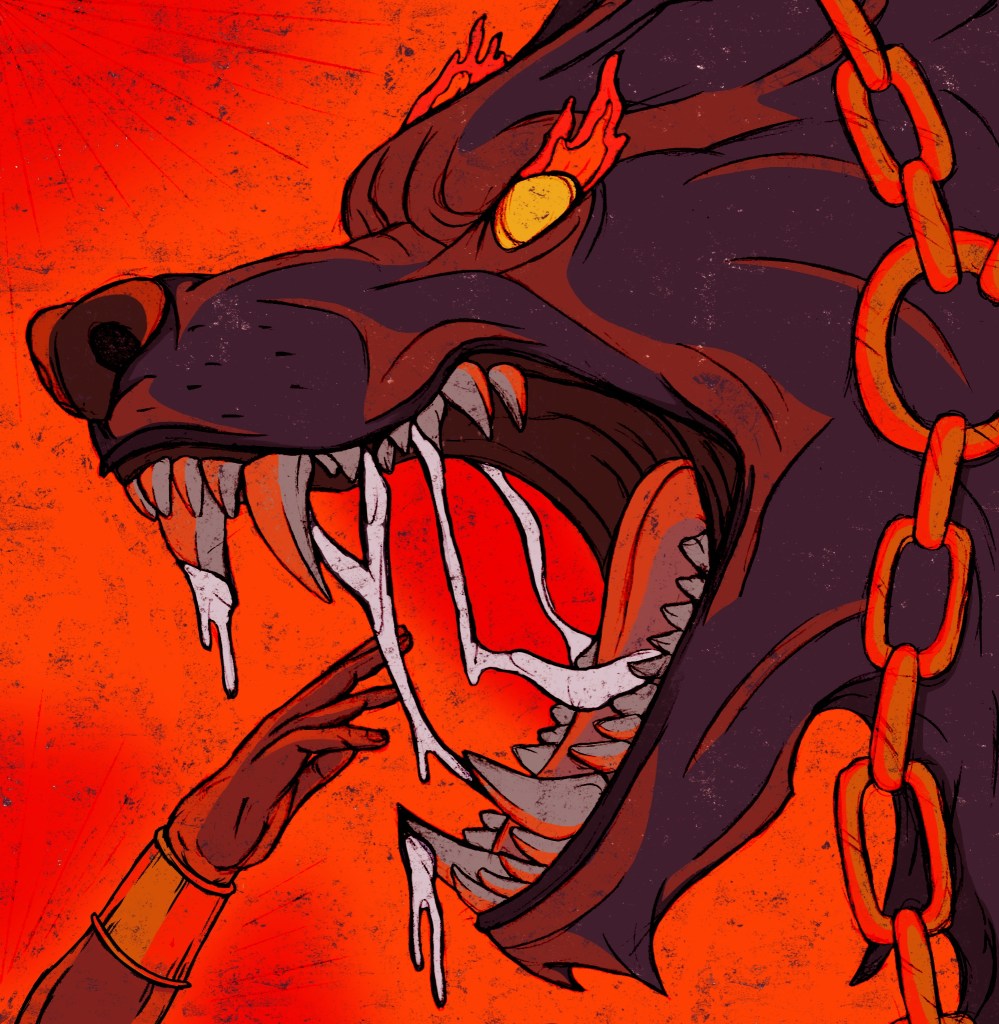
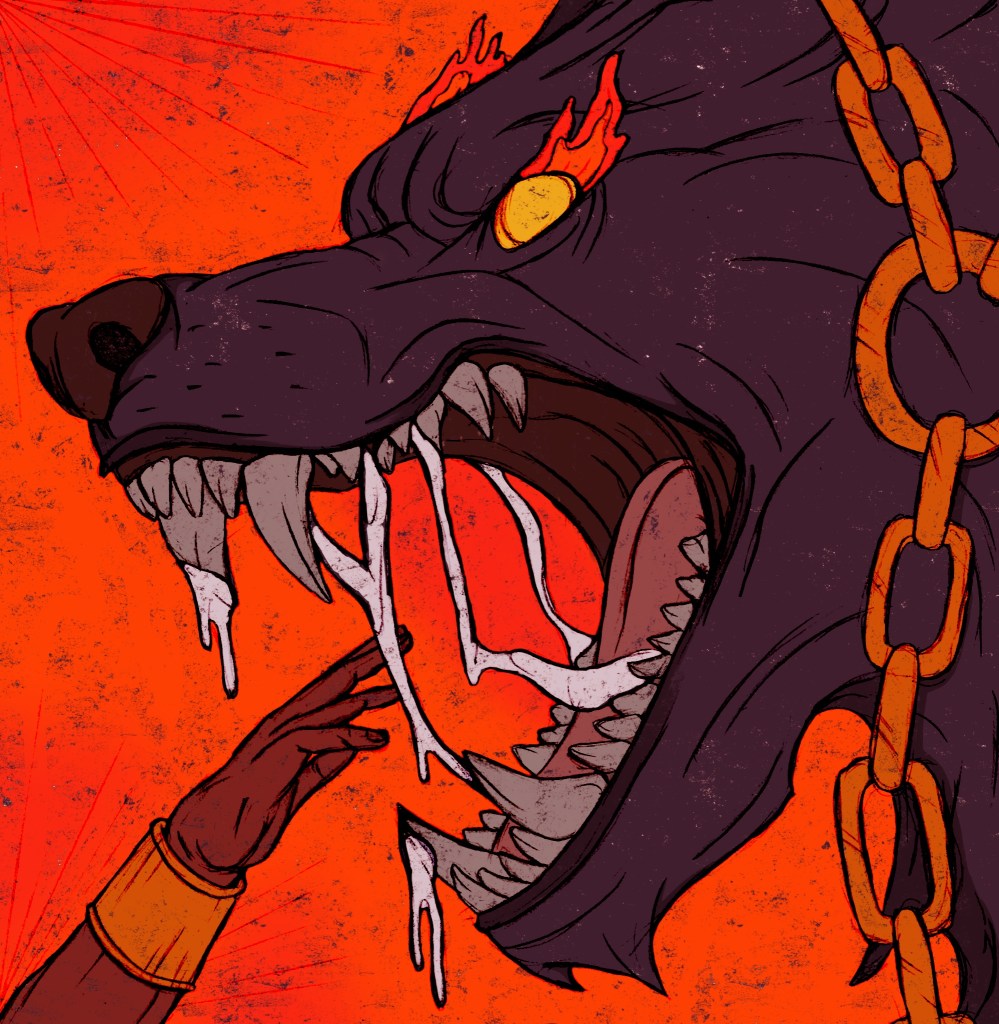
Binding of Fenrir: I chose to do this one as it’s in the middle on the timeline of myths that I illustrated and it’s one of my personal favourites. I really like the striking colour palette with the intense orange mixed with the cool blues. I wanted to experiment with these colours further by using different combinations of inks. Below is a selection of my prints with different colour variations:
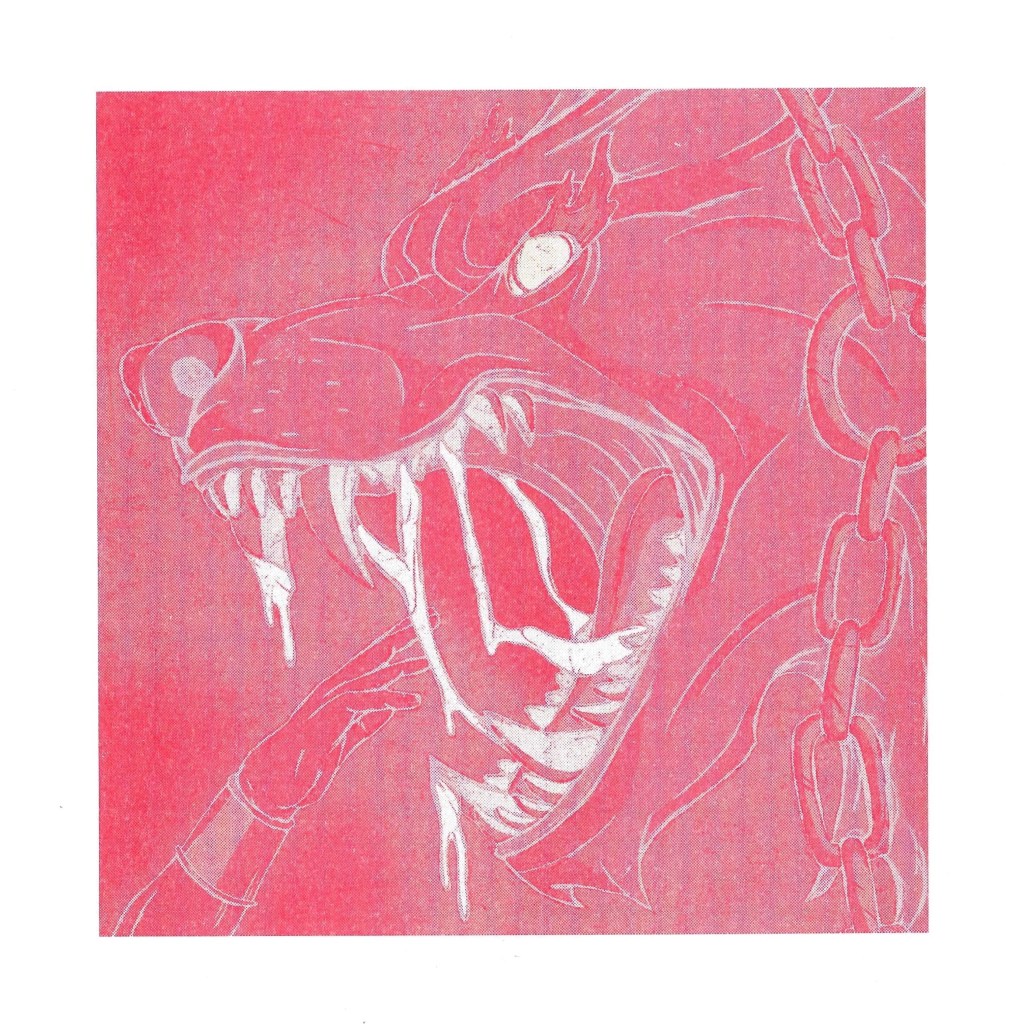
Red: with Riso printing you have to print one colour at a time and then layer the next colour over the top, making sure that the registration is correct. This is an example of a print with only 1 colour profile.
Red and yellow: here I put a yellow layer over on top of a red print. This is where it starts becoming interesting. This image has even more intensity than the original as it has the strength of the warm tones while removing the cold side of the palette. I think this is an interesting variation of the image but I think without the darker elements you don’t get the strong contrast that the original has.
Blue and black: with these prints I went for the complete opposite of the previous one, only using black and blue. The results of this were unexpected but I really like these variants. The cold tones give the image an icy feeling rather than intense heat. I think it still maintains the drama but takes the palette in a direction I hadn’t considered. Below are 3 versions of this colour combination. For the second one I added 2 layers of black and for the third one 3 layers. This was to experiment with the boldness of the colours. I really like the gritty texture that’s in the background.
Red, blue and black: this was a colour combination I tested using the colour profiles in Photoshop. By removing the yellow it creates a darker tone, while still maintaining the feeling of extreme heat. The second one has a double layer of black and blue. I prefer this one as it makes Fenrir and the hand stand out more from the background as there’s a greater contrast.
Red, yellow, blue and black: these prints have all 4 colours so are the full colour prints of my illustration. I’m really happy with these prints, they show my image with the palette I original made. I especially like the second one which has double layers of blue and black. I think this best shows the contrast that I had in my original design.
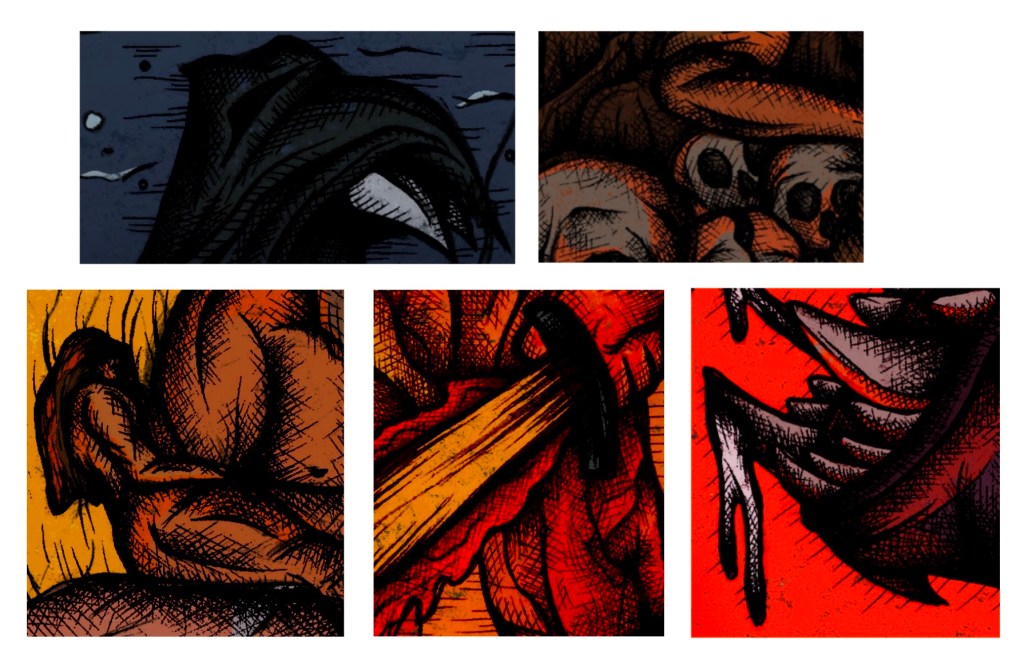
Hatching over Riso print: I wanted to bring back in some hatching over one of the prints. I chose to add the pen work over a red and yellow print. This lighter palette allowed the black pen to really stand out. As I found through experiments earlier in the module, my preferred style of shading with a pen is using street line hatching so this is predominantly what is in this image. I’m happy with this image as I think it successfully combines the 2 mediums.
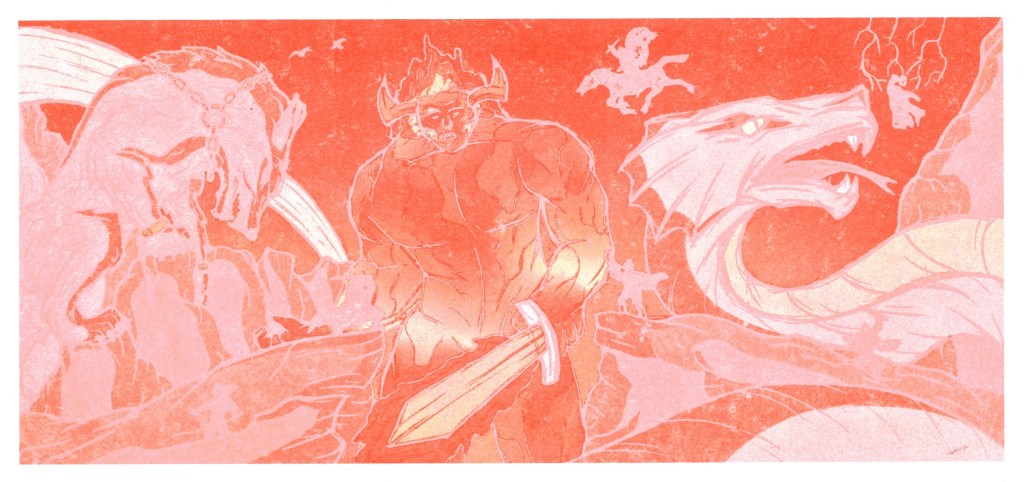
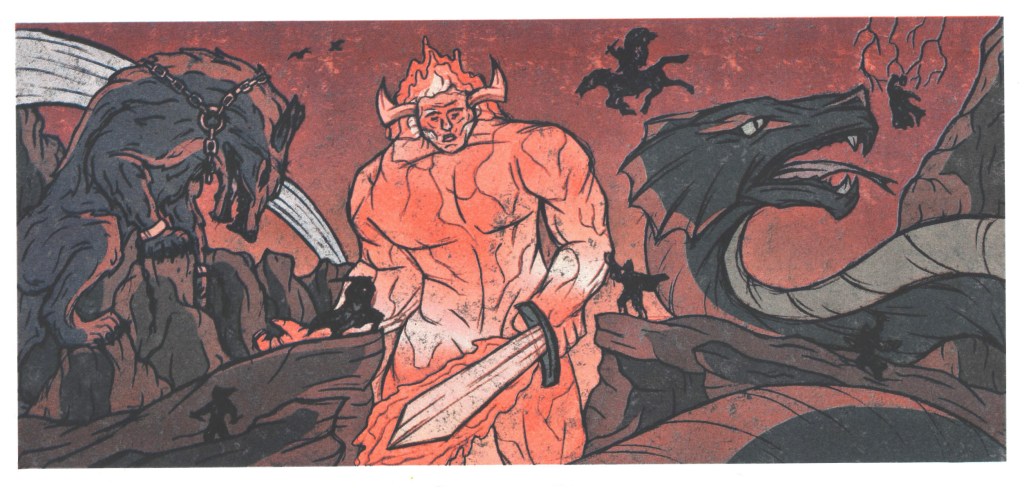
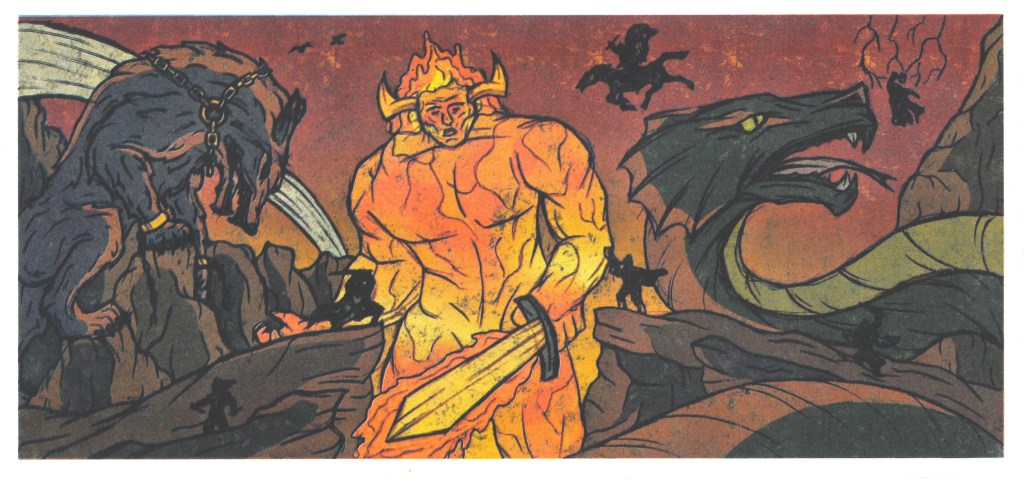
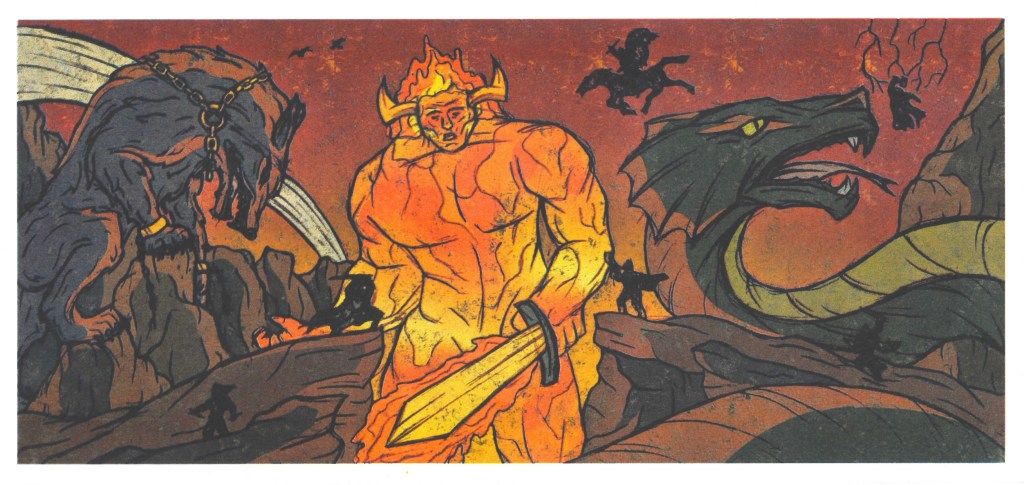
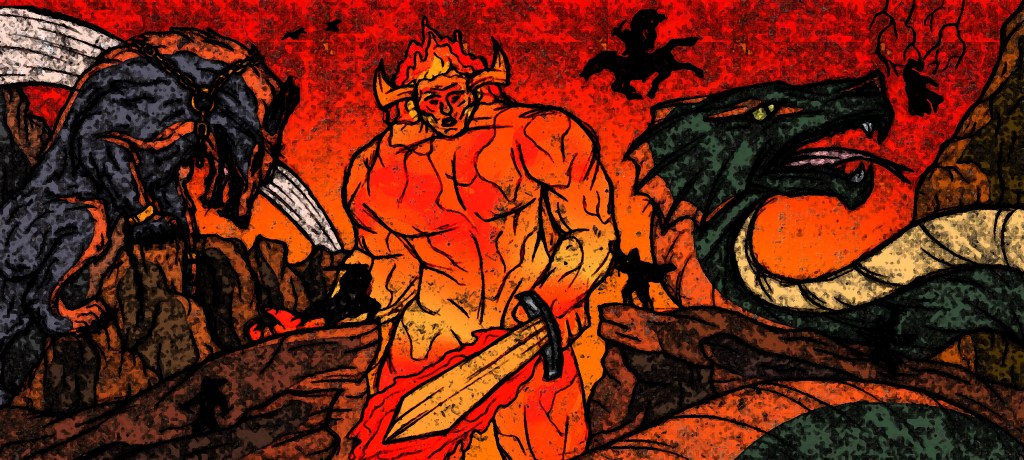
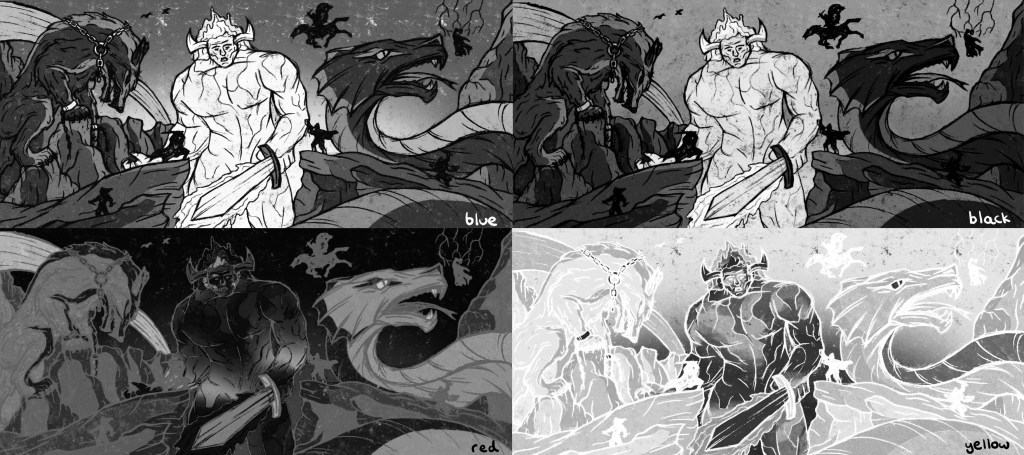
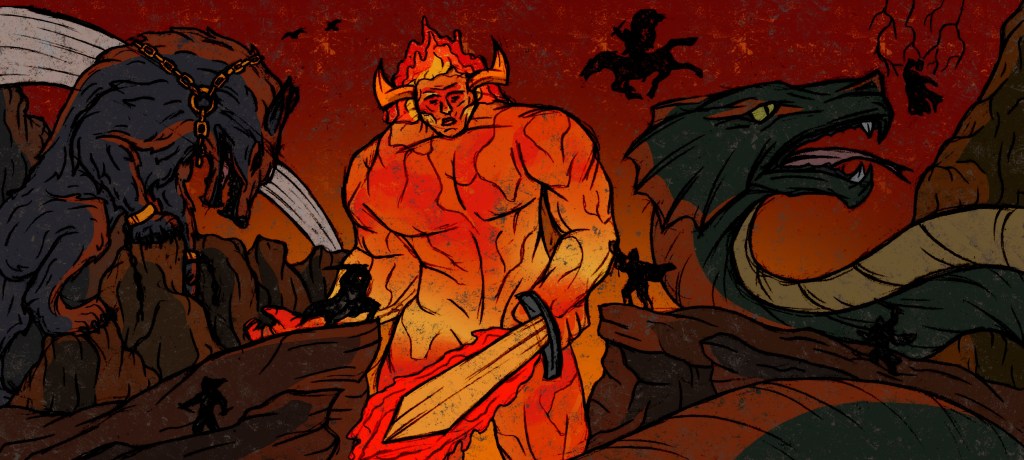
Ragnarok: this is the other image I chose to print with Riso. It’s the climax of Norse mythology and one of my favourite designs. I really like having the 3 giants together in one image. Also Ragnarok is the topic of my essay so this was another opportunity to explore this myth. Below are a selections of my prints with different colour variations:
Red: This is an example of a print with only 1 colour profile, red. I think the single colour prints are interesting visual experiments but I don’t really like them as final images. They’re lacking a lot of the depth and contrast that the original images have.
Red and yellow: here I put a yellow layer over the red print. I like the way that Surtr looks but I still think Fenrir and Jörmungandr feel a bit lifeless as they’re missing the darker tones that they originally have. One interesting element of the image are the gods. In the original they’re black silhouettes but in this version they’re a lot lighter. They seem abit like ghosts which is interesting foreshadowing for the death of the gods.
Blue and black: I really liked the blue and black prints for the Fenrir image so wanted to try that combination for this image too. Once again I’m very happy with this combination. There’s a nice amount of detail and contrast and contrast betweenthe light and shadows. It’s a huge difference from the original design but I like how cold and sombre this image feels with the darker, colder palette.
Red, blue and black: I knew I wanted to try out this colour combination after testing it on Photoshop. It’s not drastically different from the full colour version but just has more of an emphasis on red. It has a nice dramatic tone and the colours translate the idea that this is just before the end of the world.
Red, yellow, blue and black: these prints have all 4 colours so are the full colour prints of my illustration. I’m really happy with these prints, they show my image with the original palette. I especially like the second one which has double layers of red and yellow, highlighting the warmth of Surtr and the intensity of the apocalyptic event.
I had lots of fun doing the Riso printing and learnt so much about the technique from my session in the studio. I’m really pleased with the outcomes of my prints as I was able to create lots of different colour variations of 2 of my illustrations. I got some prints that showed my illustrations as I had intended and through experimenting with different colour combination I achieved some prints with completely different tones. This was a really valuable experience and helped me develop my illustrations further and see new possibilities for them. If I had more time I would have liked to print all 5 illustrations to have the whole series. I intend to still do this in my own time.
I have my finalised colour illustrations and I wanted to do some experiments to see how they would look with different filters and variations. This helped me get an idea of potentially what formats my work could take other than just printed images. It also helped me see how to expand my work to different audiences.
Hatching over colour: I took the hatching sections that I made and overlayed them onto my coloured illustrations to see how the 2 elements work together. I like the style but I prefer the style that the images already had as I feel this style of dense hatching and shading makes the illustrations too dark and block some of the colour. If I was to do a whole image with this combination, I would make the hatching less dense to allow the colour palette shine.
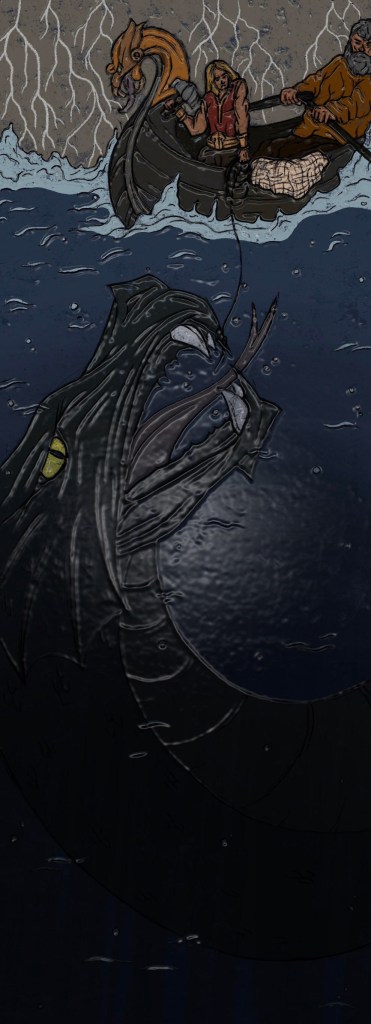
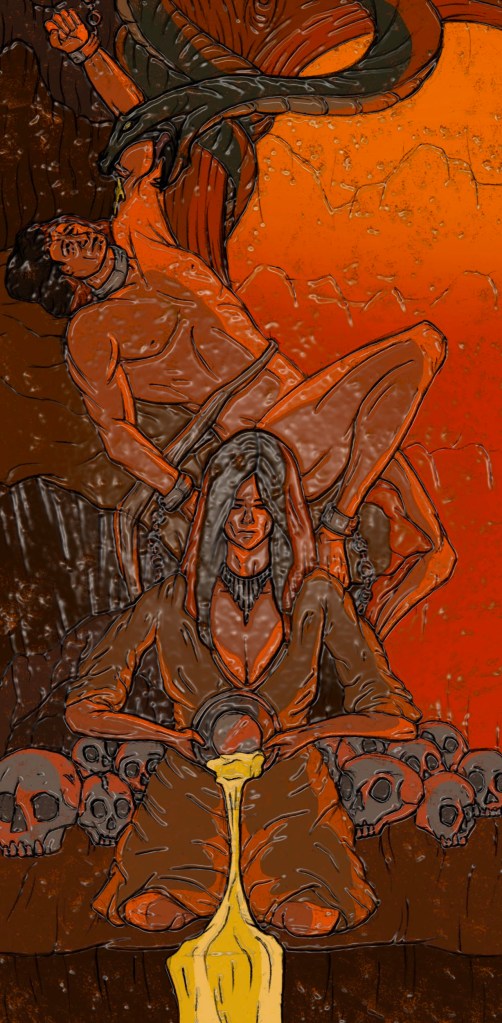
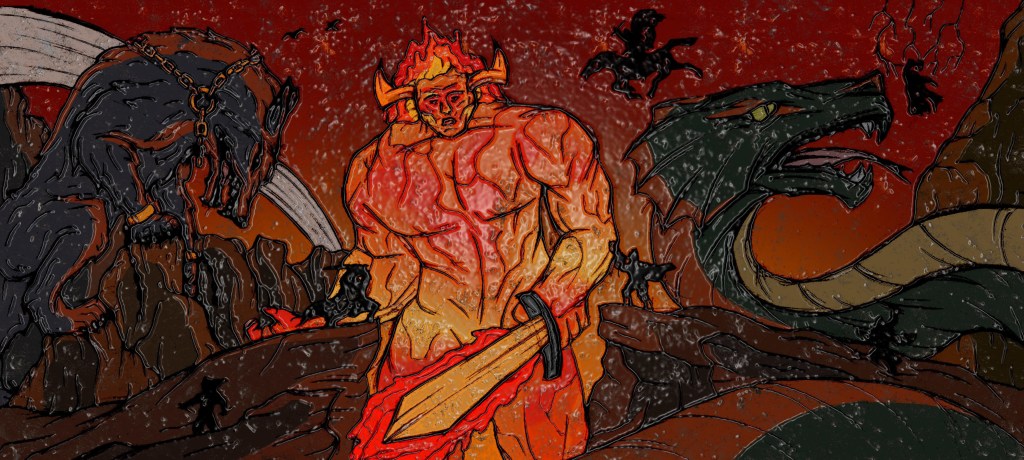
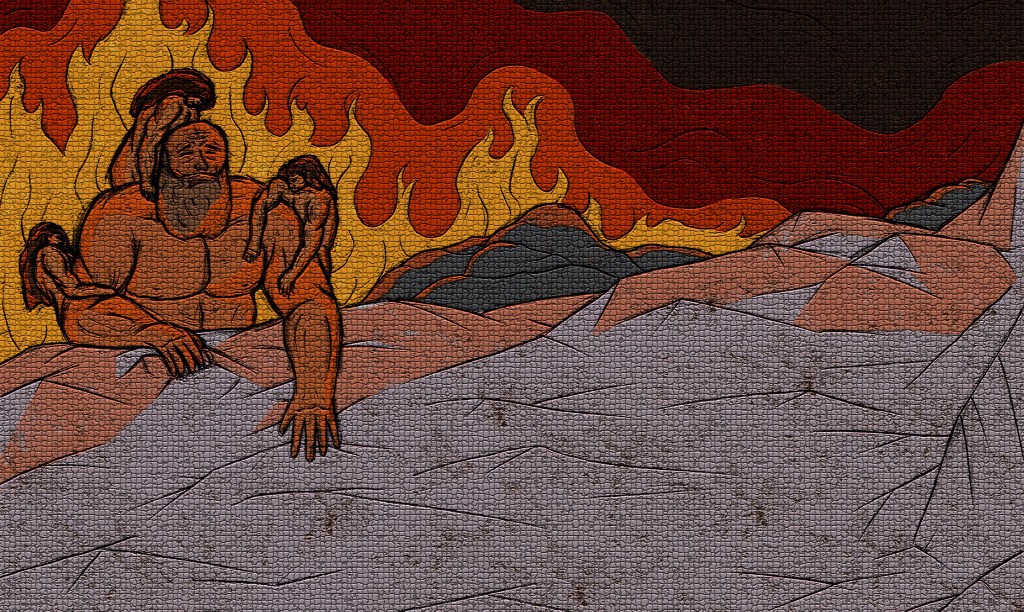
Photoshop filters/editing: all of the other experiments were done on Adobe Photoshop using the image filters. For each I did the whole set of illustrations as I think it’s key that they’re kept as a set. While they work as stand alone images I think they are made better when placed together and get a better sense of the whole story.
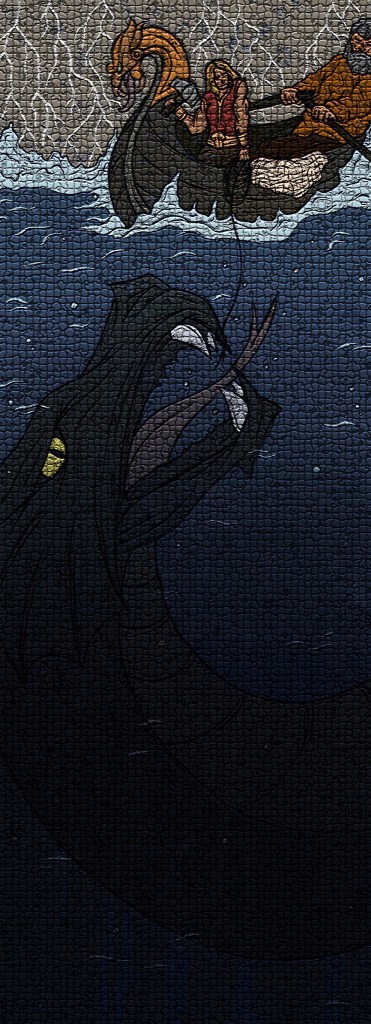
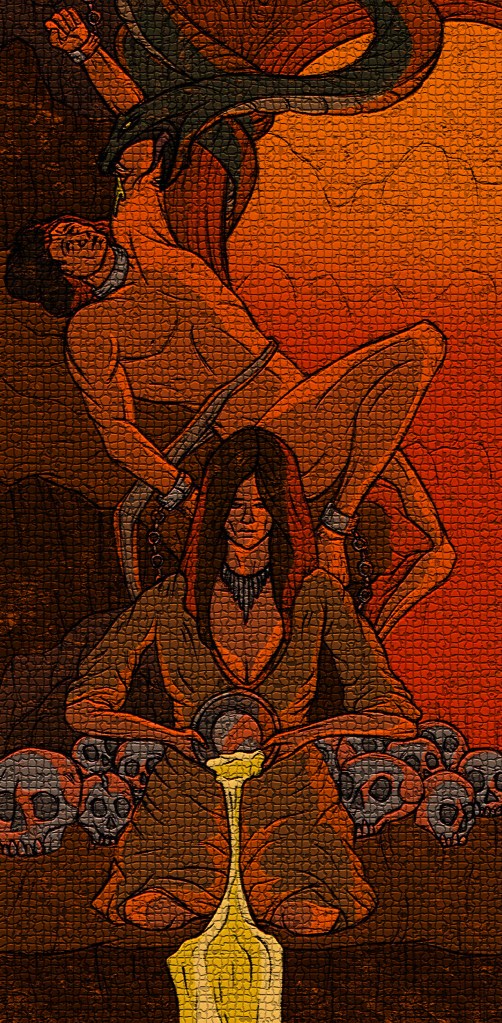
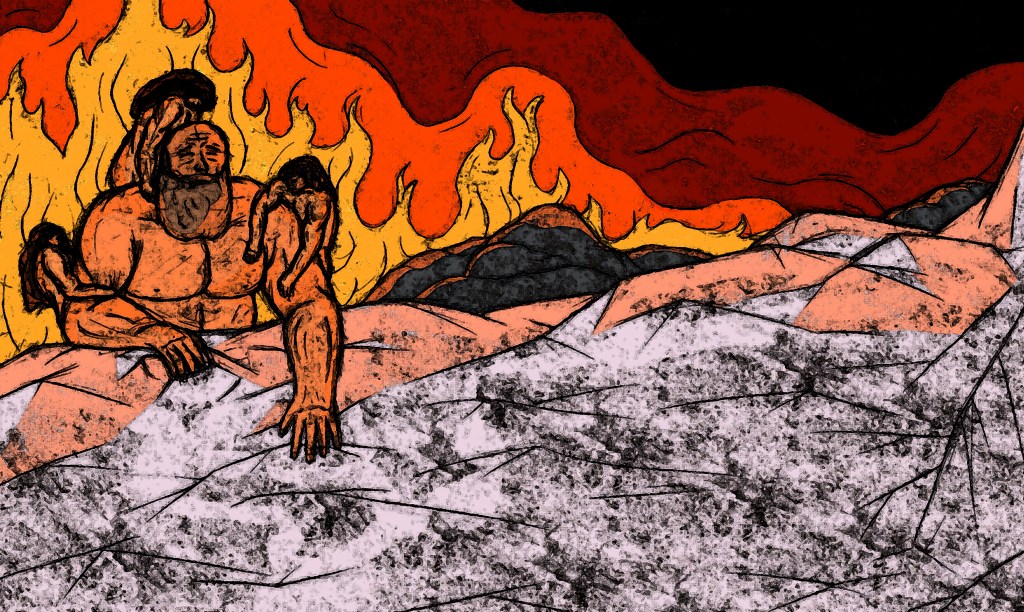
Plastic wrap filter: this filter is my favourite out of all the ones I tried. It makes the images look like glossy tiles. This is an outcome I had never considered but I now think these illustrations could make a really nice set of decorative tiles.
Mosaic filter: continuing with the theme of tiles, I applied a mosaic filter to my series of illustrations. I think having these as mosaic pieces would be interesting as it’s an old technique which contrasts my modern style of illustrations. I can imagine these being big mural style mosaics which would an interesting way to experience them.
Fresco filter: to achieve these I used a combination of the Fesco filter on Photoshop and overlaying some of the textures I created in the creative workshop. This really lightened up the images and added more of a random texture. I like the aesthetic and think they could make interesting posters which could be scaled up or down. I wouldn’t replace the originals with them but I think they’re a fun variant.
Black and white: these are greyscale versions of the colour images. It’s interesting to see how they look without colour as colour was such a key part of my development of the illustrations. I think seeing them like this shows the strength of the designs and compositions and the still tell the stories and are visually strong. However, the colour really elevates them so I wouldn’t use greyscale version of the images for any sort of outcome.
Creating these different experiments was a fun process and gave me some new ideas on what formats and styles my illustrations could take such as a tile or mosaic.
Now that I have my finalised colour illustrations I need to prepare the files for in the correct way for Riso printing. One important thing I did throughout the process of colouring the my images was to put each bit of colour on a different layer. This made adjusting the colour easier and will make creating the colour profiles easier.
Color/shift: downloading colour profiles
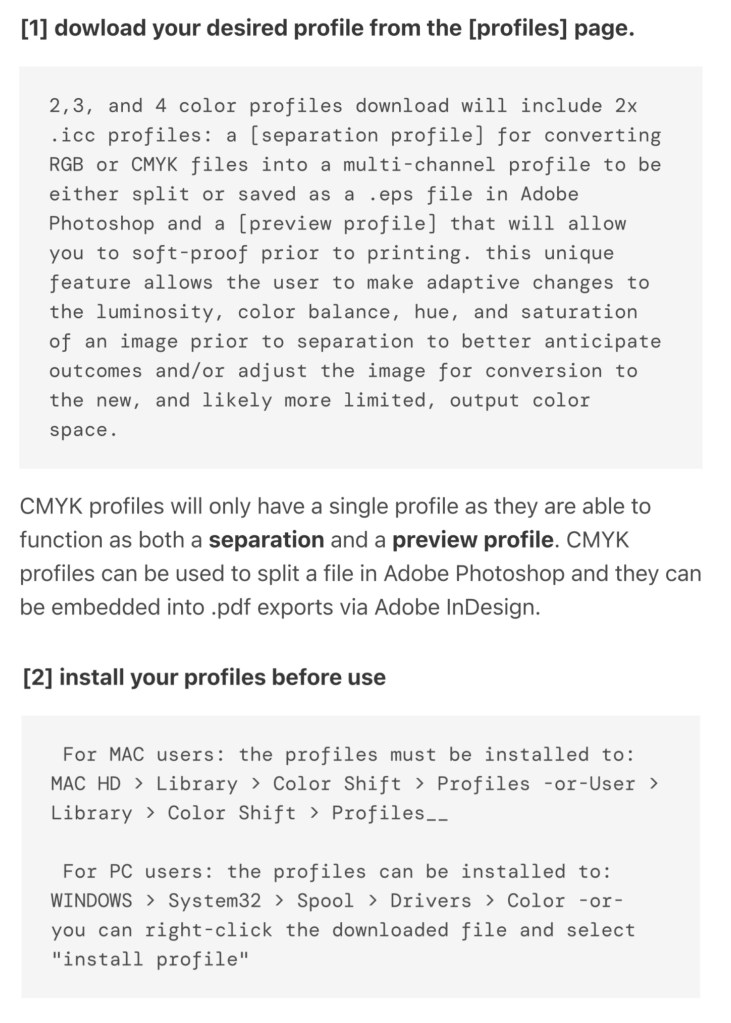
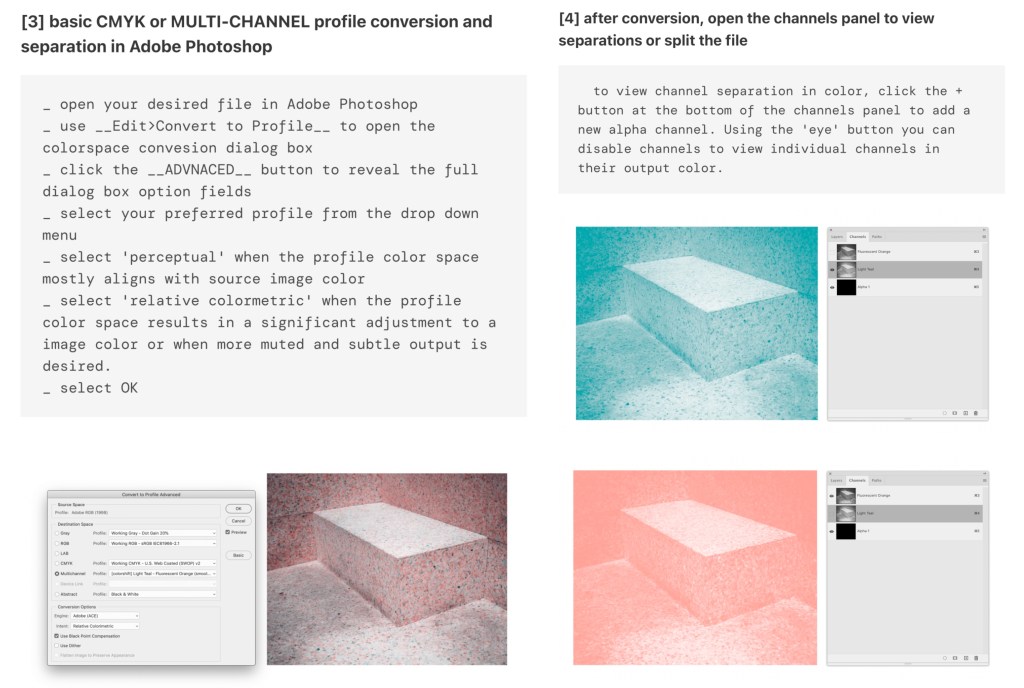
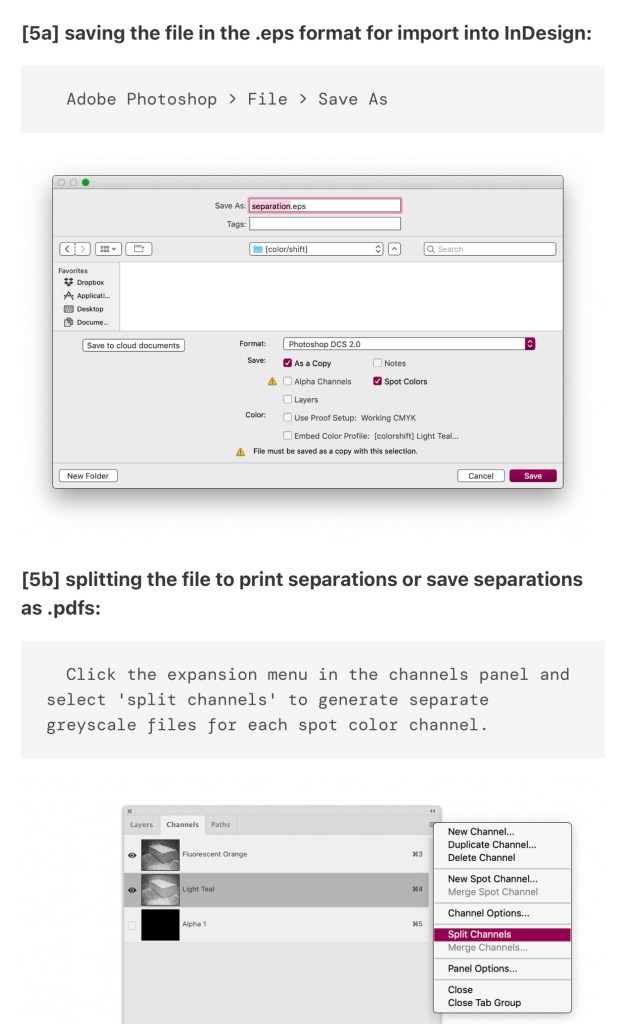
During the induction I learnt about a couple of different websites that can be use to create colour profiles for Riso printing. The one I used was Color/shift. Using this website you can download specific colour profiles and then add them to an image and it will automatically sepertea the colours. Below is the link to their website and a list of instructions on how to download and use different colour profiles:
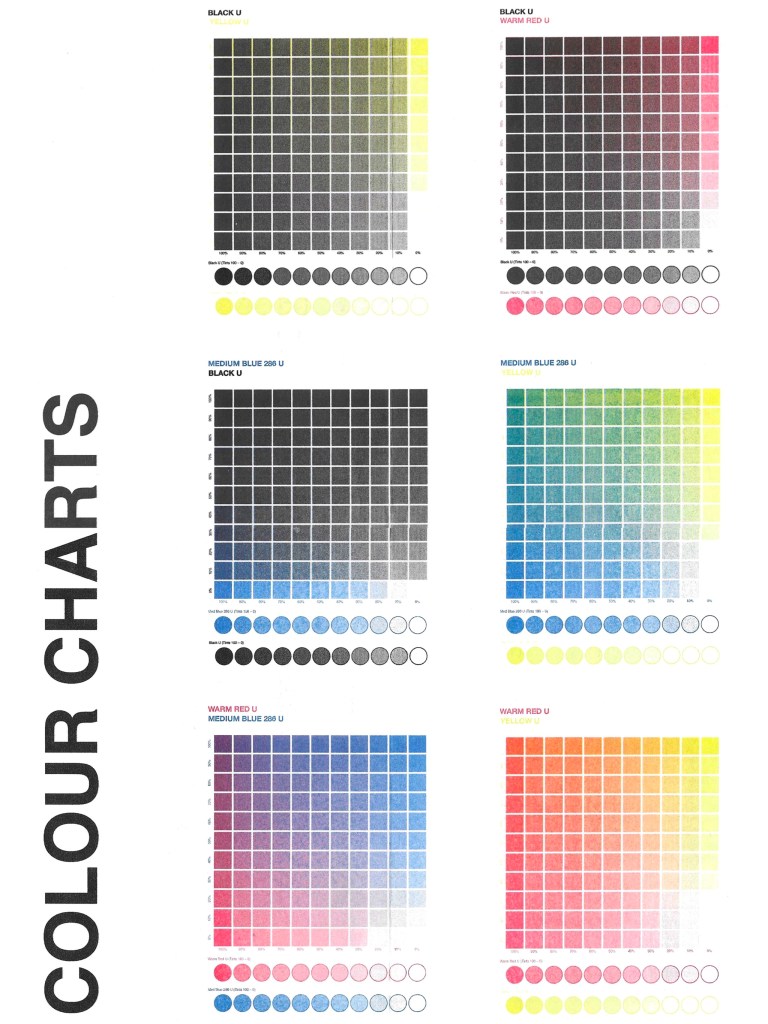
Colours available at University for Riso Printing: when picking what colour profiles to use it was important to keep this colour chart in mind as I will only be able to achieve these colours:
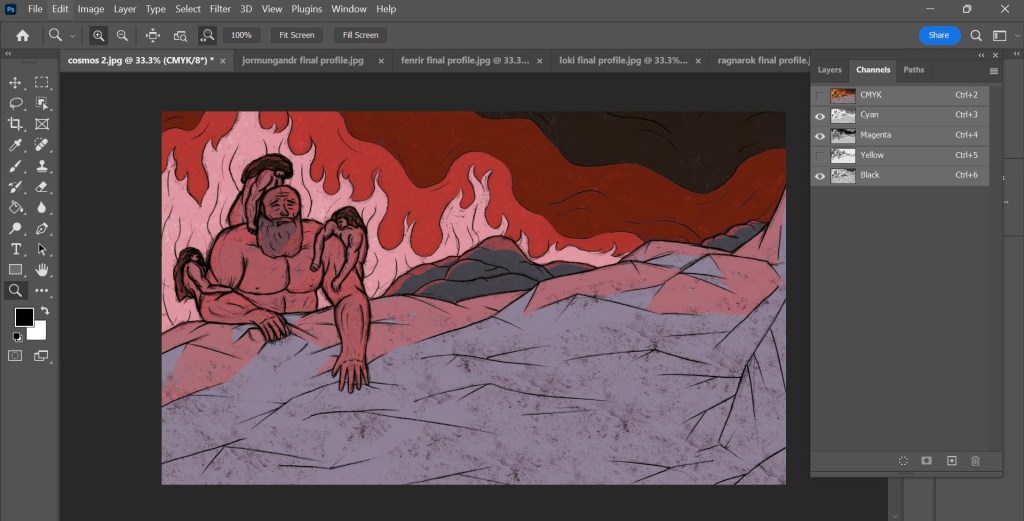
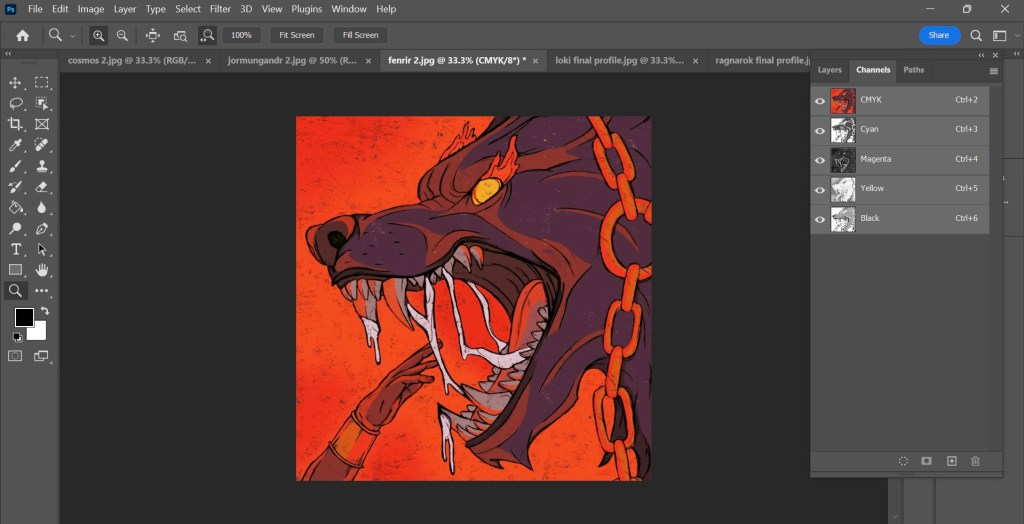
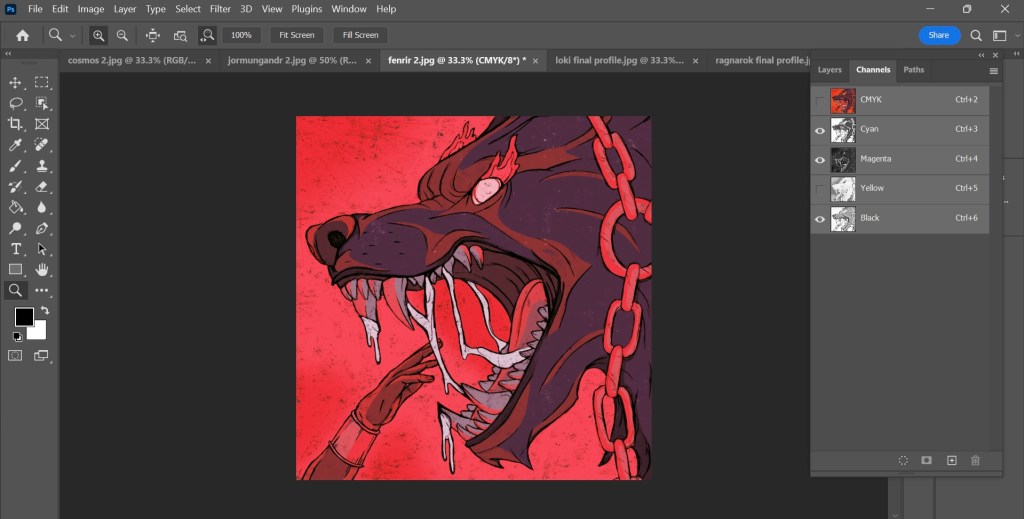
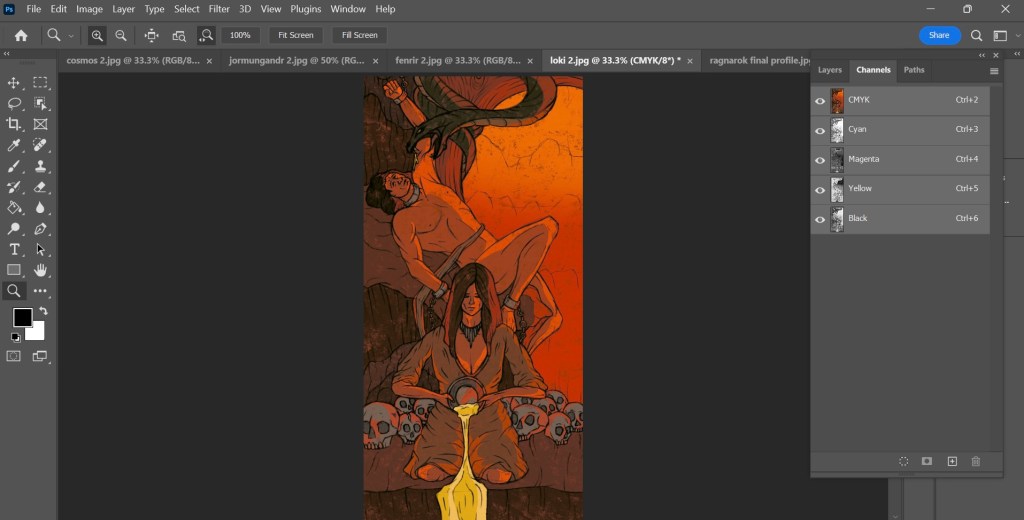
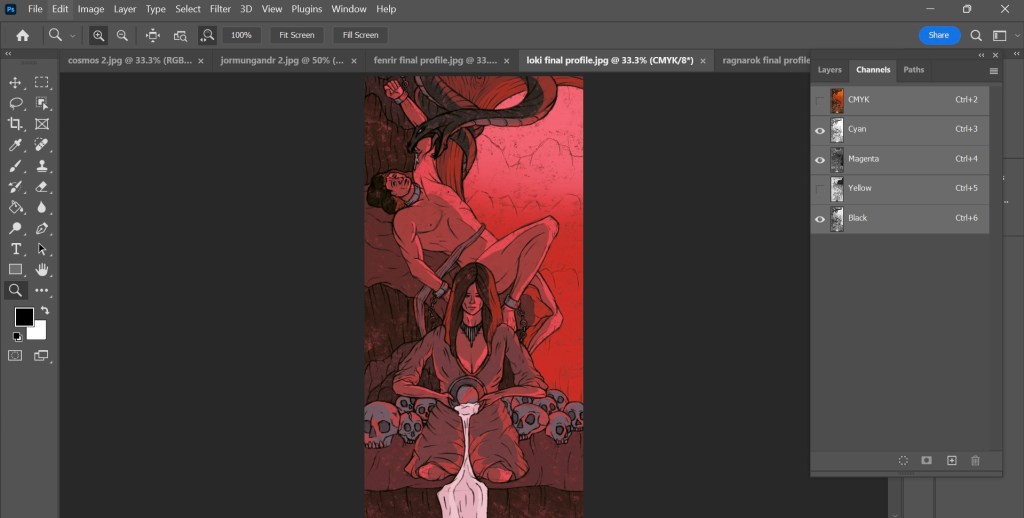
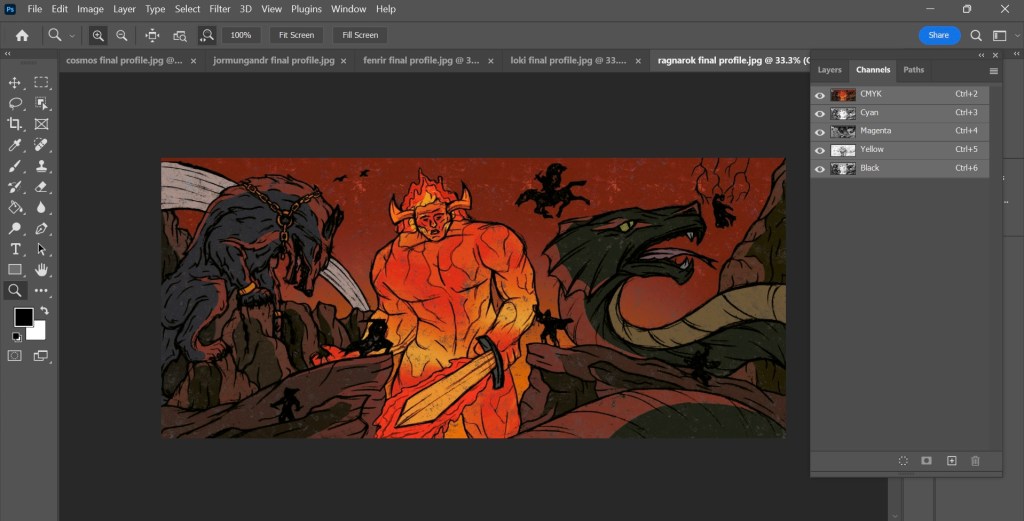
Photoshop Colour Profiles: I downloaded the CMYK colour profile as it is very close to the blue, red, black and yellow that I can use for Riso printing. With this I was able to get an idea of how the prints will look and what potential colour combination I could use. Below are screenshots on the colour profile being applied to my illustrations. The top one for each is a combination of all the colours and the second has one colour removed.
Creation of the Cosmos:
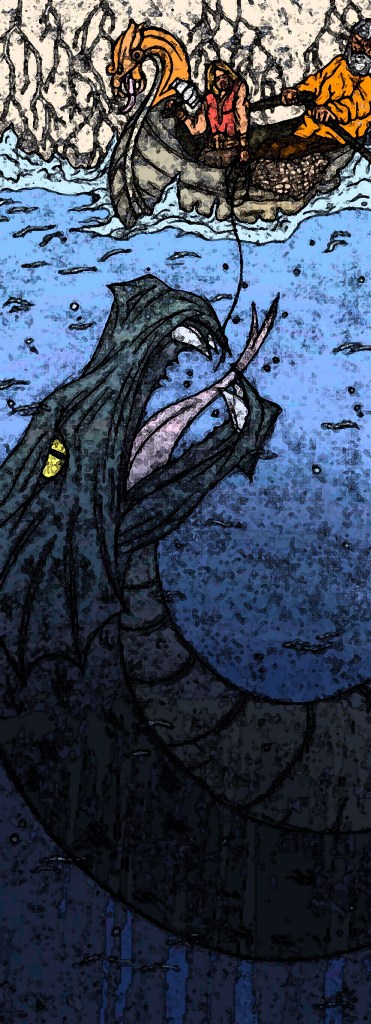
Thor fishing Jormungandr:
Binding of Fenrir:
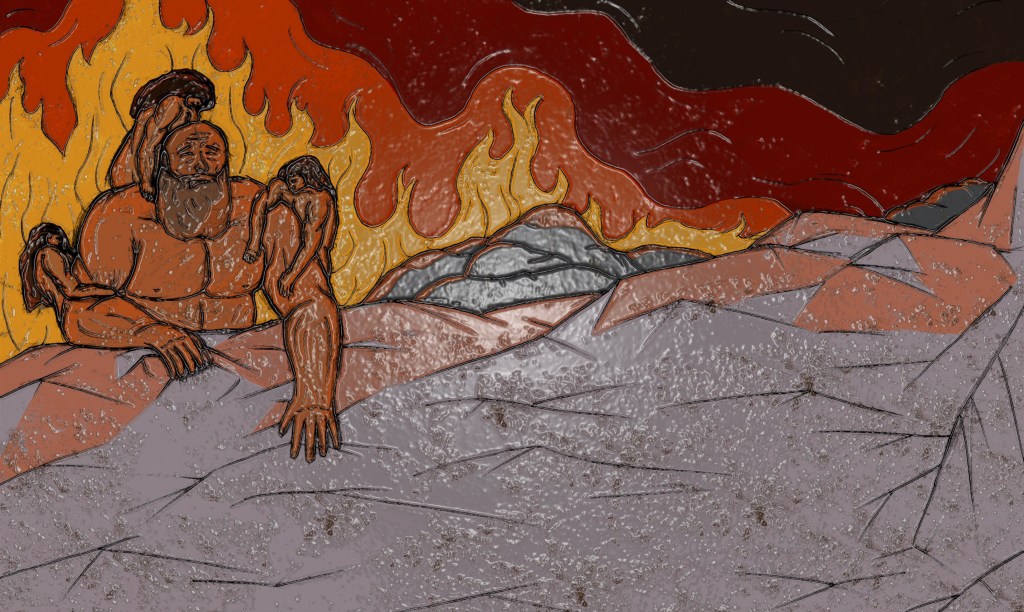
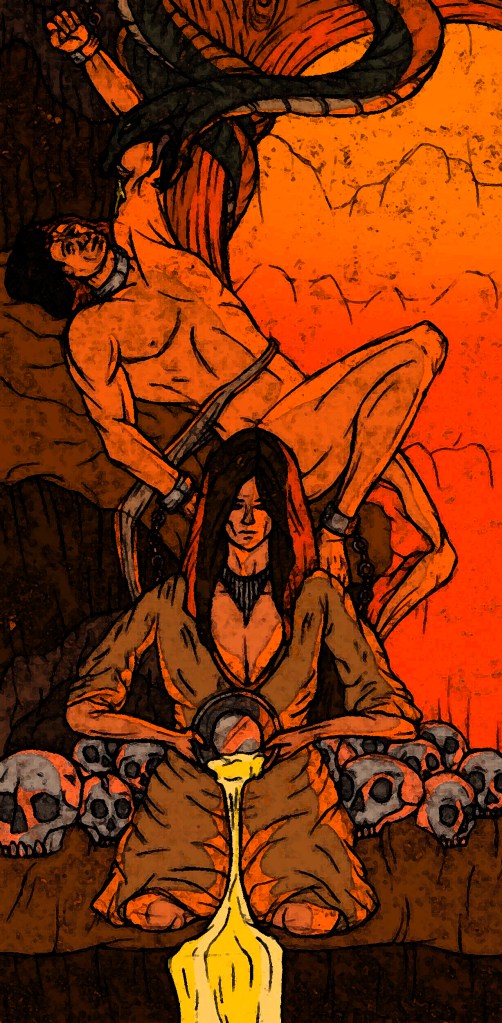
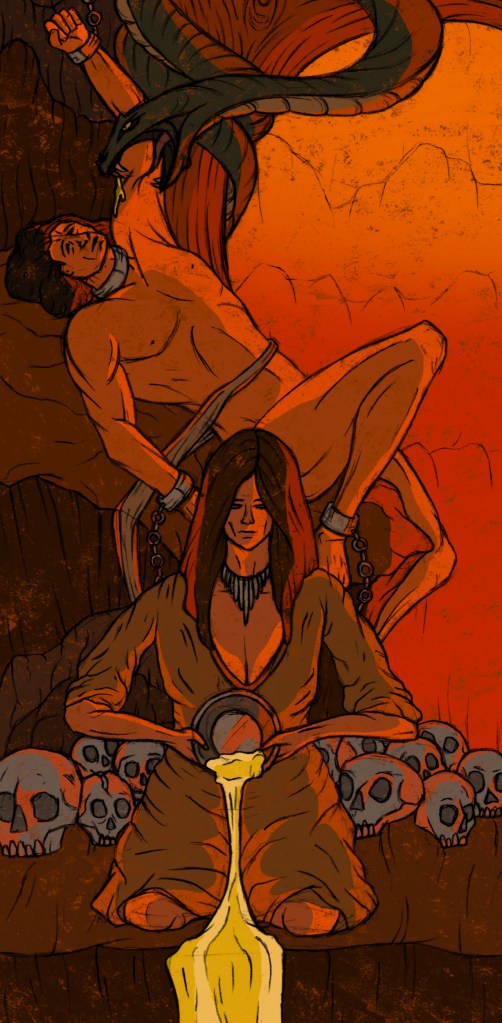
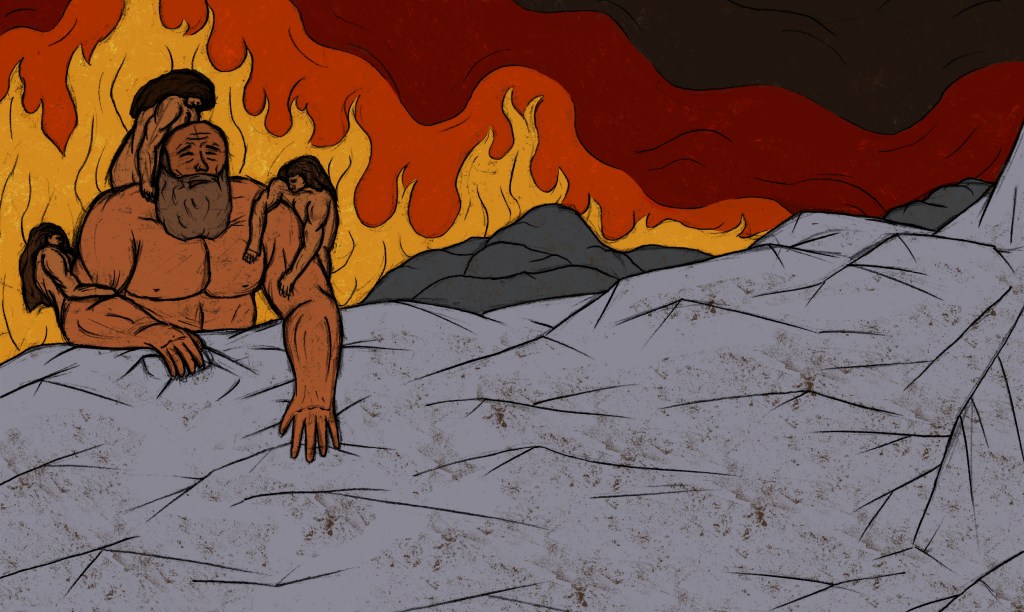
Loki bound:
Ragnarok:
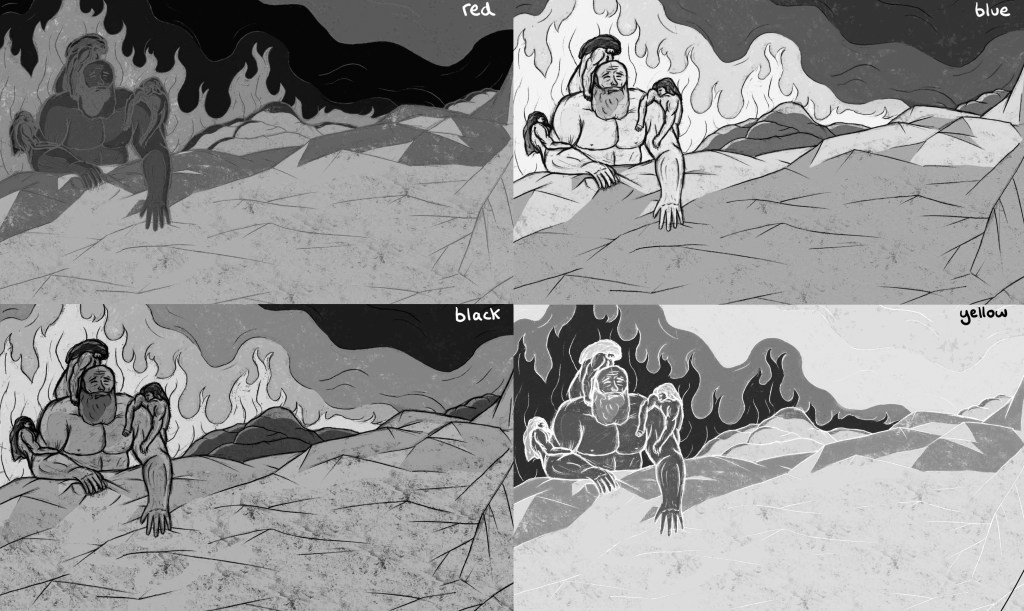
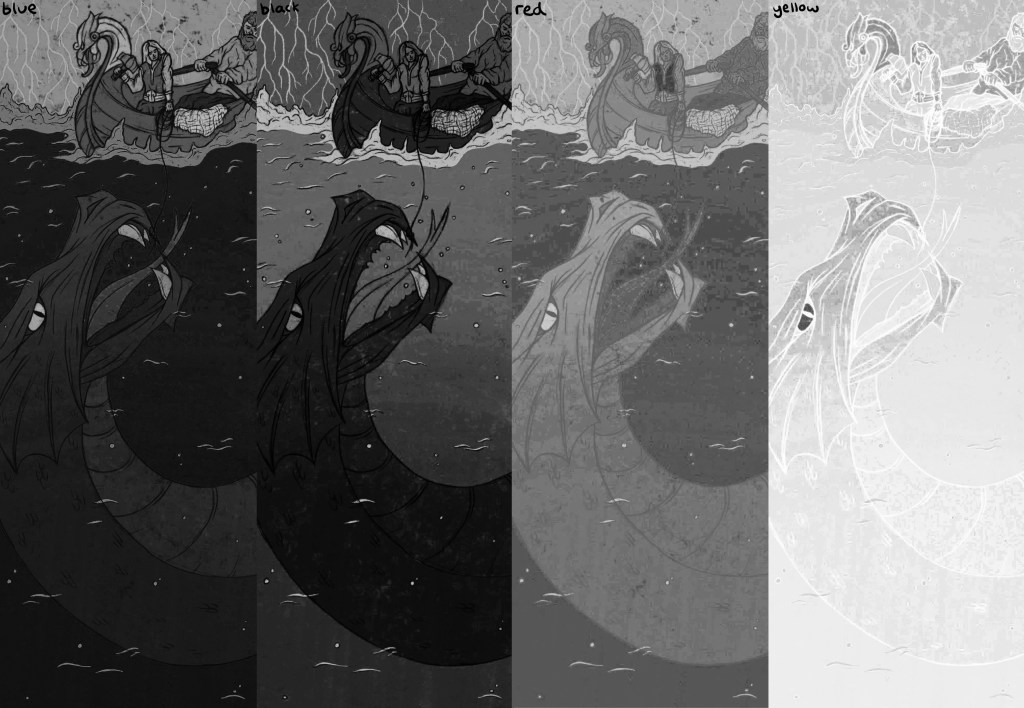
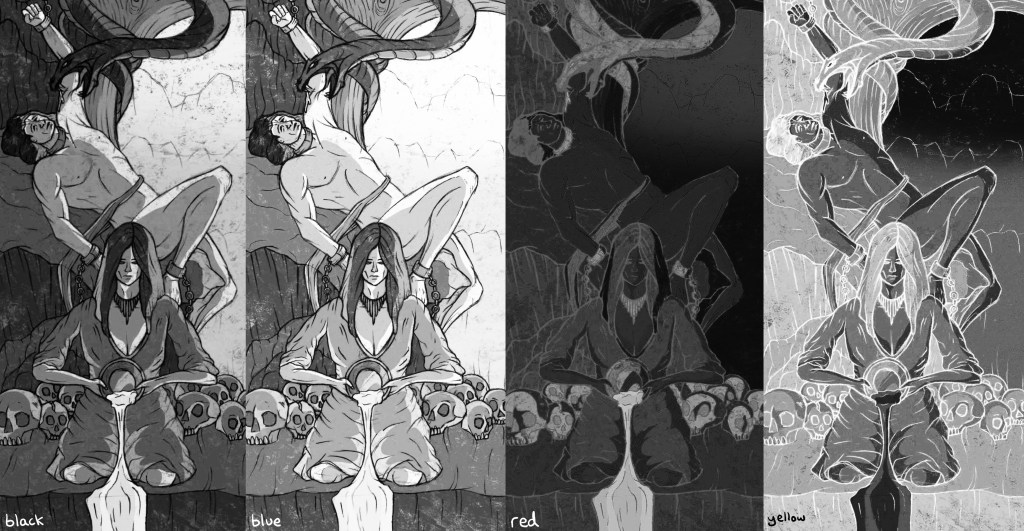
Colour Seperations: after applying the colour profile to my images and experimenting with different combination I separated each layer. When you separate them they automatically become greyscale as this is the format they need to be in for Riso printing. I then saved each separate colour profile as a PDF. Below are the 4 colour separations for each illustration that I can use for printing:
Now that I’ve added the colour profile as saved each colour separation as a PDF I’m ready to begin printing.
I had the base colours for each illustration and after I reflected on them it was time to make the necessary changes and improvements in order to finalise the colour.
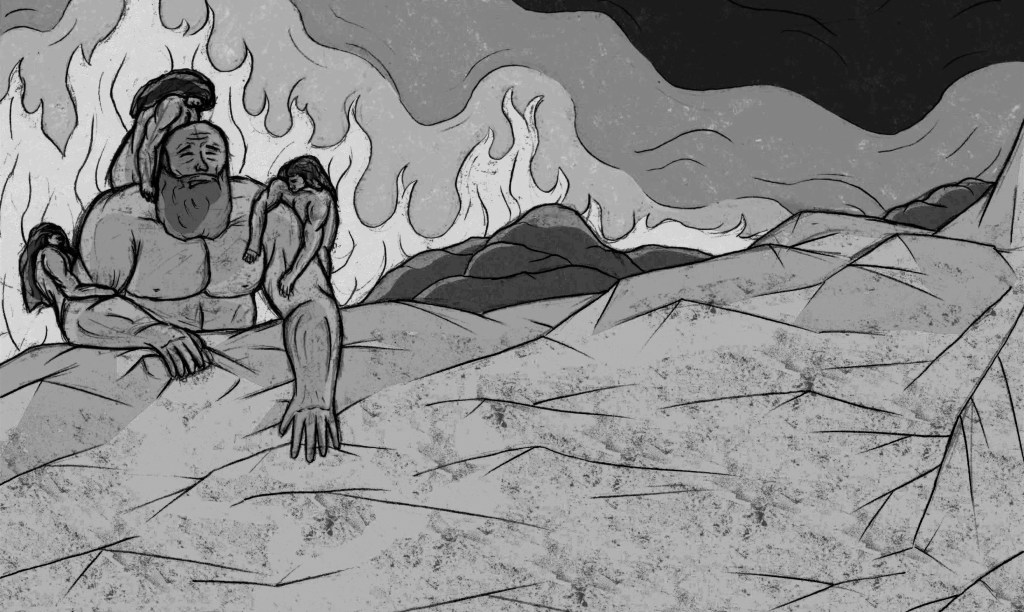
Creation of the cosmos: the main change was adding reflections and glow from the fire onto the characters, rocks and ice. This change really ties the 3 parts of the composition together.
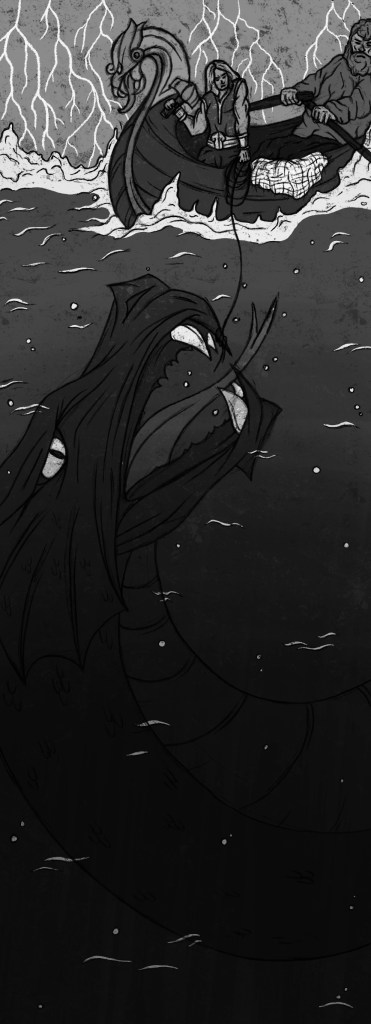
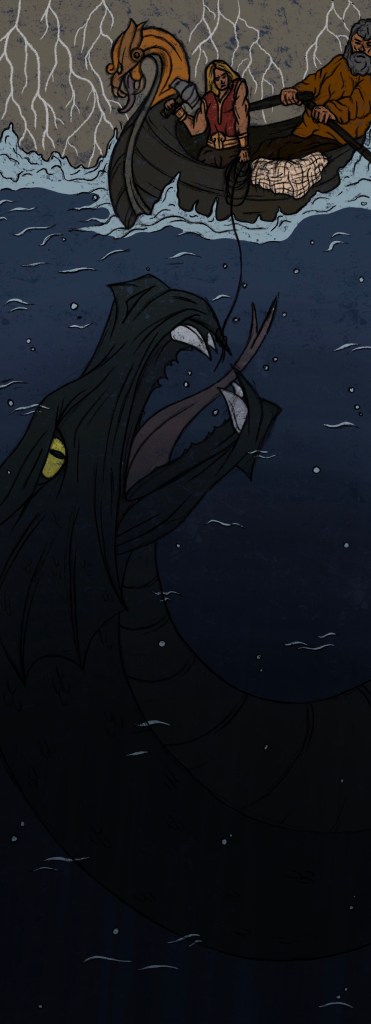
Thor fishing Jormungandr: I made Jörmungandr a less vibrant green and the bottom of the image darker to make Jörmungandr stand out less in the water and be more mysterious. This also makes the eyes and teeth more eye catching.
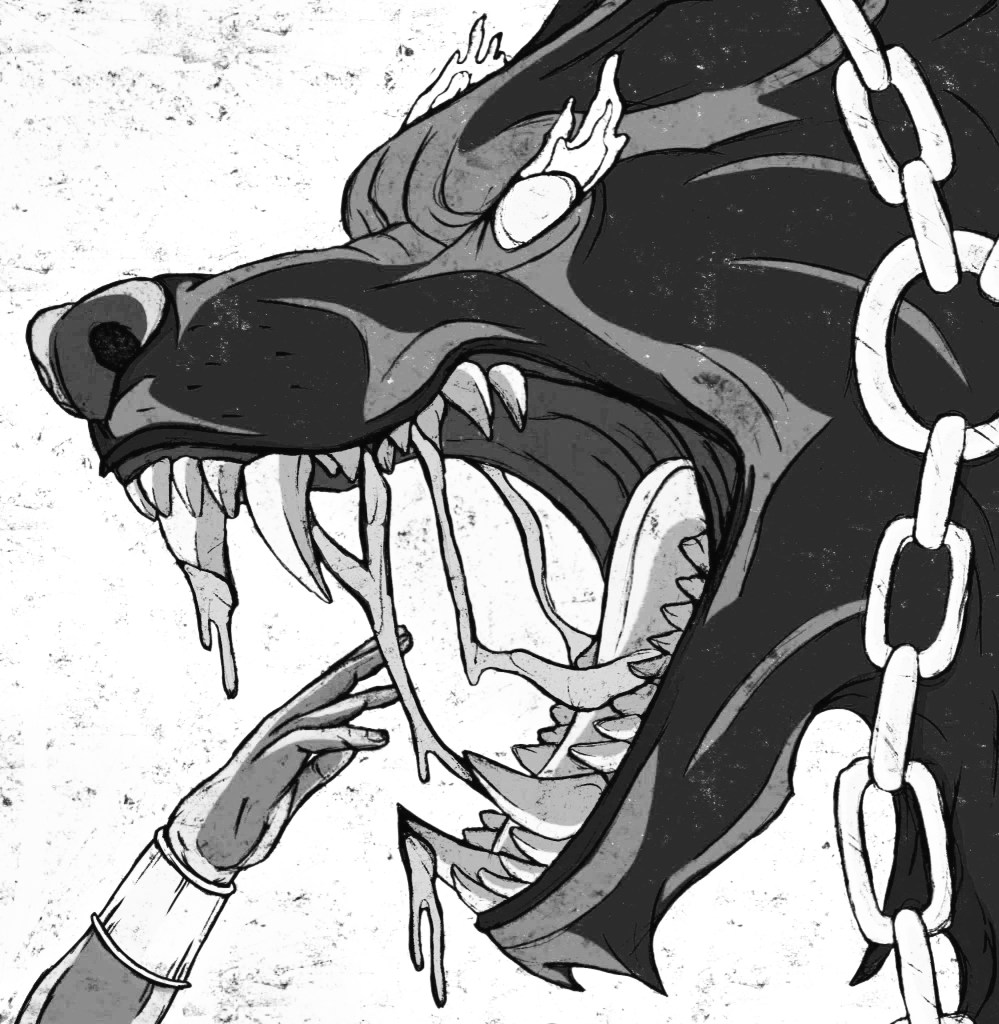
Binding Fenrir: adding in the warm highlights onto the characters really makes the image more dramatic and intense. It also made Fenrir look a lot more menacing and intimidating.
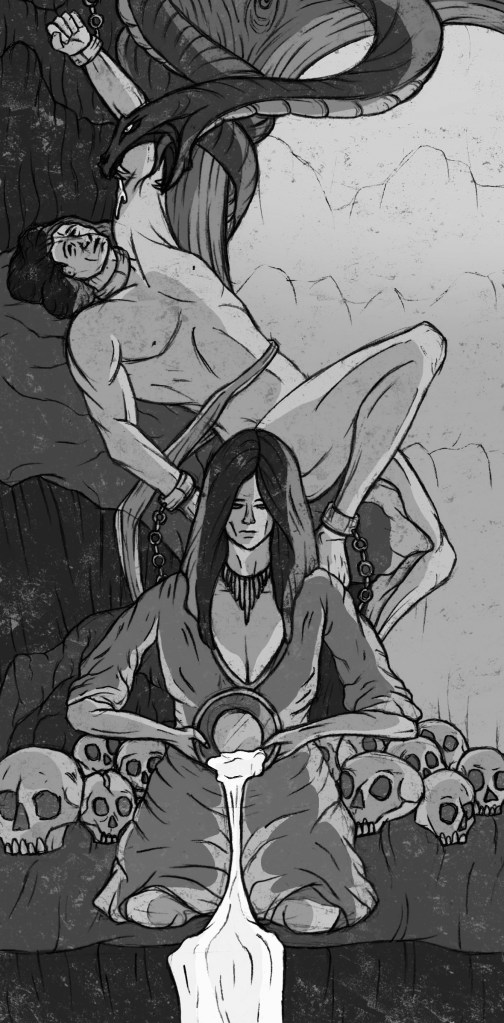
Loki bound: I made the whole composition warmer and added lots of highlights onto the characters and scenery. This now creates an uncomfortable warmth to show the suffering of the characters.
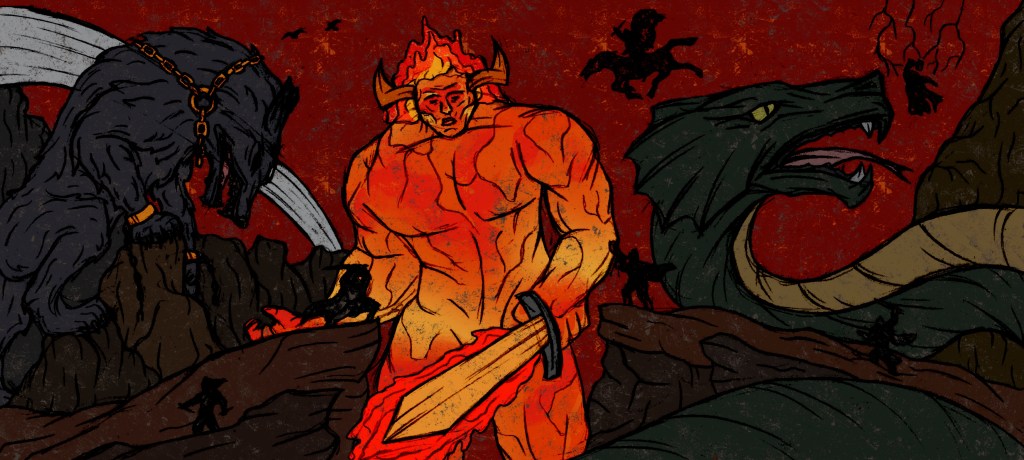
Ragnarok: Surtr now acts as the light source to the whole image. There is a glow from him reflected on all the creatures and scenery. The image now looks a lot more intense and shows the drama of the final battle.
Reflection: Overall I’m happy with the outcome of this project. It turned out better than I was expecting, I was able to achieve smoother and more cinematic stop motion sequences and with the help of João the editing and audio are much more detailed than I had planned. I think it fulfils the brief well, as its topic and style is centred around the theme of play. I chose the subject to be a game of chess which is an example of play that is enjoyed globally by adults and children. I was able to successfully combine digital and analogue approaches. I learnt lots of new digital softwares including Dragon Frame, Adobe Premier Pro, Adobe After Effects and Adobe Audition. I combined this with analogue media such as the paper cut out animations and stop motion. I think the combination of these approaches is fun, visually engaging and unique.
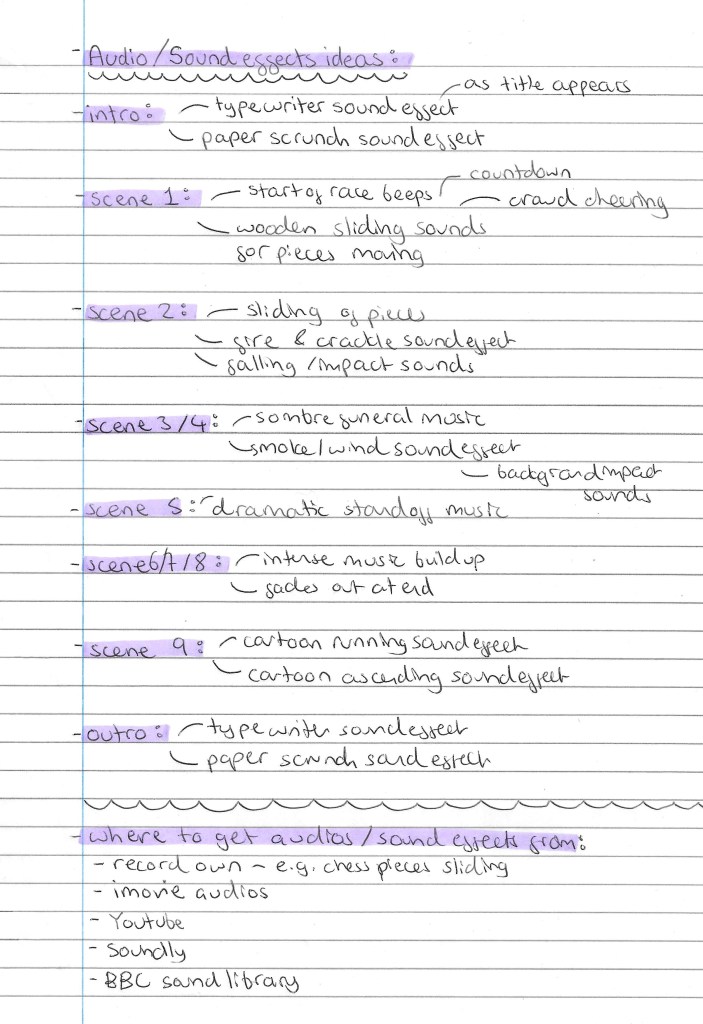
Adobe Audition is a software I have never used before and had absolutely no knowledge of so I was able to learn a lot from the session we had using it. Before we started creating the audio for the video we made a plan for what sound effects and audios we wanted at each part of the video. In the same way we did for planning the visual effects, we independently made a list of our ideas. Then we each shared our ideas and discussed them to create a joint list. The list below is our joint plan for the videos audio:
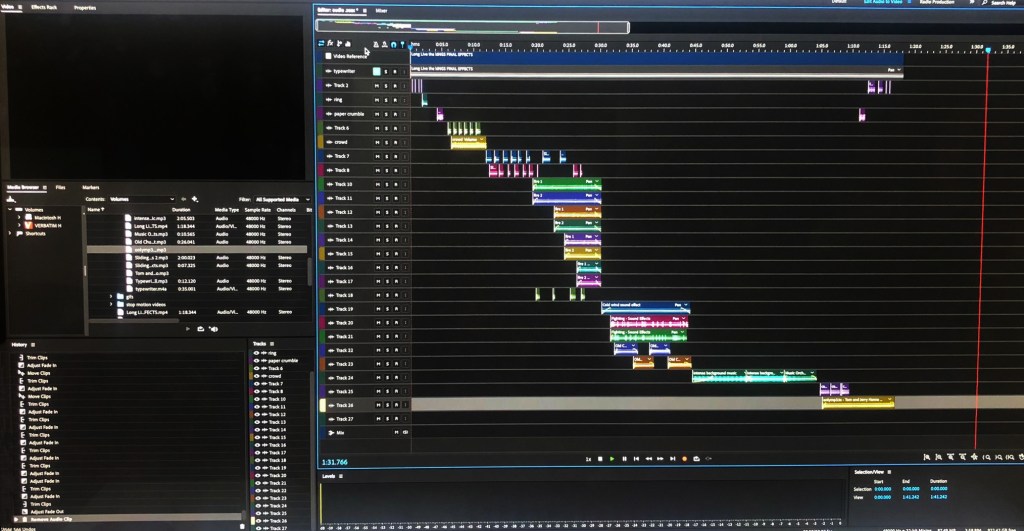
The hardest part was finding all the audios and sound effects we wanted. We got them from a range of places including YouTube, IMovie, BBC sound library and some of our own recordings. João was pretty confident with the software and I was able to pick it up pretty fast as it’s not overly complex to use. As a result of this we were able to create a more complex and advanced audio that we had planned. There’s lots of layers to the audio throughout with precise editing in terms of when the audios start and stop and how loud each layer is at what time. We were able to create the audio for the whole video in one session. Below is a photo from our Adobe Audition session:
Base Colours: I scanned my final sketches and edited them to make them look like they were drawn in pen rather than pencil. To colour my images I used Procreate. I have a large range of brushes I can use and created some of my own textured brushes from the images I made in the creative workshop. This post shows all my illustrations with base colours. Before starting I had a pretty good idea of the colour palette I wanted for each image. I took inspiration from the Norse mythology colour palette which consists of colours found of Norse artefacts.
Creation of the cosmos: this image is divided into 2 distinct sections with different palettes. The top sections is fire so has a very warm feeling and the bottom is ice with a much cooler palette. This contrast is key to telling the Norse creation story. This image needs the 2 parts to merge more so I will add reflections of the fire onto the characters and ice.
Thor fishing Jormungandr: I wanted this image to have a more earthy palette which is why I went for lots of greens, blues and browns. These colours work as a nice and cohesive palette. There are a couple points of contrast that really stand out, the eyes and teeth of Jörmungandr. I want to try emphasise these more to make them more eye catching for the viewer. Another alteration I want to make is to have the bottom of the image darker, to hide Jörmungandr more and make him seem like he’s rising from the depths of the ocean.
Binding of Fenrir: the contrast between the intense warmth of the orange and the cool tones of Fenrir are really striking. I’m really happy with the colours, the image just needs reflections of the warmth on the characters to much it feel like the heat it surrounding them rather than just behind them. I think this change will significantly improve the design and make it less flat.
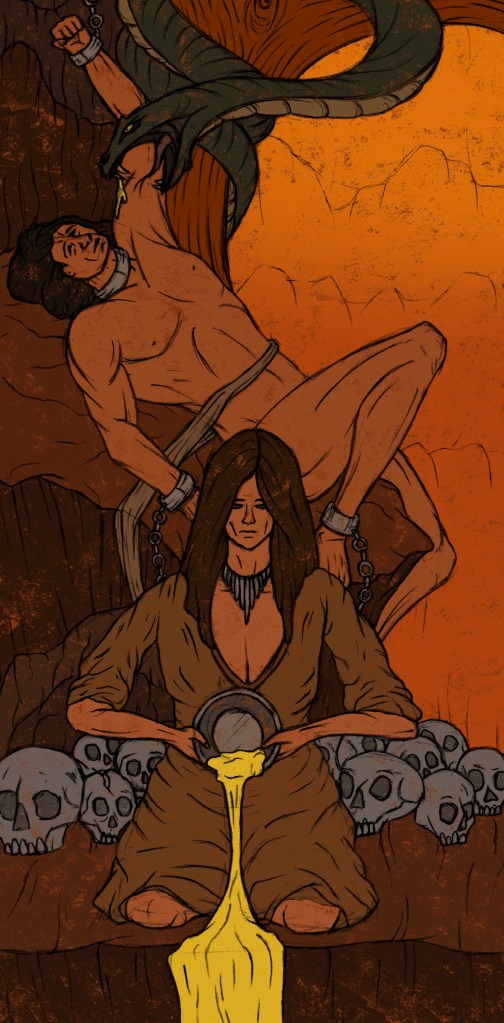
Loki bound: the colour palette of this image had the smallest range, mostly just consisting of shades of brown and yellow. I wanted this image to feel almost uncomfortably hot to show the suffering of the characters. The current colours are too muted to really translate this idea. I’ll need to add in more orange and highlights will play a key parts in creating this sense of overwhelming heat.
Ragnarok: this image has the most diverse colour palette. The background a scenery is mostly deep red and a mixture of dark browns. The gods are simple black silhouettes. Each of the creatures has their own colours. I’m happy with this distribution of colour but my main issue with it currently is that it’s generally too dark. It needs more light and warmth radiating from the centre (Surtr) to lighten up the rest of the characters/surroundings.
The next step will be to add in lighting, highlights and shadows to make them all feel more dramatic and visually engaging. This will be a key part in getting across the narrative of the images as at the moment they feel pretty flat and a bit lifeless.
Before this project I had more knowledge of After Effects than I did of Premiere, having had a workshop on it earlier in the semester. In the workshop and my own independent study I was able to create some simple animations and was happy with the progress. However, After Effects is a more complicated and extensive software so there is plenty of basics still to learn and hopefully I can learn some more specific and advanced skills.
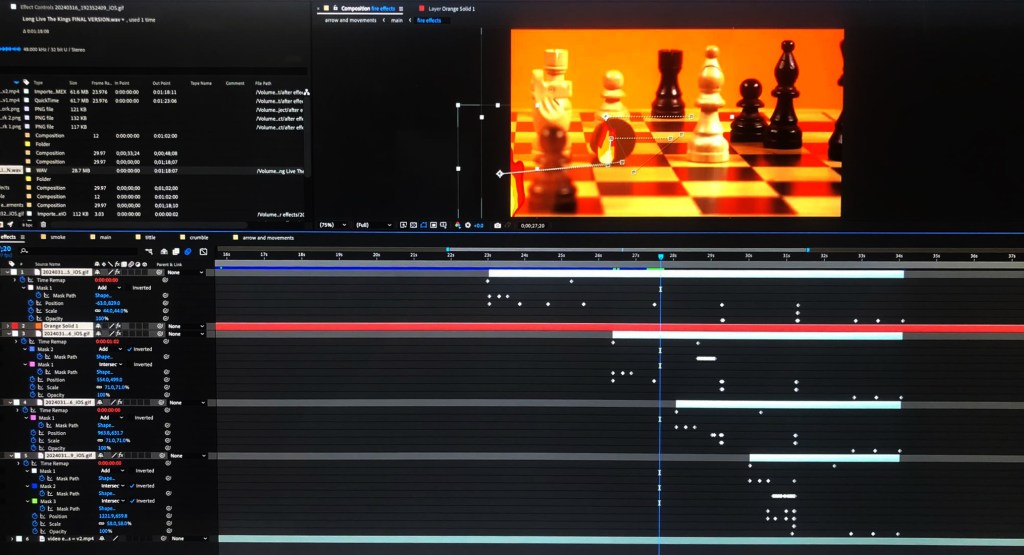
Thanks to having João join the project we were able to achieve more advanced and technical editing than I could have achieved on my own. I think particularly during our After Effects sessions we had a really good working relationship as we where able to continually develop on each others ideas which really helped us advance the editing beyond our original plans. On here we did lots of work with the title, outro sequence, fire, smoke and movement lines. One particular tool that I learnt a lot about was masking. In several sequences we drew and animated masks using key framing. The scene that has the editing I’m most proud of is scene 2, the battle scene. It has colour correction, zooms, fire, glow, movement lines and masking. Below is a photo of our work on After Effects:
This is how the video looked by the end of our 2 sessions of After Effects:
From this video there wasn’t any corrections we felt needed to be made so we can take this straight to Adobe Audition and start working on the final part, the audio.
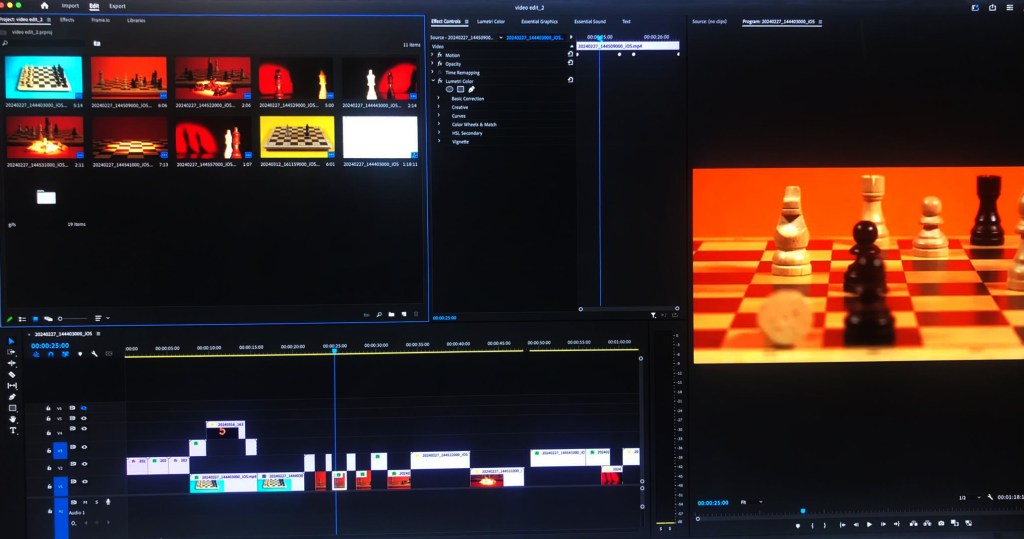
Prior to this project I only had a very basic knowledge of Premier Pro from watching demos and tutorials I hadn’t actually made anything on it myself. This was the first software that me and João used as it’s a video creation tool. One part that I was unsure about before was how to correctly set up folders on Premiere. If the media isn’t saved correctly Premiere won’t be able to load it when you next open it. This will delay the process and mean that they you need to go through and manually ‘link media’ 1 by 1. To save everything we created a folder on the desktop and then at the end of the session saved onto my OneDrive and his hard drive.
What we did on Premier was import all of the chess stop motion sequences and the GIFs of the 2D paper cut out. With this we put them all in the right order, adjusted the speed and duration of each sequence, adding the transitions we wanted. We were able to make some of the shots more cinematic and intense by using zooms and framing techniques. We also did some colour correction to some of the shots to make them look more vibrant and intense. This is a photo of our work on Premiere:
This is what we had made by the end of our session on Premiere Pro:
After reviewing the video we made on Premier there are some bits I was unhappy with and want to change before we start editing on After Effects. For example I want the scrunching of the paper to be faster as I think it’s currently takes up too much time and distracts from the flow of the video.

















 Samuel Green Illustration