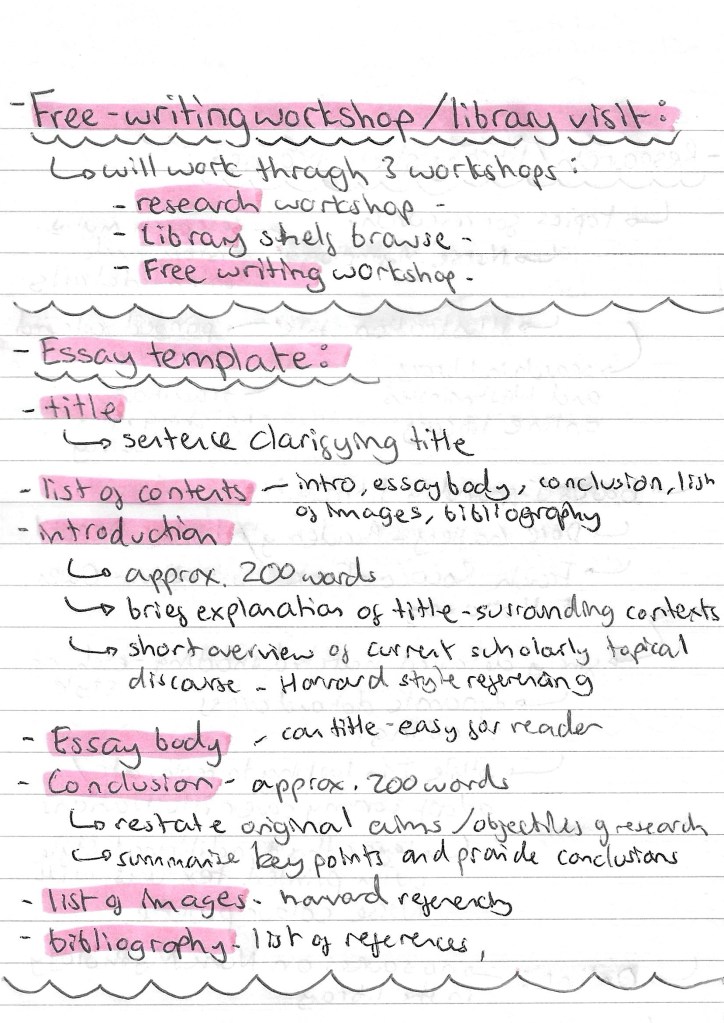
In this session we did a little bit on our essays, looking at the structure and formalities of an academic essay that we needed to follow. I took some notes of this which can be seen below. The main part was a research workshop where we visited the University library to find inspiration for our essays.
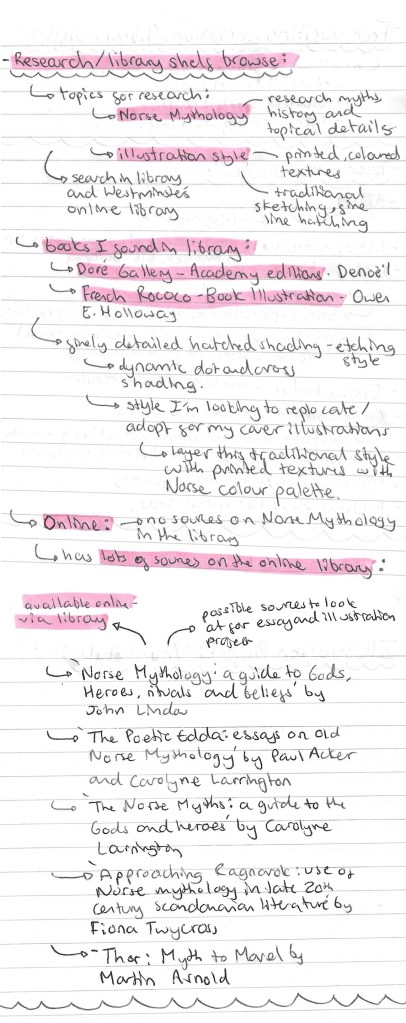
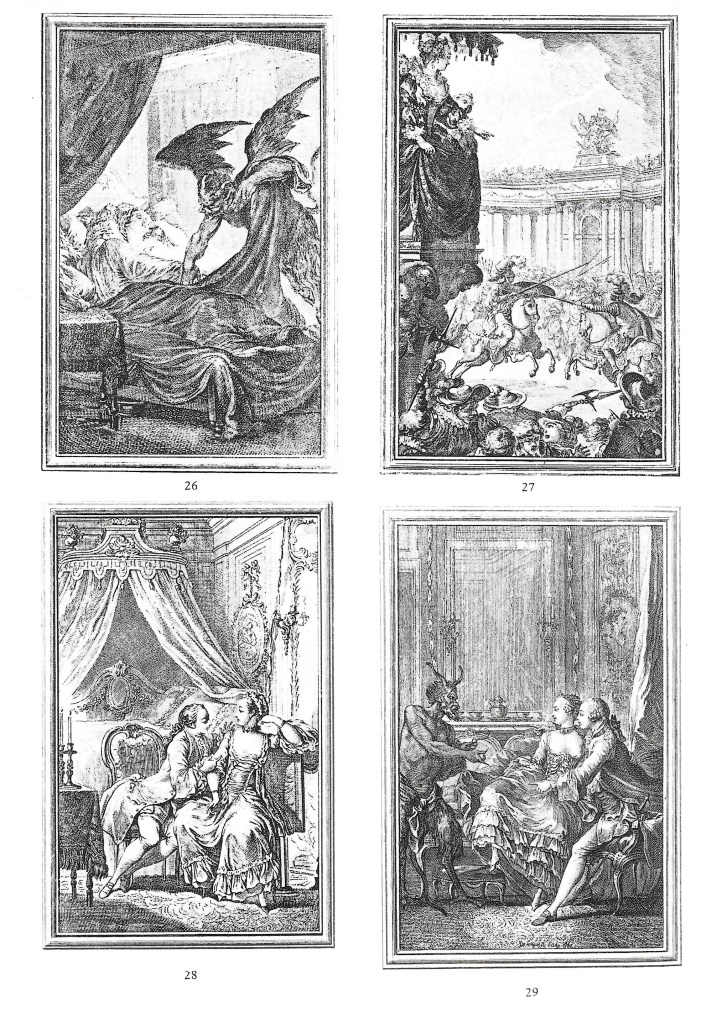
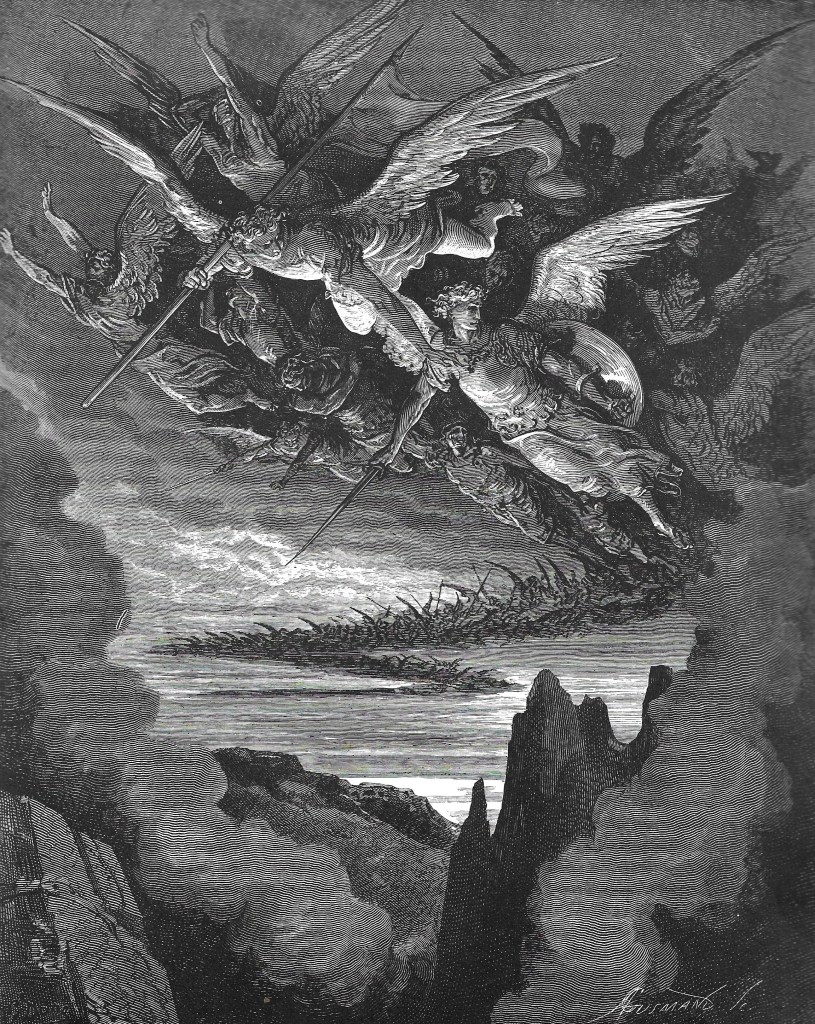
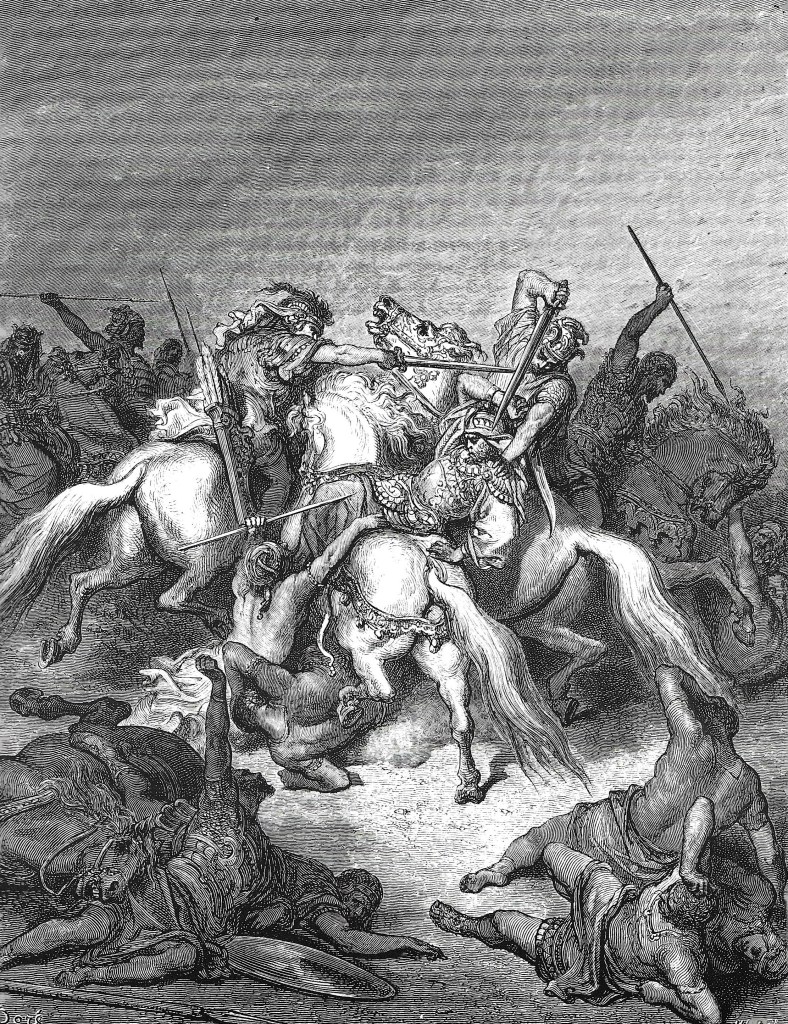
I was initially looking for books about Norse mythology but soon discovered that there were very few books about this topic in the library. There are a lot of sources about it on the online library so I looked there and made a list of possible reference for me to look at. I then chose to expand what I was looking for and try to find visual reference material rather than factual material about Norse Mythology. I started researching books that had highly detailed hatching illustrations as this is a style I’m thinking about incorporating into my project. I was able to find a couple books with this style called ‘French Rococo’ by Owen E. Holloway and ‘Doré Gallery- Academy editions’ by Denoël.
French Rococo Book Illustration – Owen E. Holloway
Doré Gallery – Denoël
This session was beneficial in getting more ideas for this visual style of my Norse Mythology project. Initially the library search was frustrating as I was just looking for sources on Norse mythology and couldn’t find any but when I broadened my search to find inspiration for the visual style it was more successful. By the end of the session I found lots of references on Norse mythology through the universities online library and a couple of books with detailed hatching illustrations that I’ll take inspiration from for my project.
Developing project ideas: the idea I’m working on for my project is to illustrate a series of myths, creating 1 illustration for each. I want that illustration to act as a ‘cover’ for the story. Not in the sense of a book cover but more as a single image that tells the story showing the gods, creatures and story. These images could then be applied to many contexts. The series will have a consistent visual style. I am aiming for my work to be versatile in regard to format and audience. Below I made a list of some of the most important Norse myths and marked ones of initial interest to me:
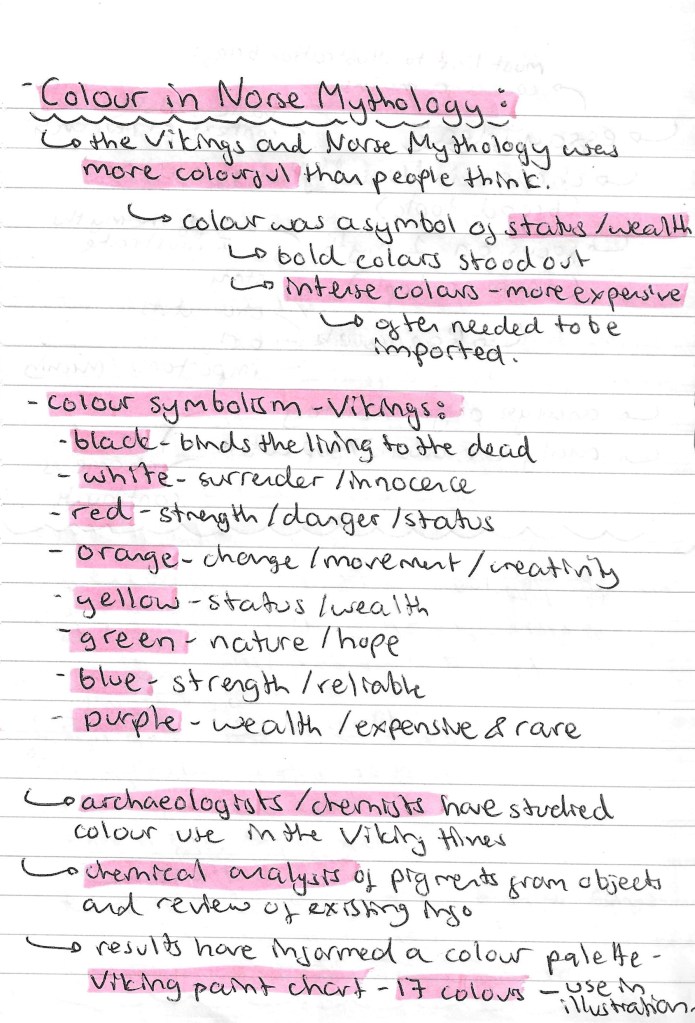
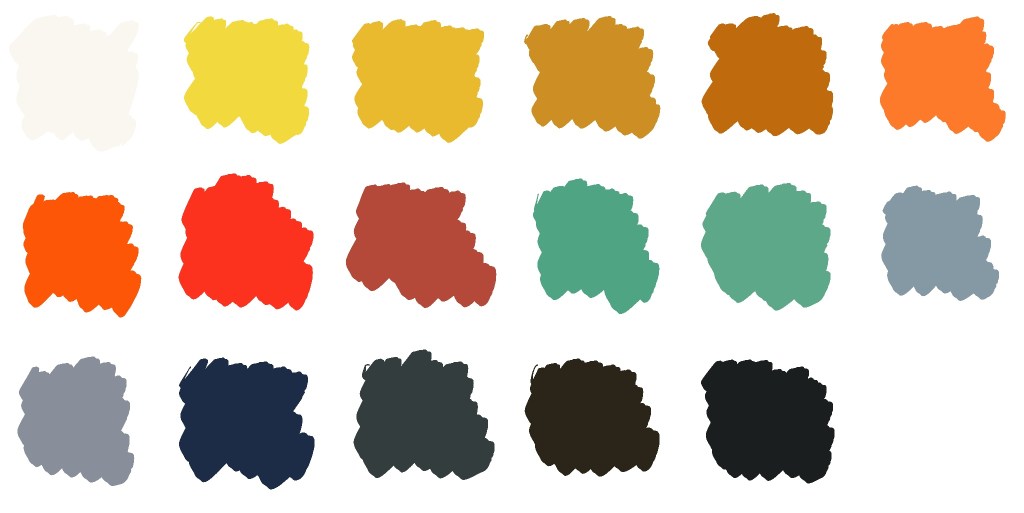
Colours in Norse Mythology: a topic that interests me is the colours used by the Vikings. I researched this as I’d like to achieve an authentic colour palette in my illustrations. The Vikings were more colourful than people may think, with colour being a symbol of status/wealth. Bold and bright colours were more expensive and often needed to be imported. Below is a list of colour symbolism for the Vikings, these are ideas I could bring into my illustrations. I found a colour palette that was created based of chemical and archaeological analysis of Viking artefacts. The palette has 17 colours.
Norse colour palette: The palette has a nice range of earthen tones and string warm colours. Using just this palette you could create eye catching and authentic illustrations.
I added this palette to Procreate and Photoshop, the 2 main drawing softwares that I use.
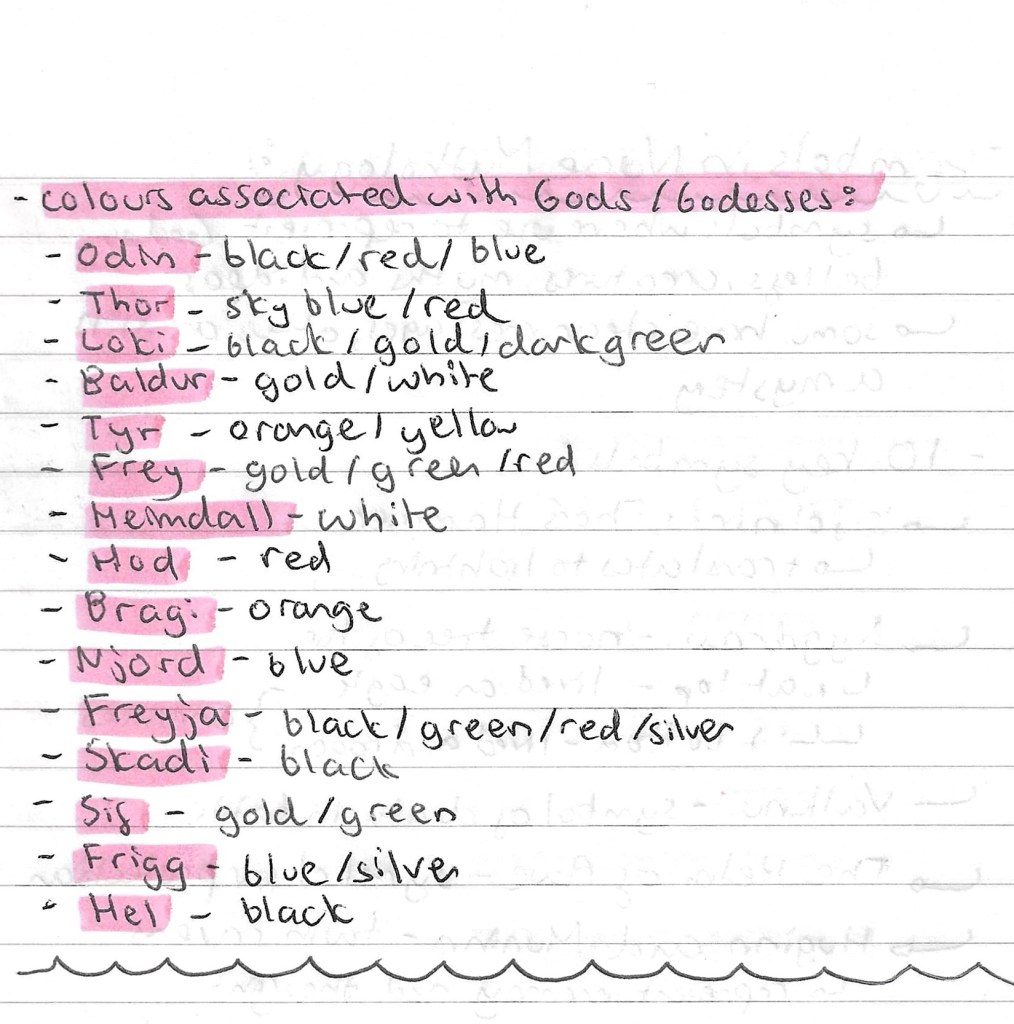
This is a list of colours associated with different Norse gods and goddesses. I plan to use these ideas and the general Norse colour symbolism in my project.
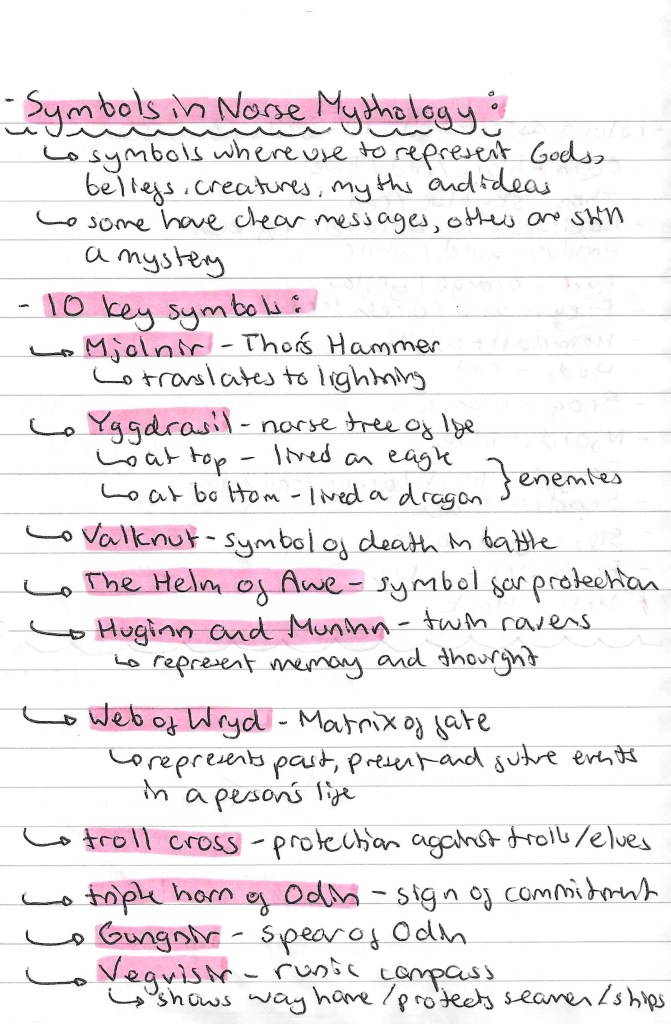
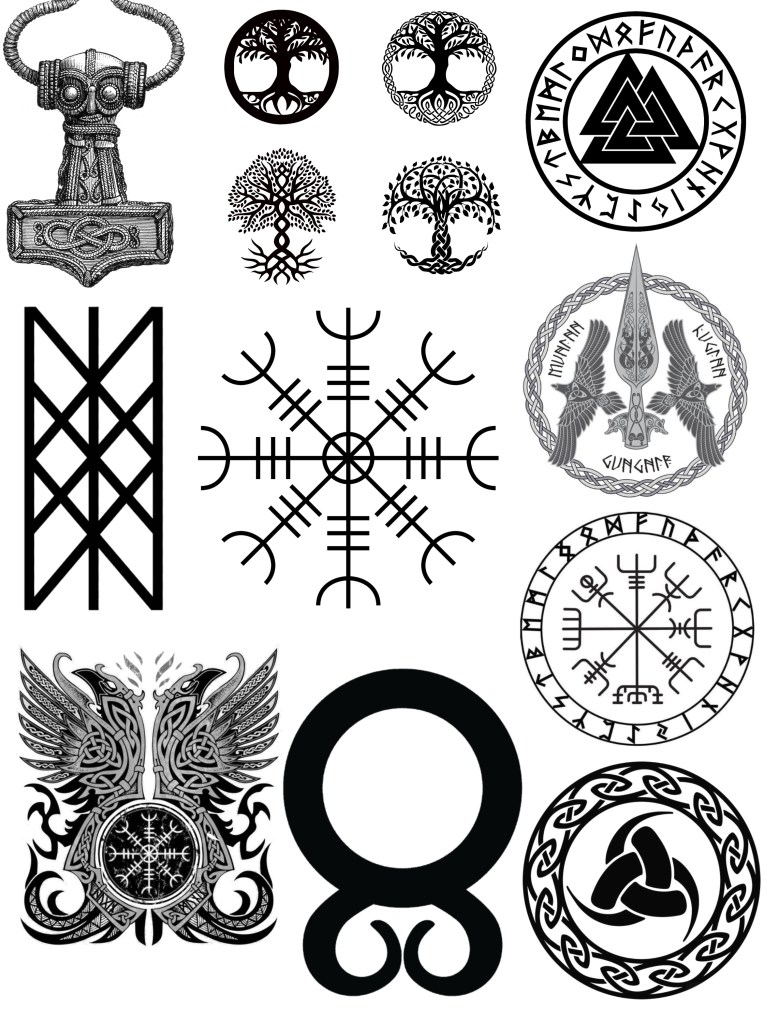
Symbols in Norse Mythology: symbols are important in Norse mythology, often being used in Norse artworks. Symbols were used by Vikings to represent gods, beliefs, creatures, myths and objects. Including some subtle symbol in my work could be an interesting element. Below is a list of 10 important symbols in Norse mythology, a brief description of what it represents and an image of each:
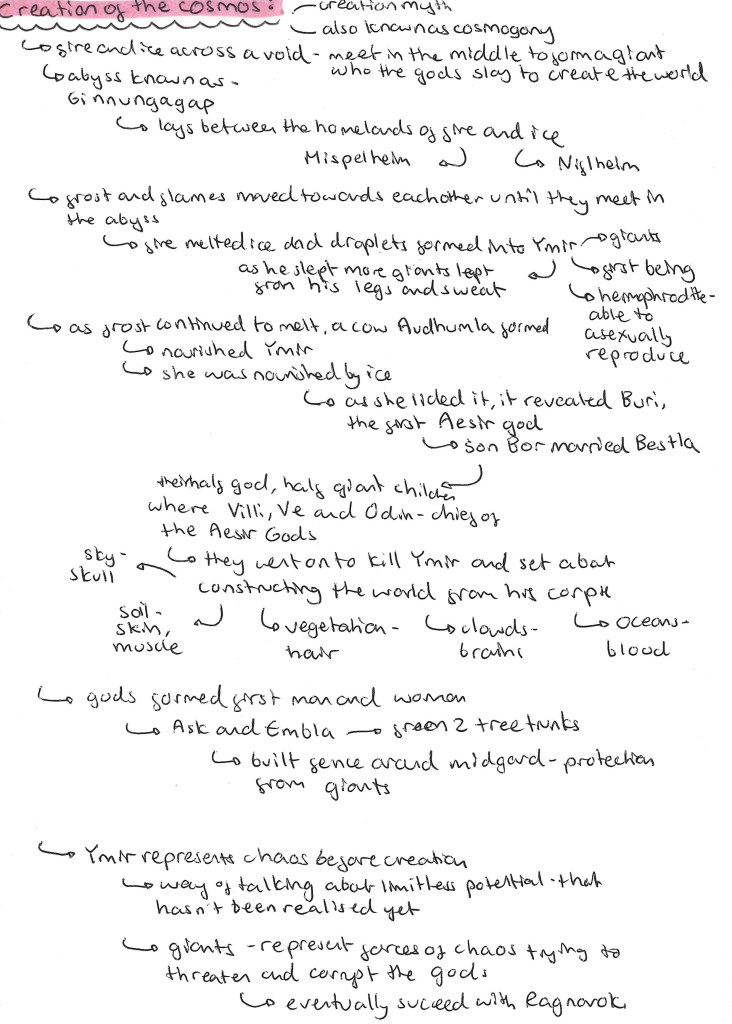
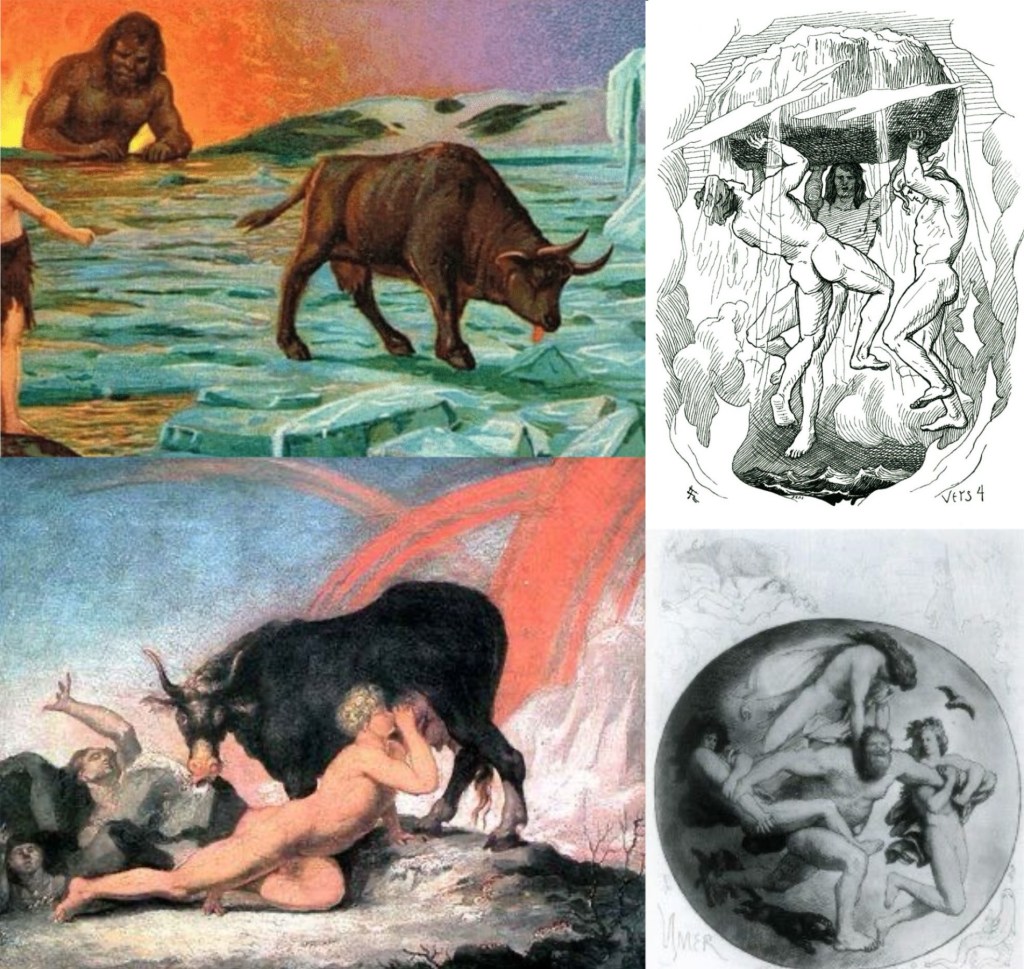
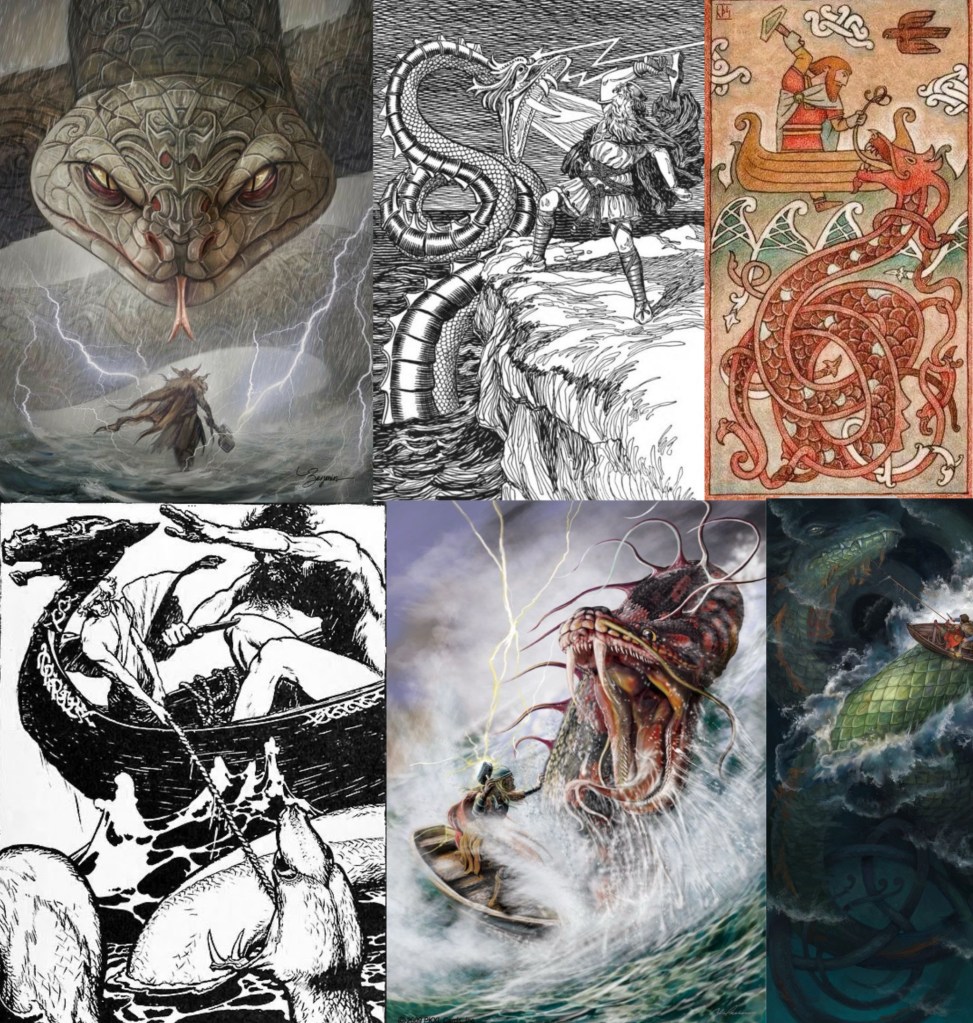
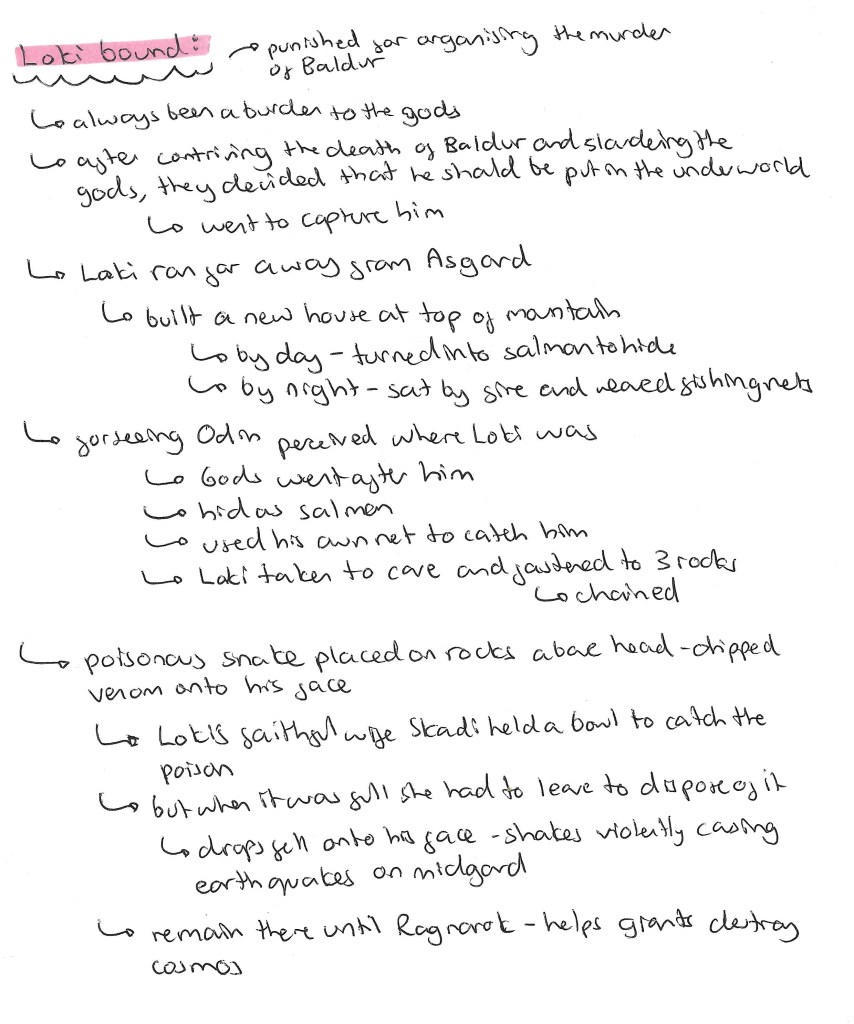
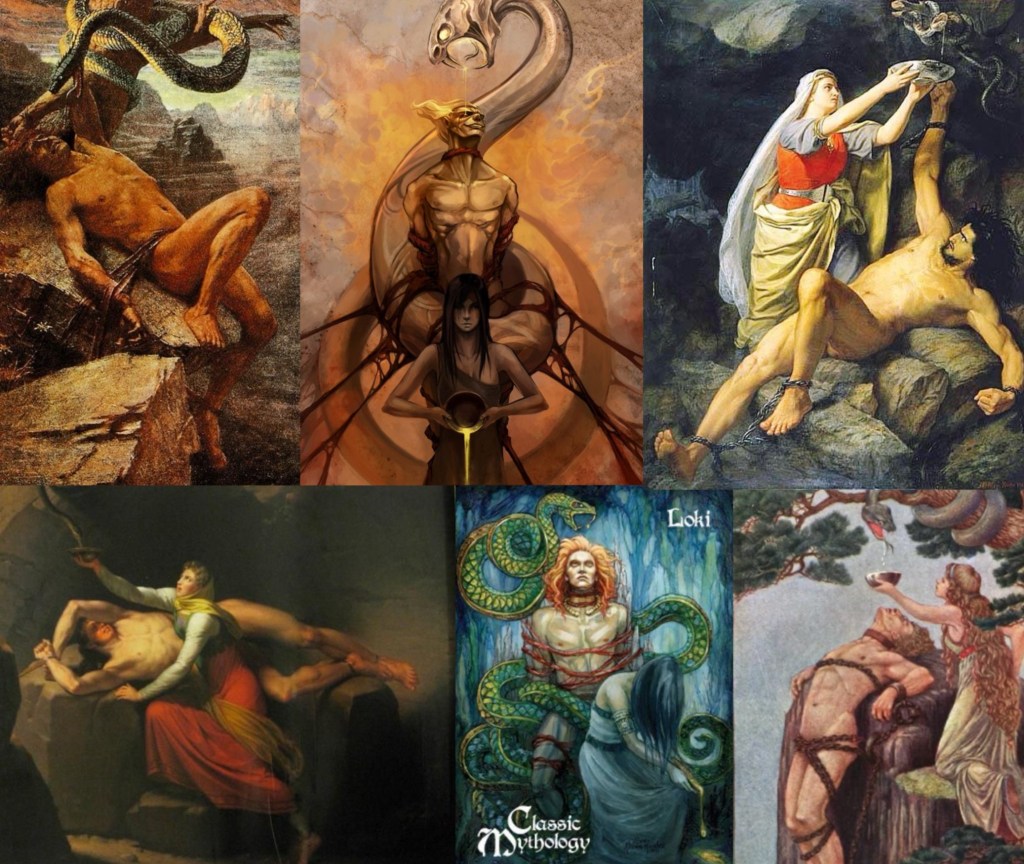
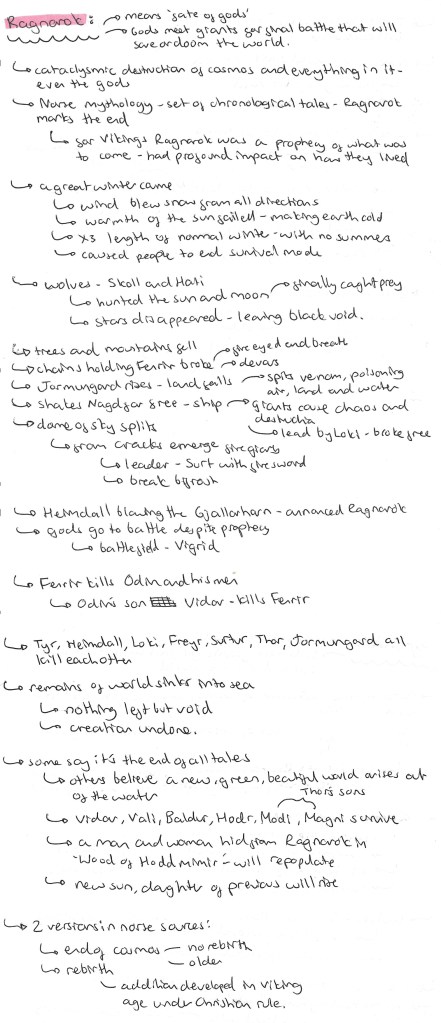
Myths: from the list is key myths I made I chose 6 to research in depth. These are the creation of the cosmos, creation of Thor’s hammer, binding of Fenrir, Thor fishing Jörmungandr, Loki bound and Ragnarok. I chose this set as they evenly cover the timeline of Norse mythology, an interesting range of gods, goddesses, creatures, objects and environments. I researched each one in detail, making notes on the story, characters, themes and some examples of artwork depicting each one. For this research I look at the original sources such as the Prose and Poetic Edda and summaries on various websites.
Creation of the cosmos:
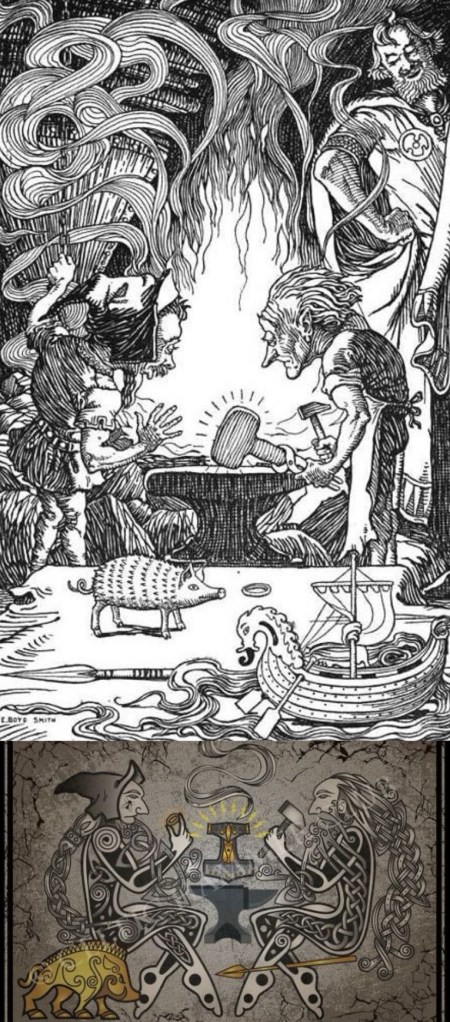
Creation of Thor’s hammer:
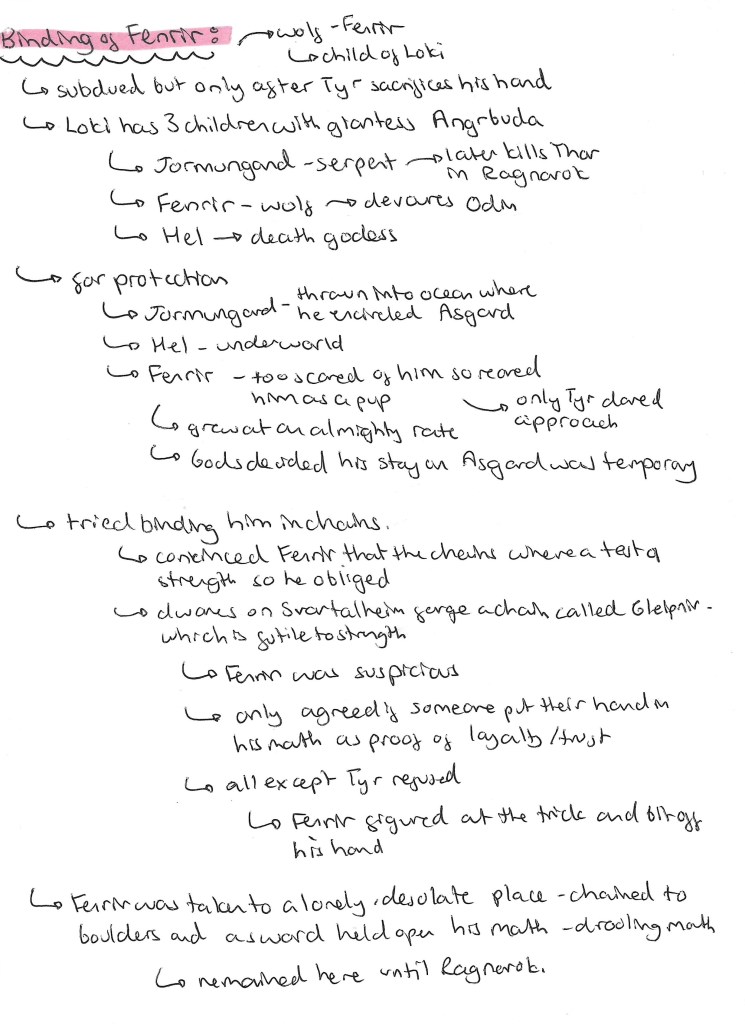
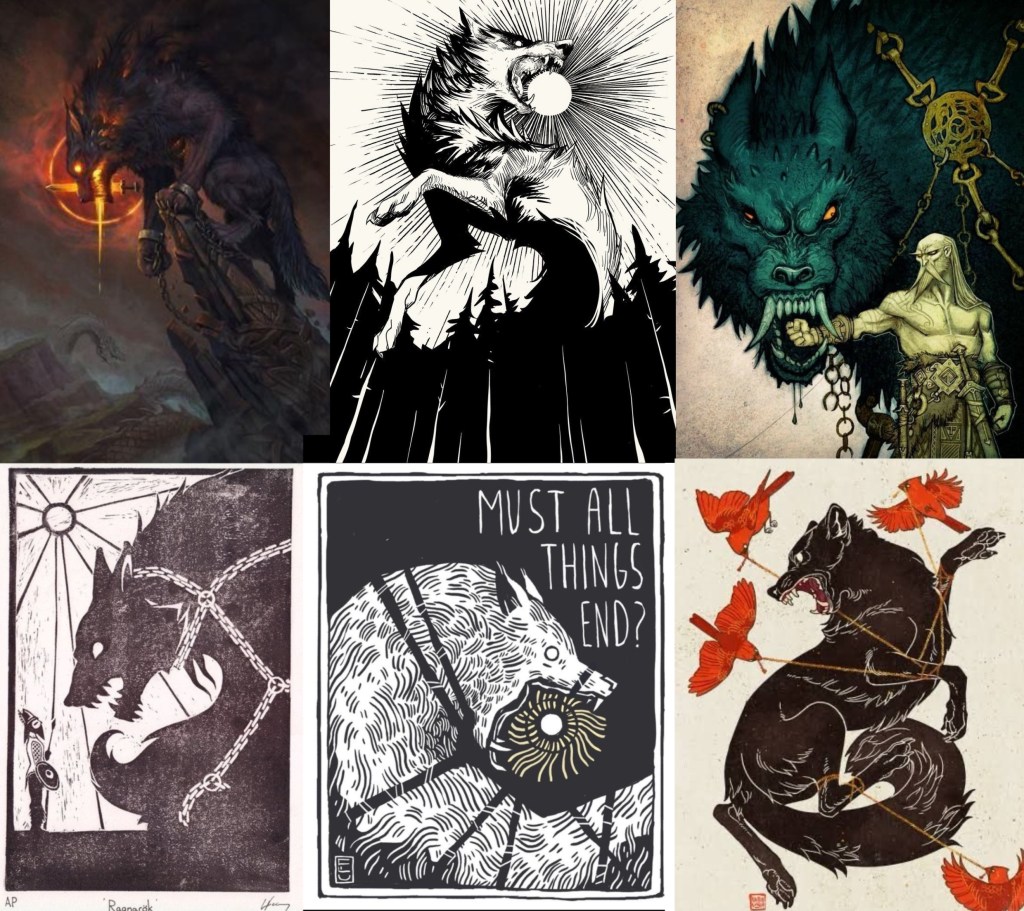
Binding of Fenrir:
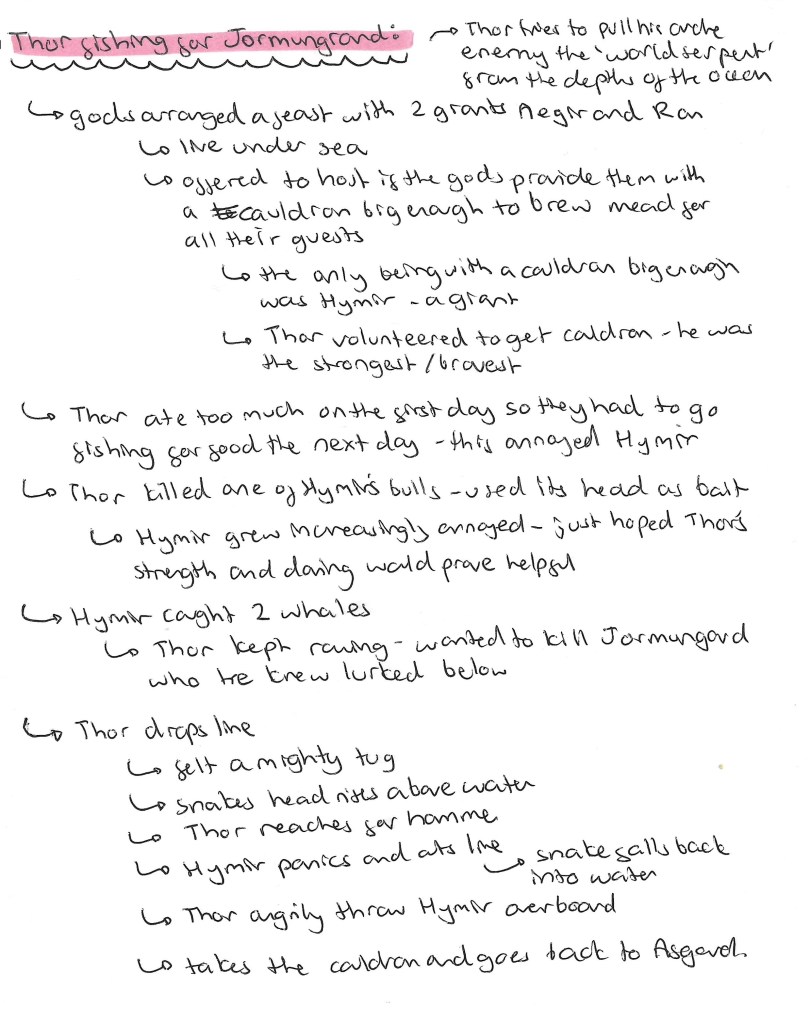
Thor fishing for Jörmungandr:
Loki bound:
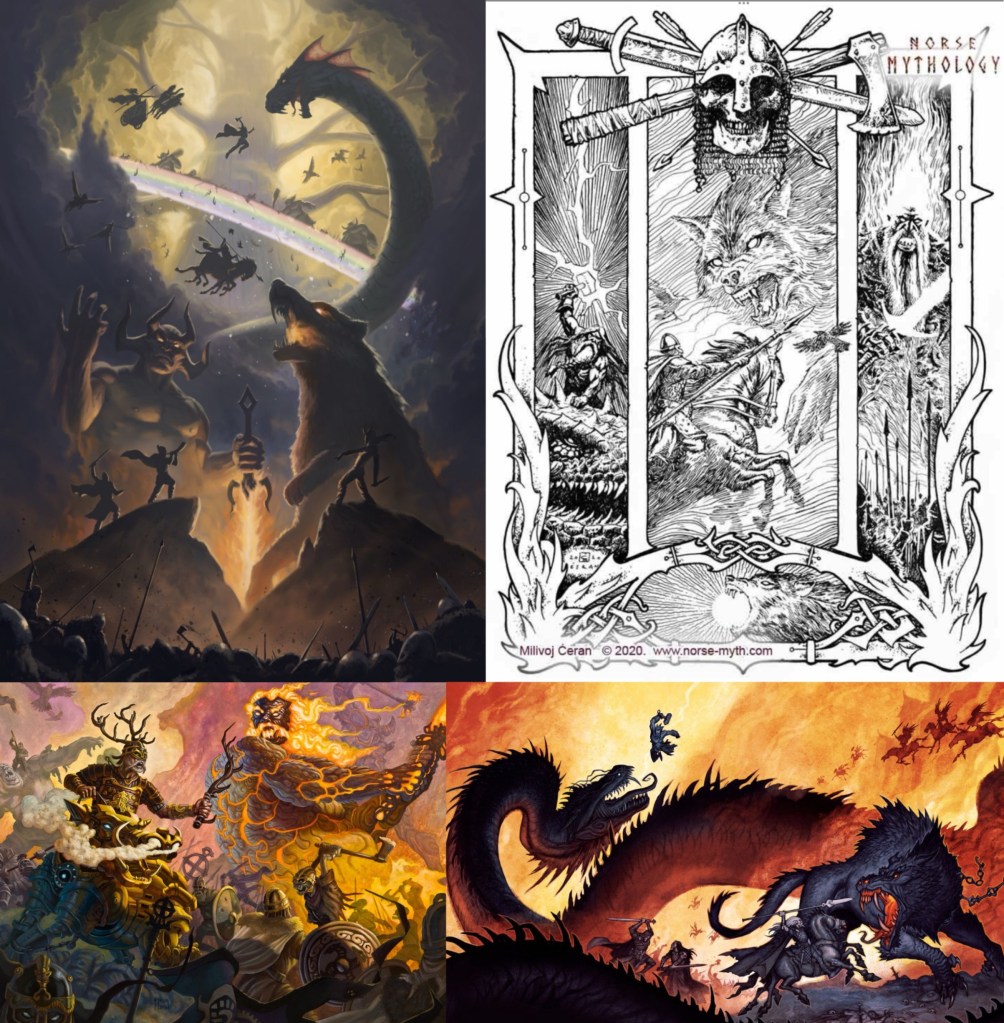
Ragnarok:
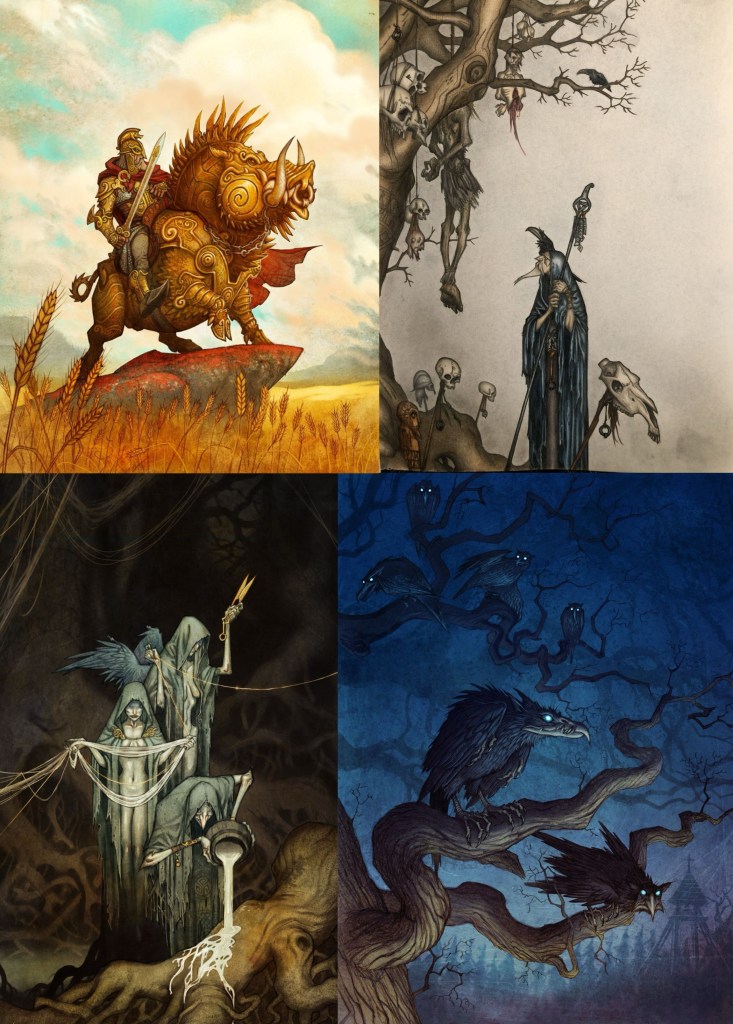
Additional visual research: as well as researching images depicting specific myths, I gathering lots of general resources of Norse mythology artwork.
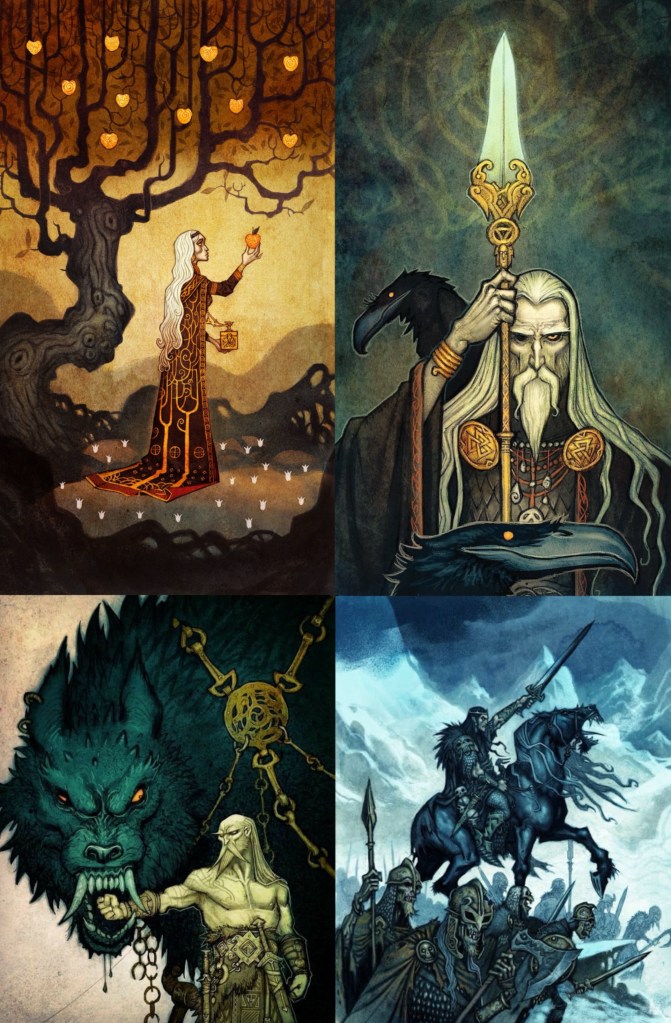
Johan Egerkrans: I will be taking lots of inspiration from Egerkrans’s work. There are many elements I admire including the colour palette, compositions, stylisation of characters and ability to create a narrative within a single image.
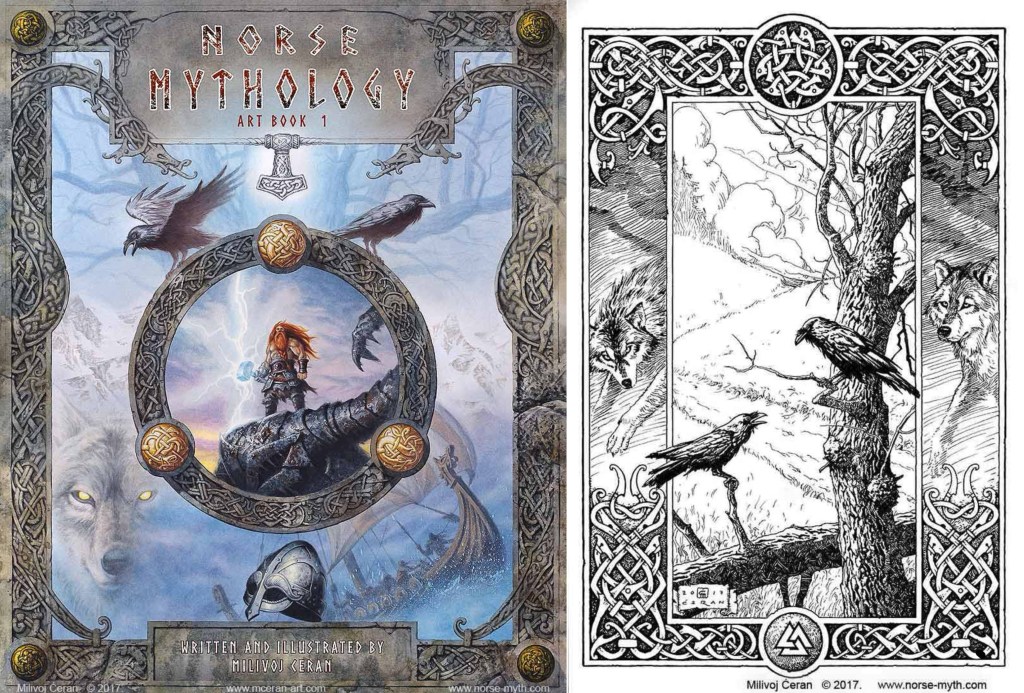
Milivoj Ceran: Ceran has a more simple style in regard to colour, replacing bold colour palettes for finely detailed hatching. This is a technique I’d like to incorporate into my work. I really like how he frames his images and creates dynamic compositions that tell a story.
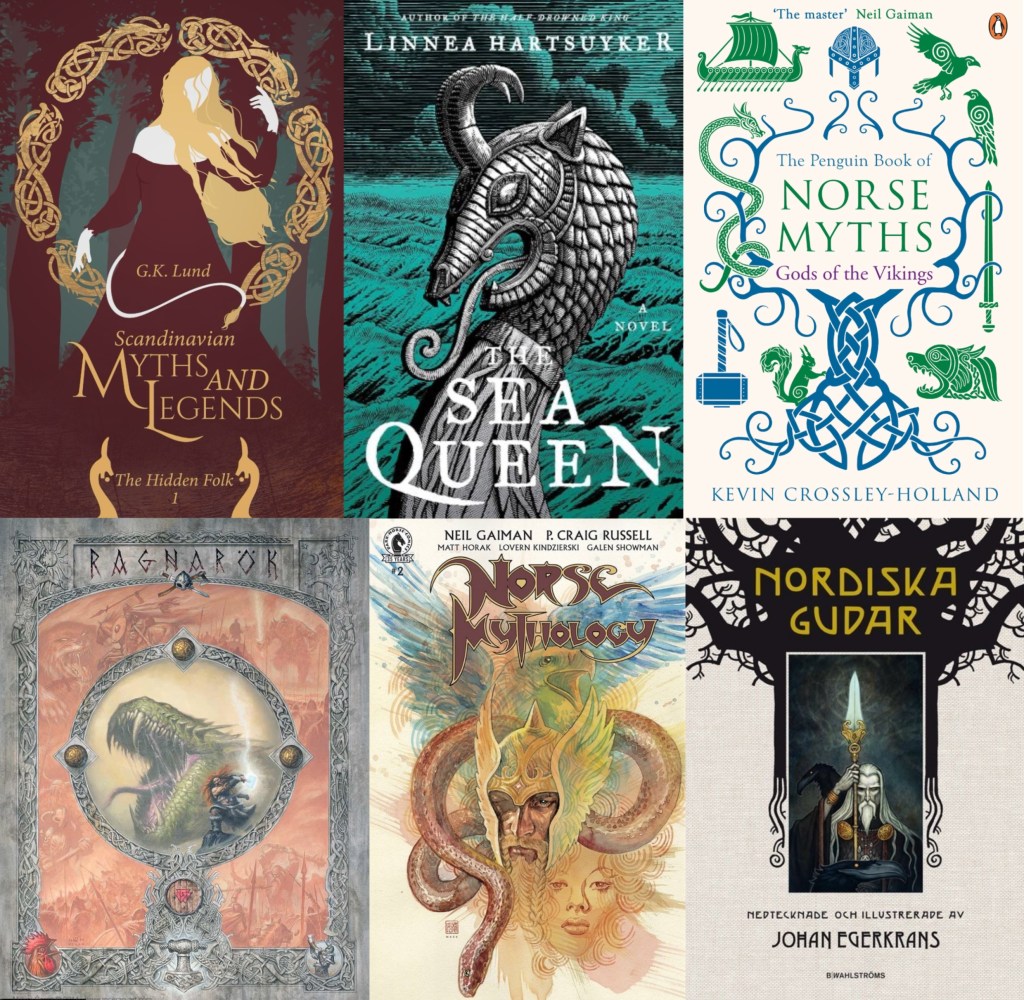
Book covers: Although I’m not producing a series of book covers, they are a good source of reference as their purpose is to summarise the story into a single image. In particular, the covers of Joanne M. Harris’s book really stood out to me. I really like the dark colour palettes that allow the small bits of bright colours to be very striking. Also I like the incorporation of fine patterns it’s the images and the traditional style borders. Below are some examples of these and some other Norse mythology covers that I like:
The next steps for this project will be to decide on the mediums I want to use and begin sketching some ideas for each illustration.
For this Module we will need to create an Illustration Project and an essay. We get to choose our own topic but the 2 outcomes need to be linked. The topic I’ve chosen is Norse Mythology as it’s something I’m interested in but don’t know too much so it will be interesting to research and learn. Before starting the research I had a very basic understanding of the topic, most of which came from modern pop culture adaptations such as Marvels interpretation of Thor and other characters. This is where I was first introduced to the topic and what sparked my interest. With this research I wanted to find out more about this topic and specifically its history. The comparison of the traditional descriptions/ depictions to modern version could be an interesting avenue to explore.
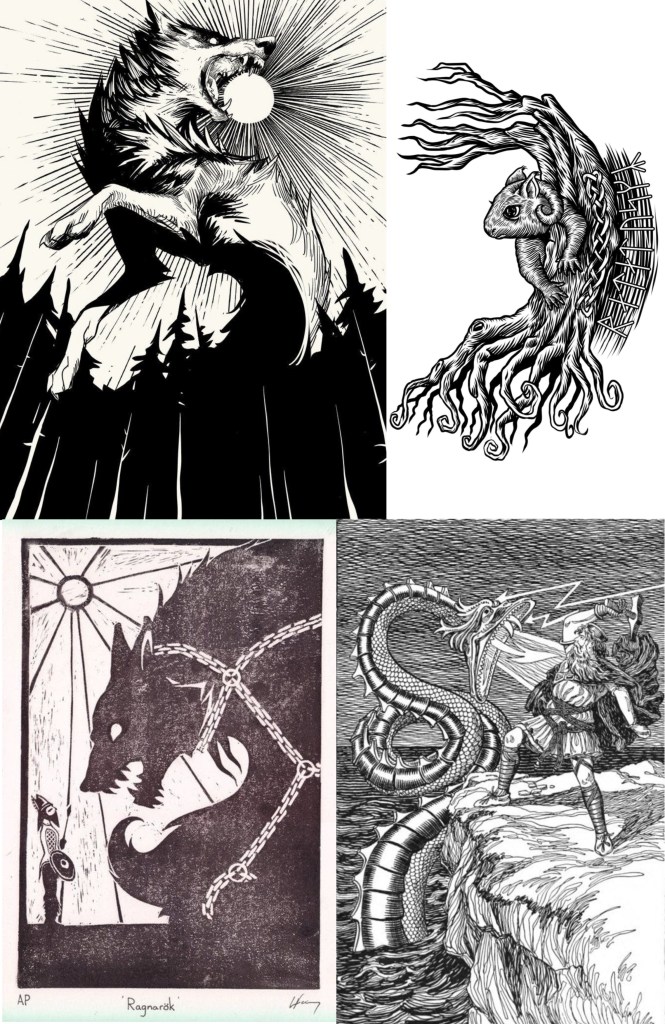
Here are a range of artworks about the topic of Norse Mythology. They’re a starting point for my ideas about the Illustration Project. At this stage I haven’t looked into any specific artists, I just did a broad search on Google and Pinterest to collect visual media that interested me. I immediately noticed that there will be big range of style ranging from, fine black line work to highly detailed colour images. This gives me lots of ideas to take inspiration from.
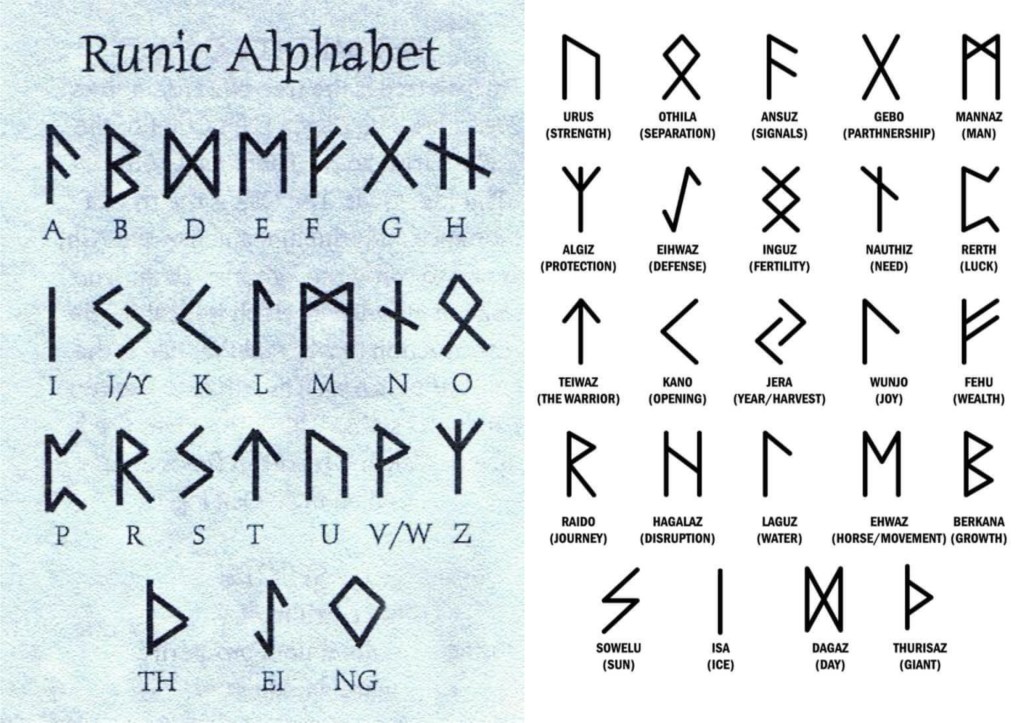
This is the Runic alphabet which would have been used at the time of the creation of Norse Mythology. It’s interesting to know and could be used as another element in my illustrations.
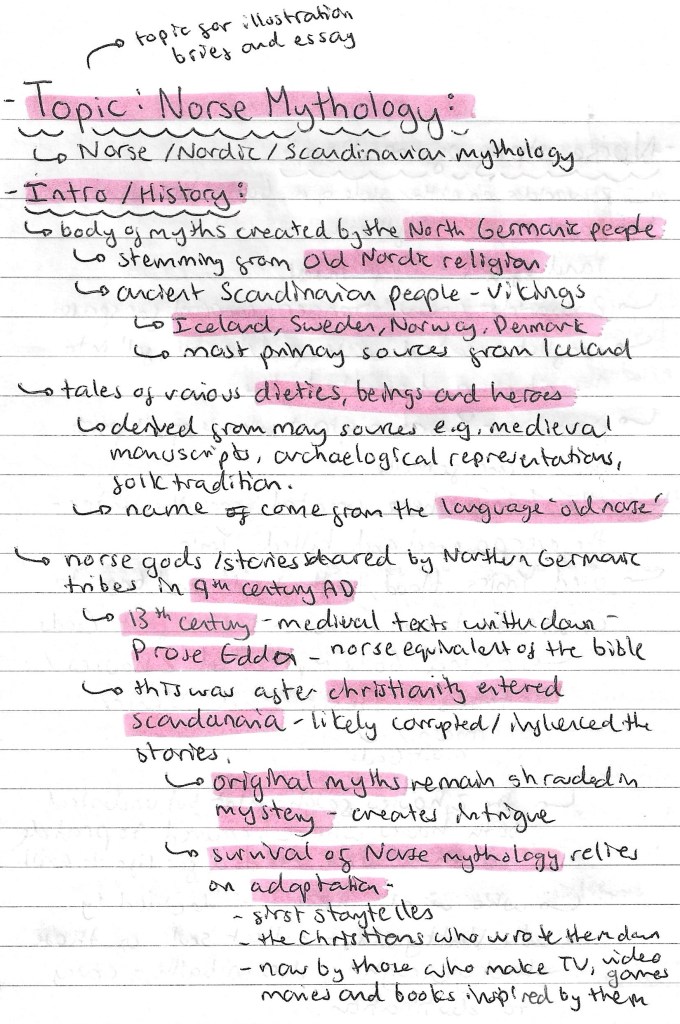
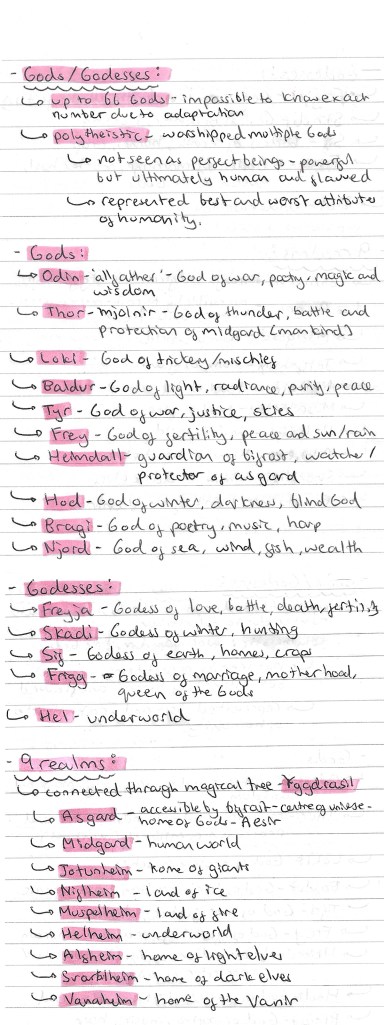
In order to get a good foundational knowledge of the topic I did lots of research into the history, the different gods/goddesses, the 9 realms, the creatures and the creation story. Notes on this research is below:
Image I found on Pinterest explaining the family tree of the Norse gods:
The Norse interpretation of the structure of the universe:
I made a list of some of the key stories in Norse Mythology (below), from this list I’ll research some in detail. I started to look into ways that Norse Mythology has been used in pop culture, such as in Marvel movies/ comics and Neil Gaiman’s ‘American Gods’. Also I began to explore some specific artists who have created work surrounding the topic of Norse Mythology including William Gershom Collingwood, Martin Eskil Winge, Johan Egerkrans and Milivoj Ceran.
William Gershom Collingwood (1854-1932): an English author, artist, antiquary and professor of Fine Arts at the University of Reading. I was drawn to his illustrations because of the traditional shading style and detail in the mark making that he uses to create shape and tone.
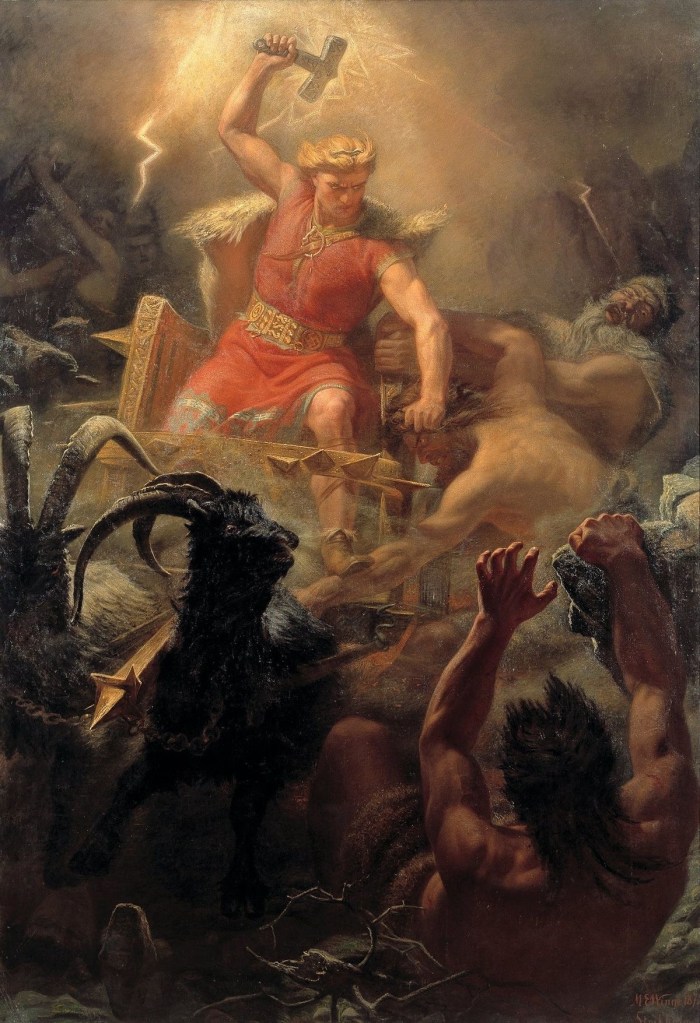
Marten Eskil Winge (1825–1896): was a Swedish artist and professor at the Royal Swedish Academy of Arts. Winge’s paintings are beautifully detailed with really striking use of colour. I really like the energy and drama he is able to create in his dynamic and chaotic compositions.
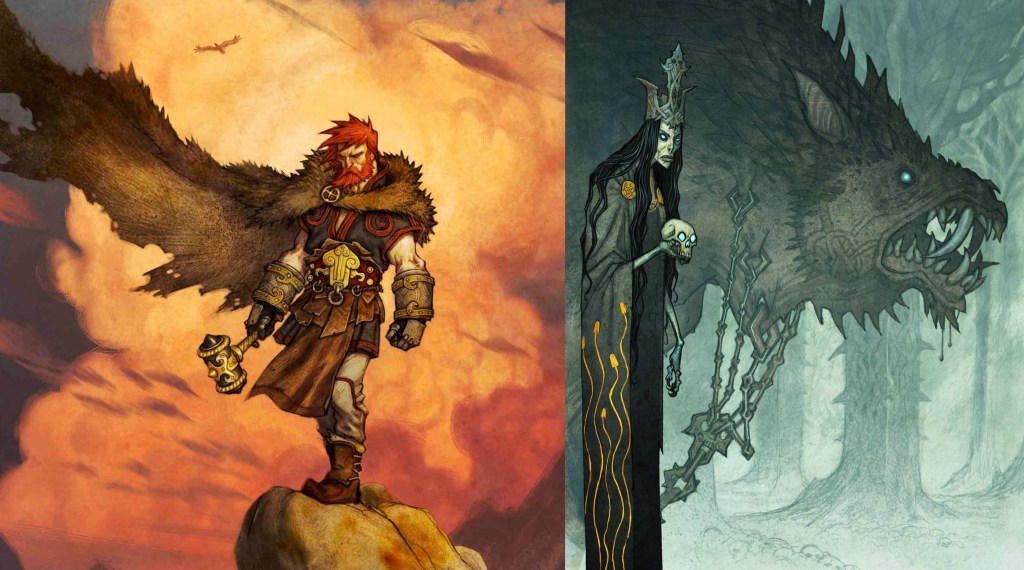
Johan Egerkrans (born 1978): a Swedish illustrator and author, mainly of Fantasy, folklore and Palaeontology, working as a children’s book illustrator since 2005. He has a modern, digital illustrative style with stylised characters. My favourite part of his work is the strong use of limited colour palettes used to create a mood and atmosphere.
Milivoj Ceran: a Croatian illustrator working in traditional media. He is well known for his Magic the Gathering art and other fantasy based work. He has 2 distinct styles, colour and black and white shading, both are intricately detailed. I like his compositional style and way of incorporating traditional Norse symbols and patterns into his illustrations.
Here are some initial ideas I had for the illustration project and essay after some initial research about Norse Mythology:












 Samuel Green Illustration