Week 1: Expanded Narratives:
Examples of narrative experiences: below are some examples of expanded narrative experiences that utilise digital technologies and audience engagement.
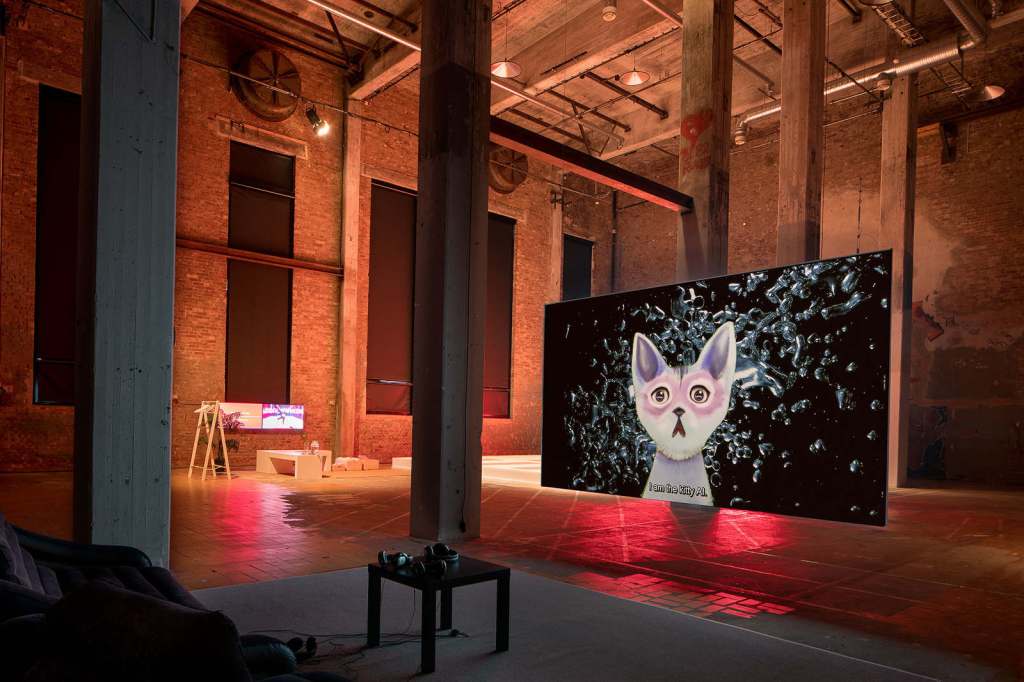
‘Kitty AI: Artificial Intelligence for Governance’ by Pinar Yoldos (2016): This is a fun piece with the narrative that in the future (2039) political governance is replaced by a speaking kitten AI.. This speculative future scenario is inspired by a Black Mirror episode. Audiences interact by talking to the AI. It’s a light hearted way of commenting on the current political governance and I like this way of approaching a serious topic.
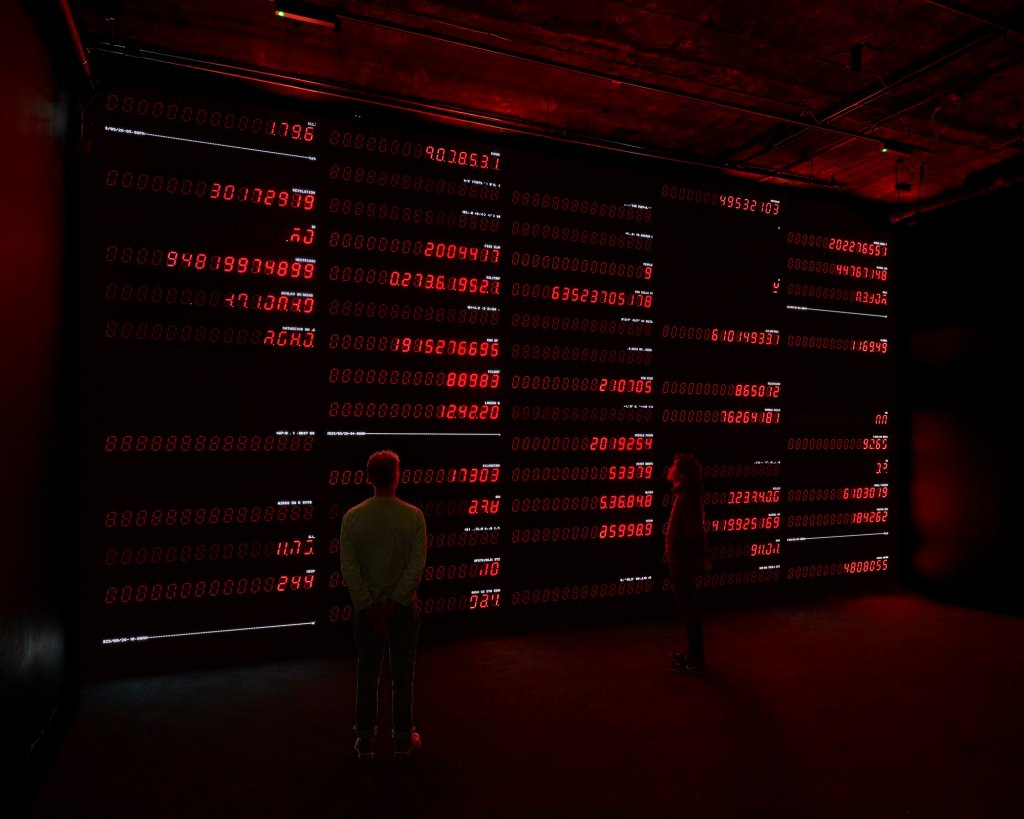
‘Present Shock II’ by United Visual Artists (2023): This installation shows the viewer loads of statistical clocks and live news feeds representing real-time information from all around the world highlighting how the speed and volume of data in the Information Age. The continuous installation successfully creates the feeling of “information overload” with a tense, stressful and ominous atmosphere.
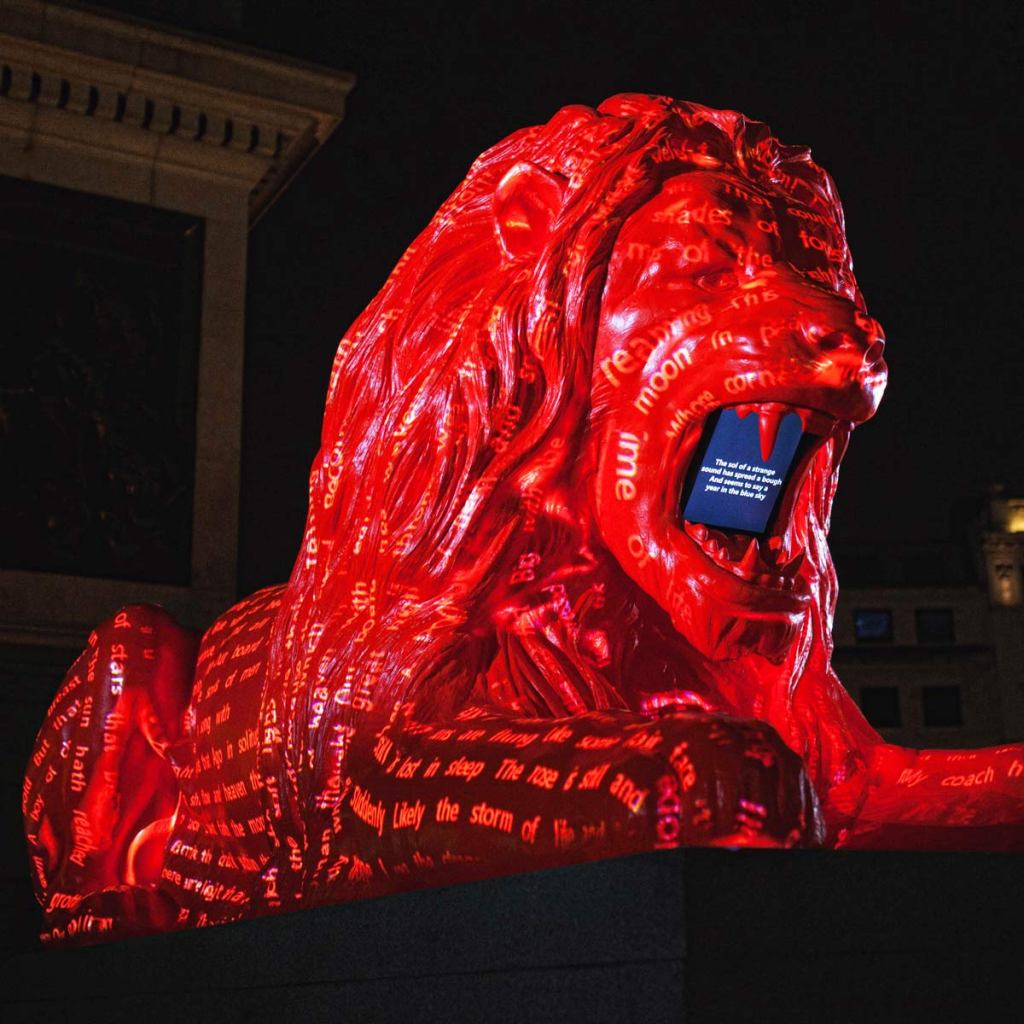
‘Please Feed the Lions’ by Es Devlin [Interactive Poetry, Sculpture, Projection] (2018): This interactive installation in Trafalgar Square combines projection-mapped sculptures, fuse light, music & tech. The lion roared poetry, with the words being chosen by the public. The public were asked to “feed the lion” words. By daylight, the constantly changing collective poem was shown by LEDs in the mouth of the lion. By night, the poem was projection-mapped over the lion.
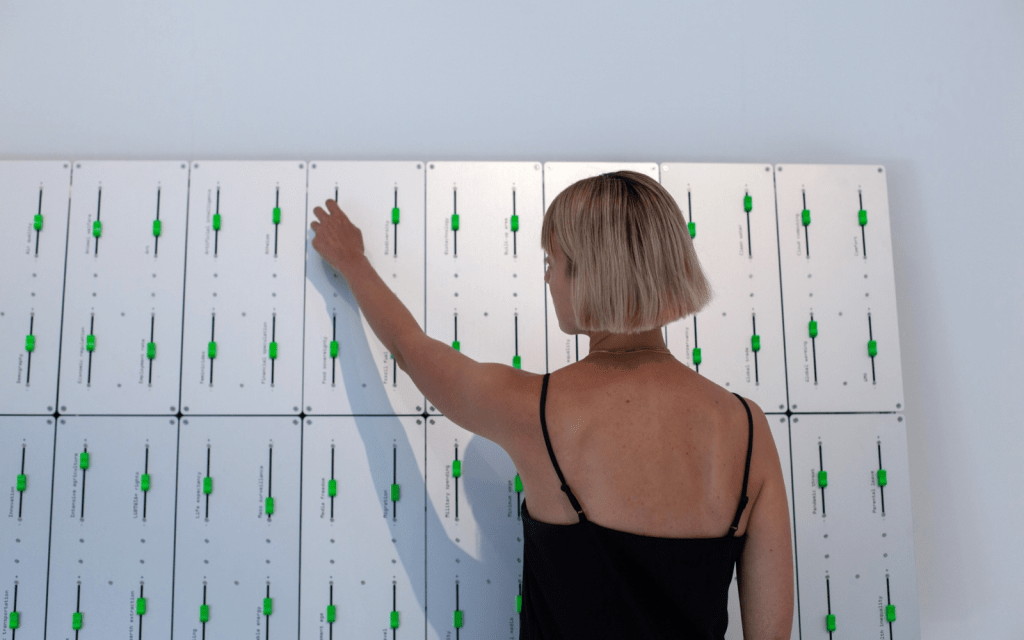
‘G80 (un)Equitable Variables’ by Fragmentin (Interactive Installation] (2023): in this installation, the audience interact with lots of sliders, each corresponding to a variable of one of 80 human conditions. When a single slider is moved, other sliders react and change, showing the how all variables are connected.
The story itself:
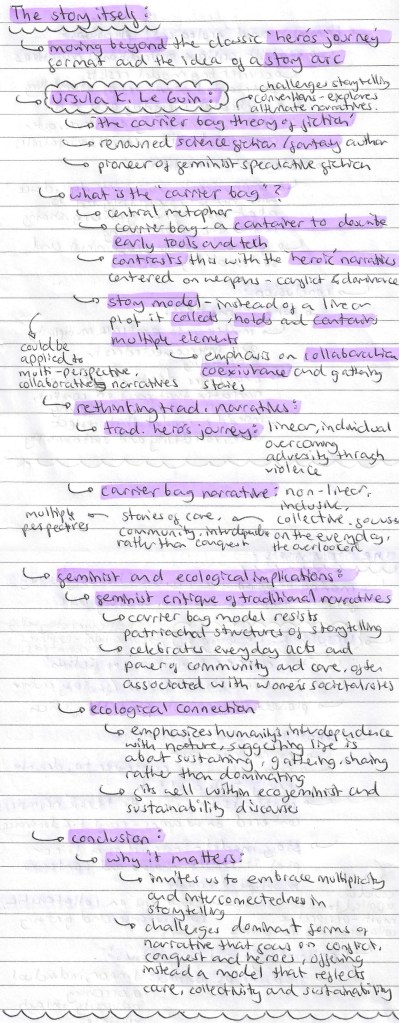
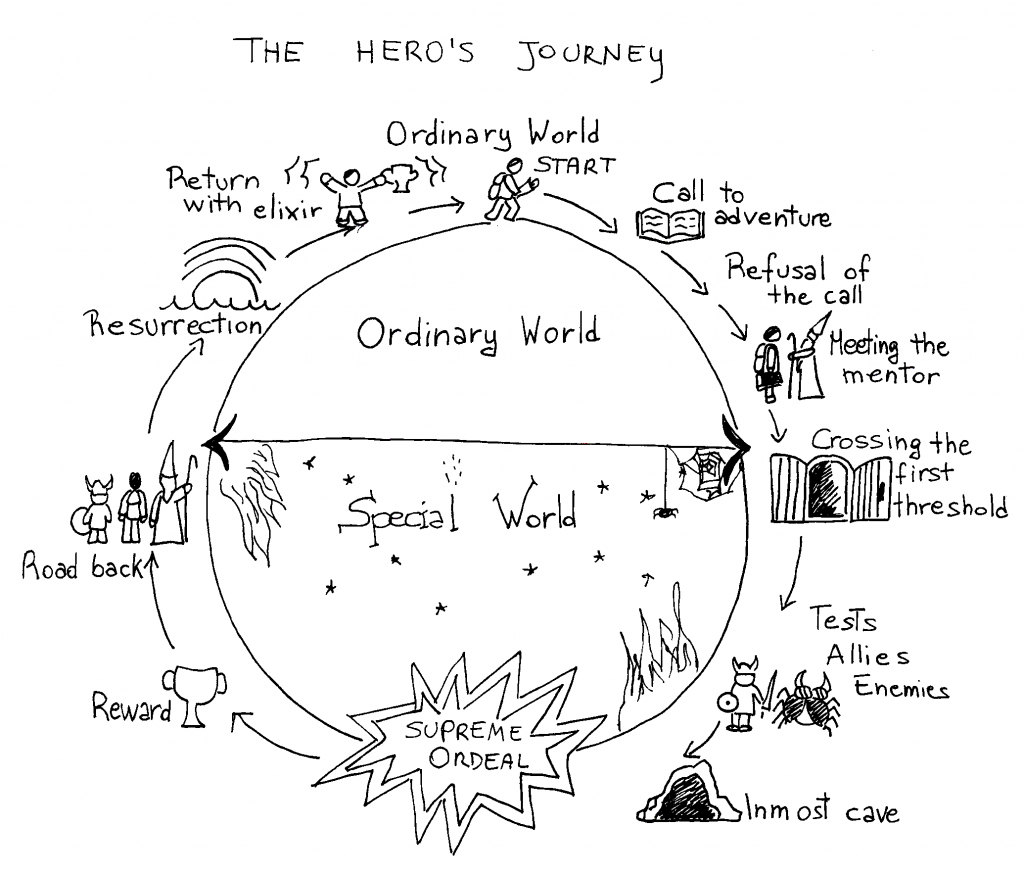
Joseph Campbell’s ‘The Hero’s Journey’: describes the common heroic storytelling narrative in which a heroic protagonist sets out, has transformative adventures, and returns home. This storytelling format is being challenged by more audience centric narratives utilising new interactive technologies.
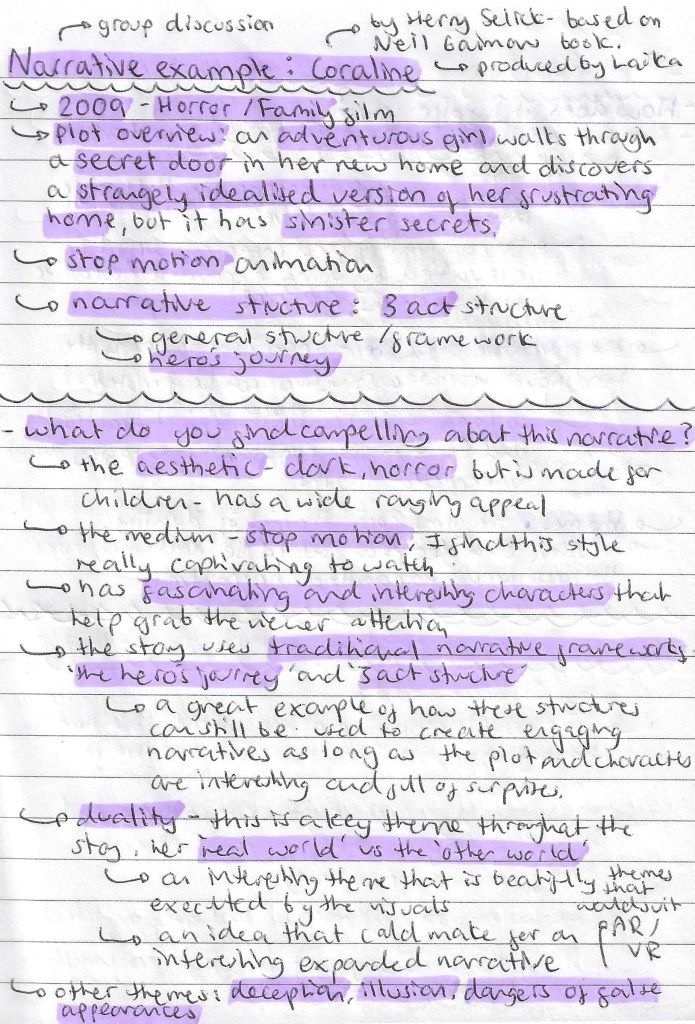
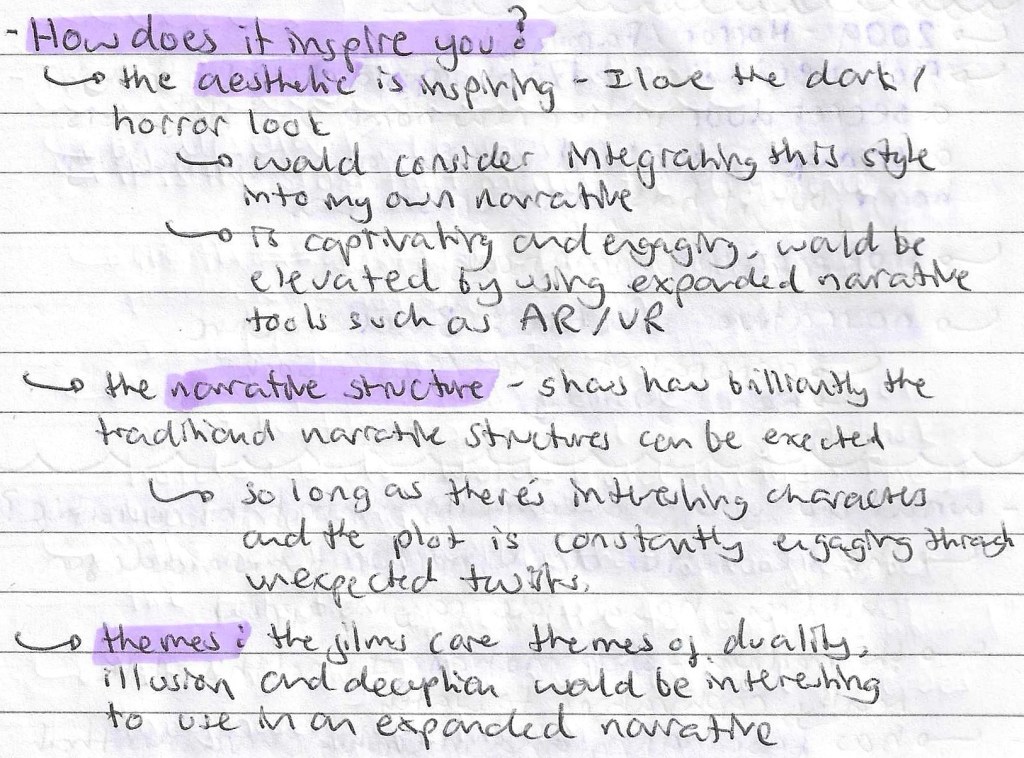
Coraline:
Coraline narrative experience:
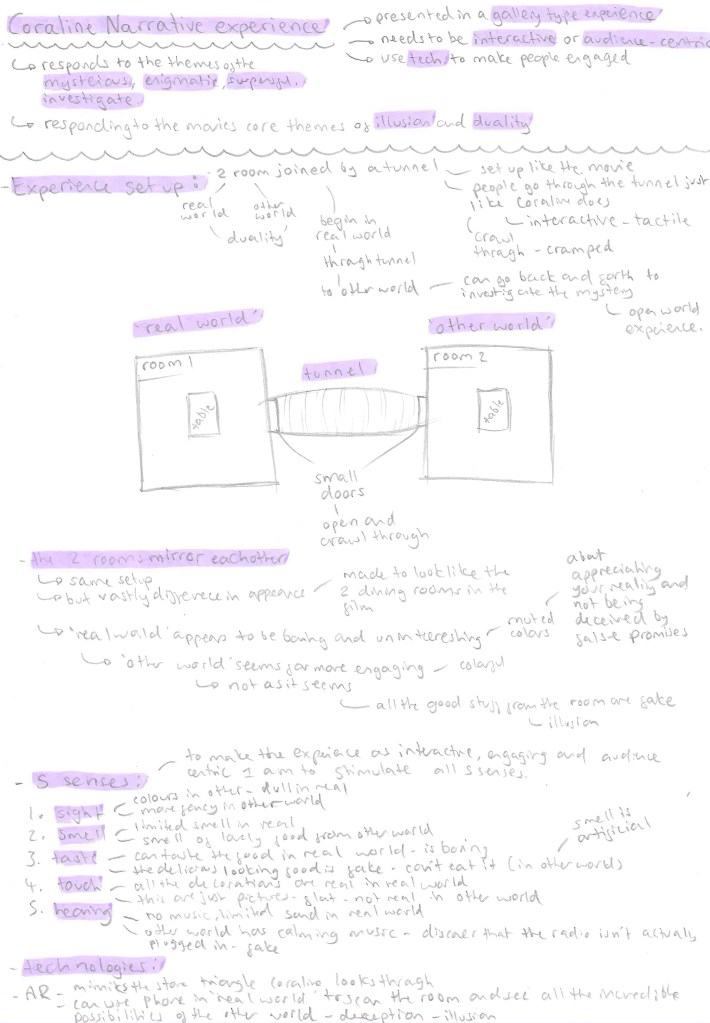
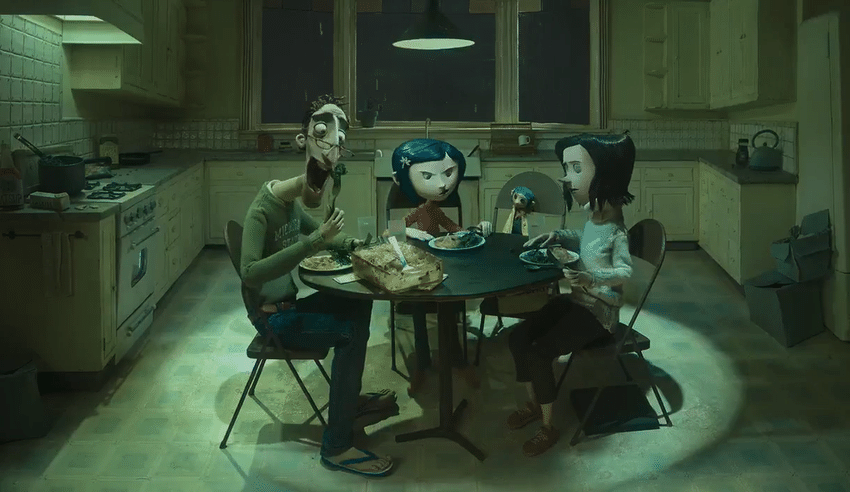
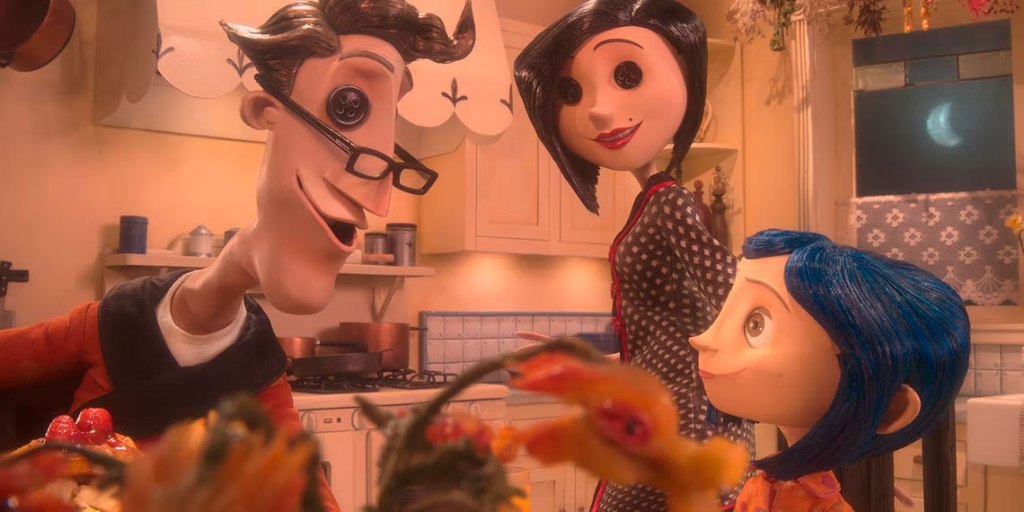
2 versions of the same room: I would replicate these 2 rooms by using different lighting, and props. Creating a drastic contrast would be key to making this installation engaging. The layout of the rooms would be the same to create the mirroring effect. There would be no actors involved to play the characters, just the audience and the sets/props. I think this would force all the other elements to be stronger in order to create an immersive experience that stimulates all the senses.
The ‘real world’:
The ‘other world’:
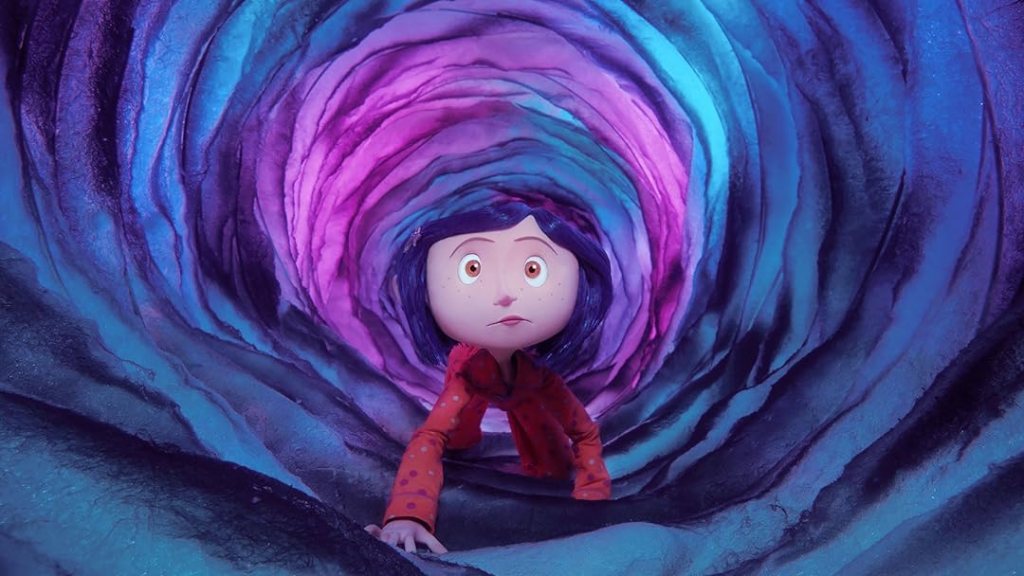
The tunnel: Coraline crawls through this to get from the real world to the ‘other world. I would add this to the narrative experience so the audience would get the tactile experience of crawling through an enclosure space, to build the mystery and tension.
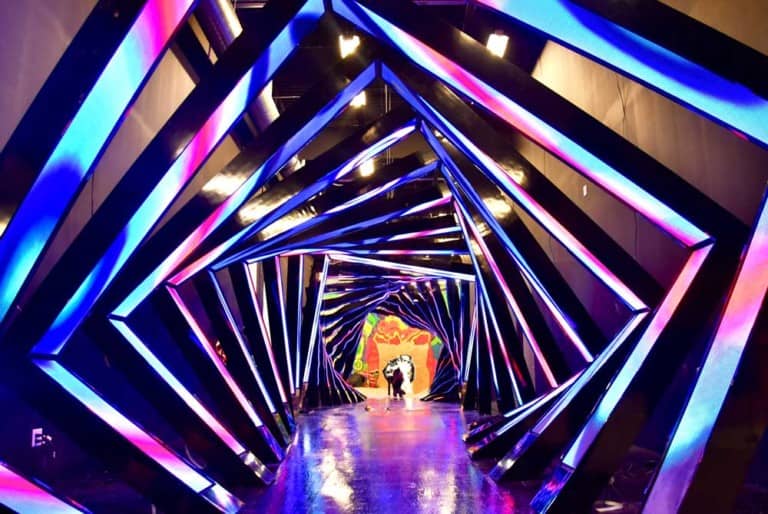
I would light this tunnel similar to this:
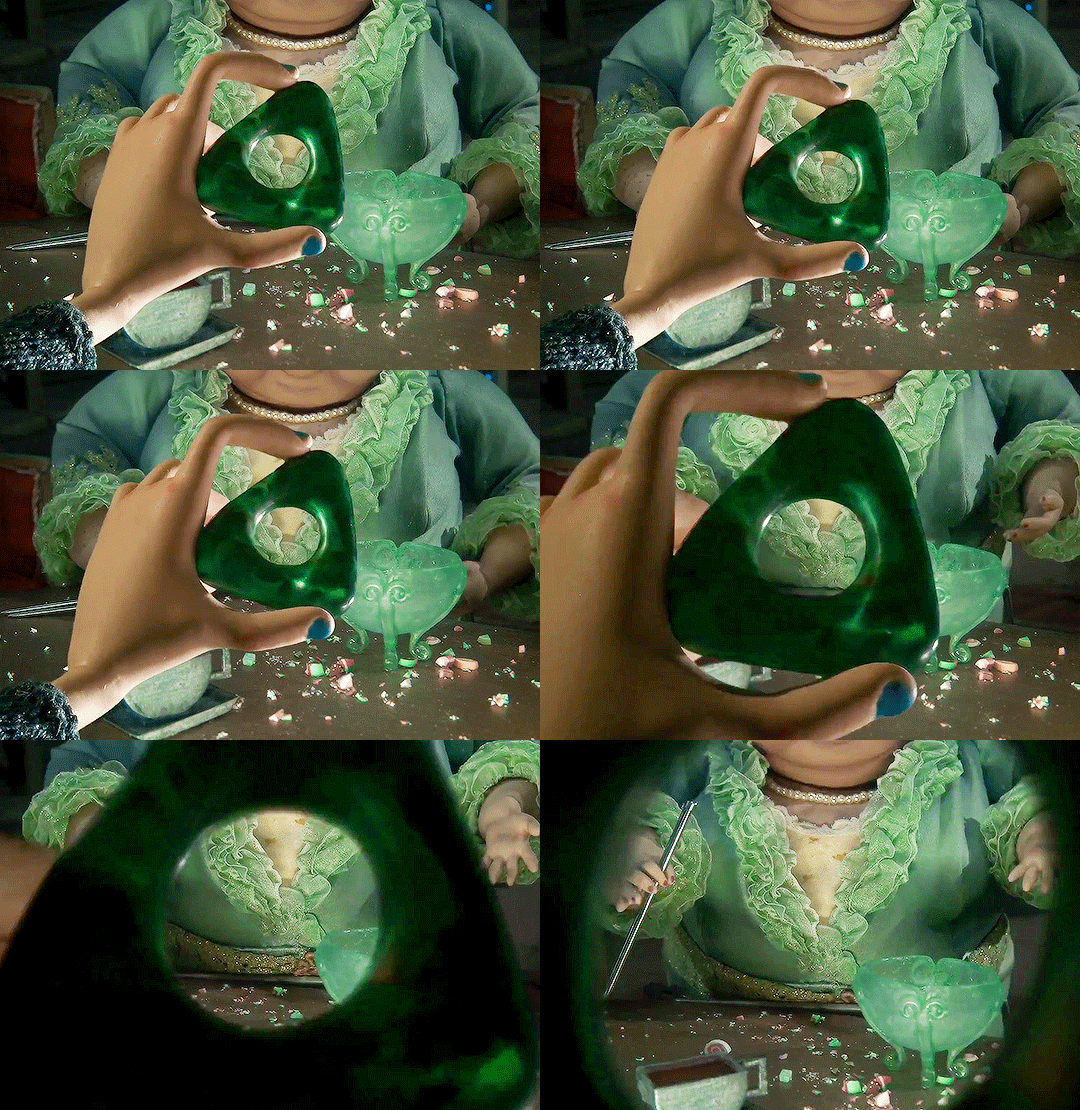
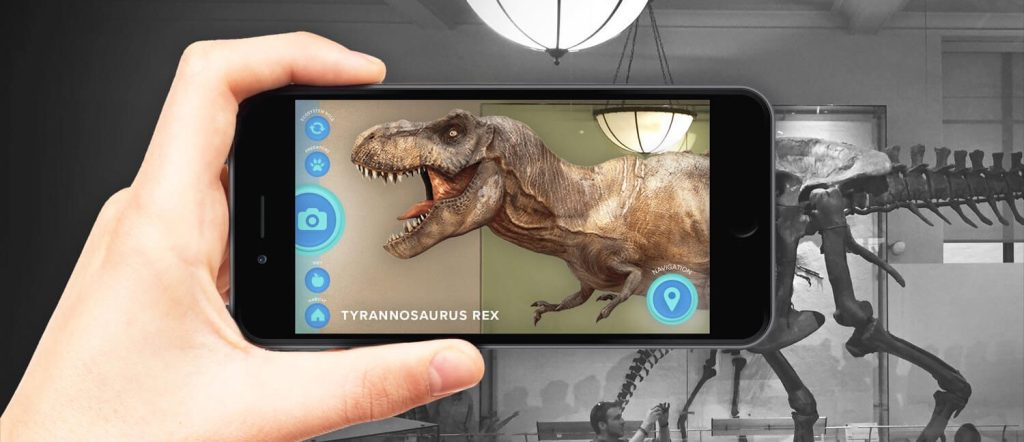
Augmented Reality (AR): I want to integrate the idea of this green amulet from the movie into the experience. Using AR technology the audience hold their phone up around the ‘real world’ and it will show them all the beautiful possibilities of the ‘other world’. The striking contrast bewteen what they’d see in person and through their phone would tempt them into the ‘Other world. This plays on the idea of deception and illusion.
AR: this is an example of how this technology would work. They would see the dull, boring room around them and the beautiful, colourful version on their phones.
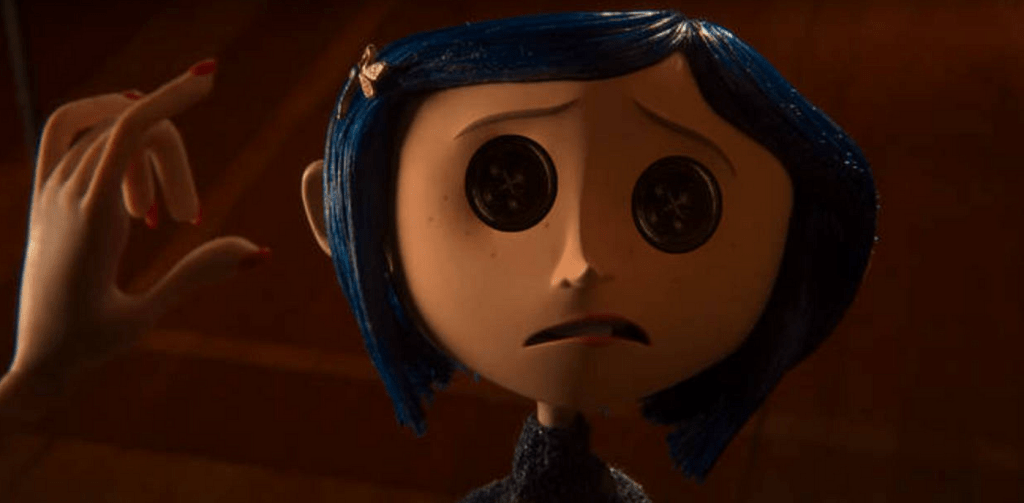
Button eyes: the buttons are such an iconic part of Coraline so I felt it was important to include them in this narrative experience. There would be a mirror in the ‘real world’ and using AR technology the audience would see themselves with button eyes if they looked through their phone. This foreshadows the danger and deceit of the ‘other world’.
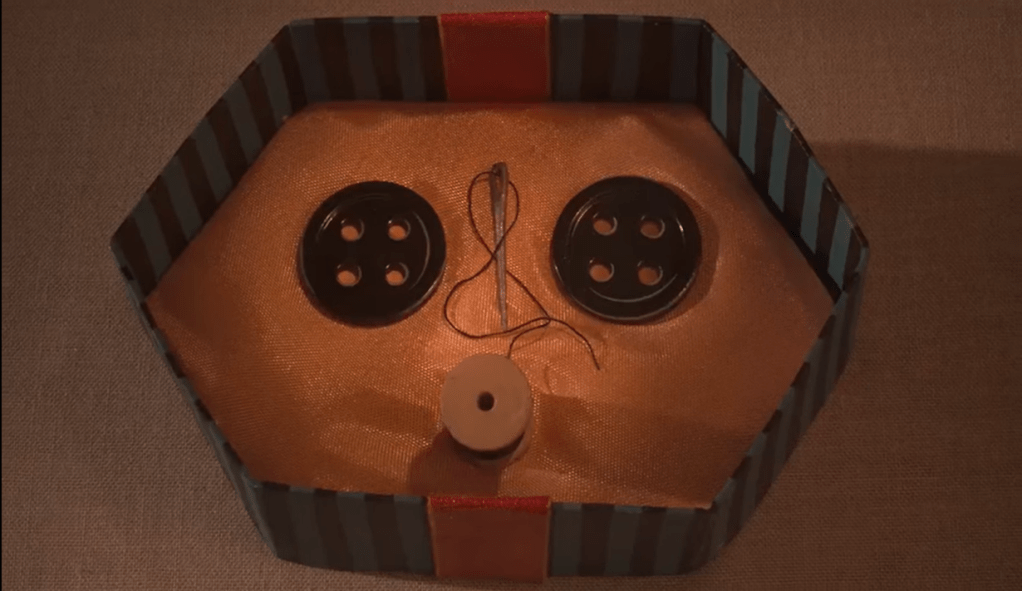
Everything in the ‘other world’ would be fake, the food would be plastic, the smell would be artificial, the decorations would just be flat cutouts or painted. The only thing that is real and audiences could touch and interact with would be this button box in the middle of the table.
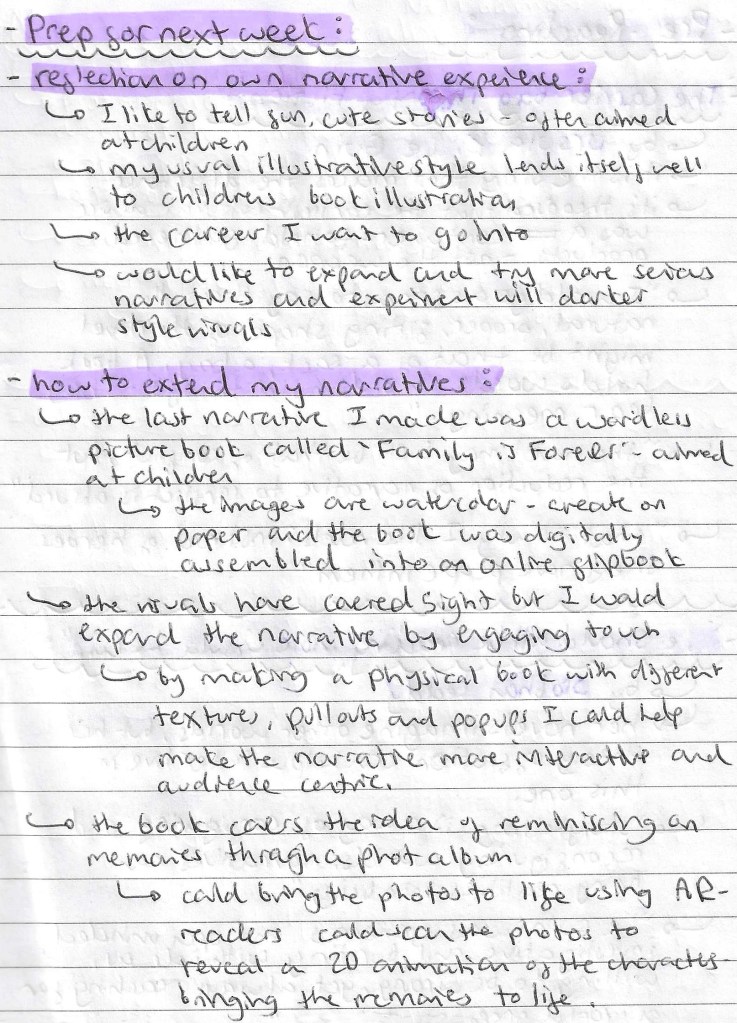
Reflection/ prep for next week:
 Samuel Green Illustration