In the last couple of sessions we looked at static and sequential imagery and how to add actions and sound to a sequence. This week’s session was focused on action and interaction, by looking and different events on social media. It’s all about the companies creating something to get the consumer to interact. We looked at several types of comparisons, different events from similar categories, different social media platforms, different areas and different posts from same organisation. We looked at TikTok and Instagram as our social media platforms. Some of the organisations we researched were Coachella, Reading, Glastonbury and the Serpentine Gallery. This is relevant to our project as one of the outcomes we need to produce is a social media video, for Instagram or TikTok, so this is the type of research that we’ll need to do related to our industry/ event type. Below are all my notes that I made during the session and in my independent research:

Comparing different organisations : Coachella Instagram vs Reading Instagram:
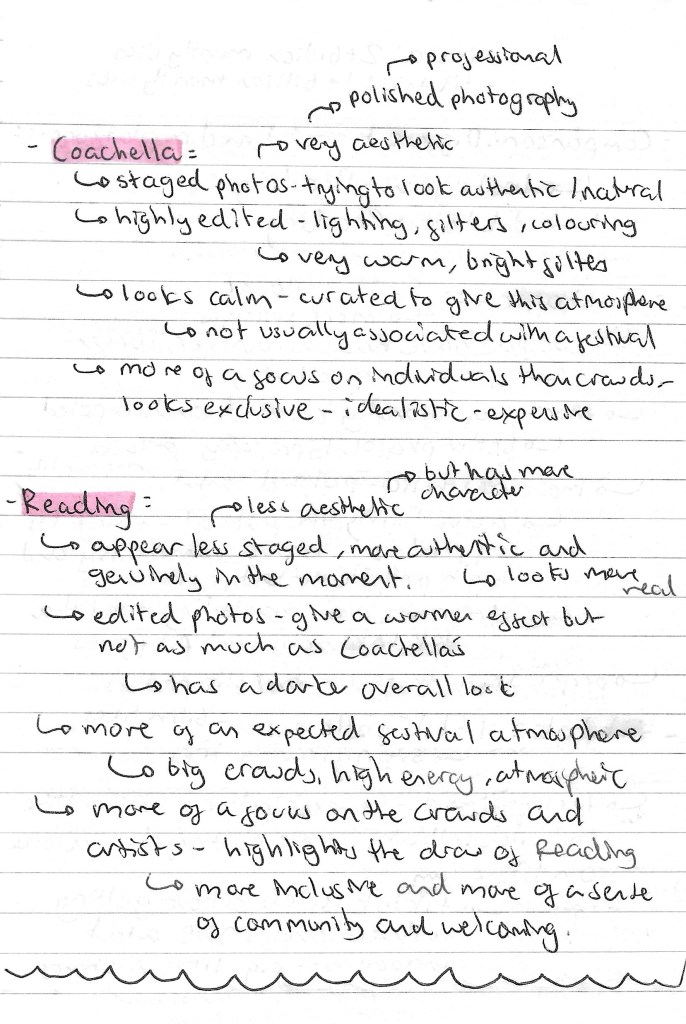


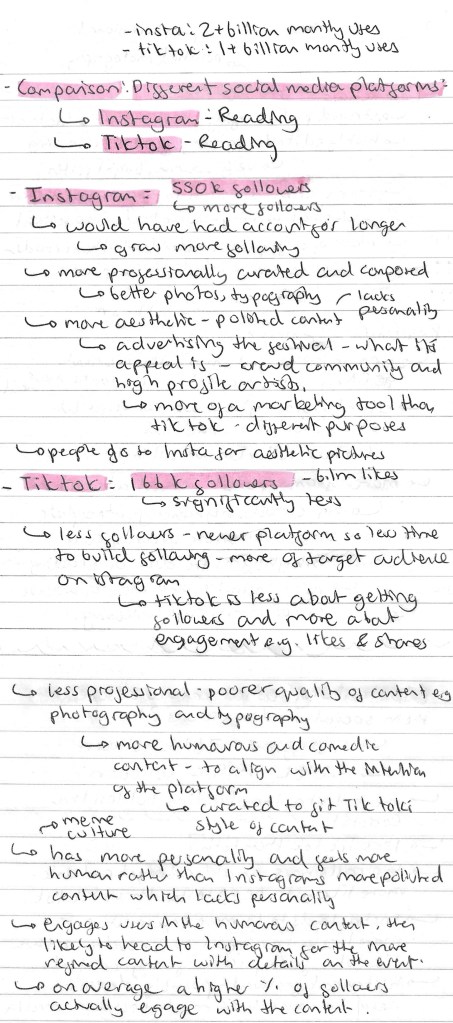
Comparing different social media platforms: Reading Instagram vs Reading TikTok:


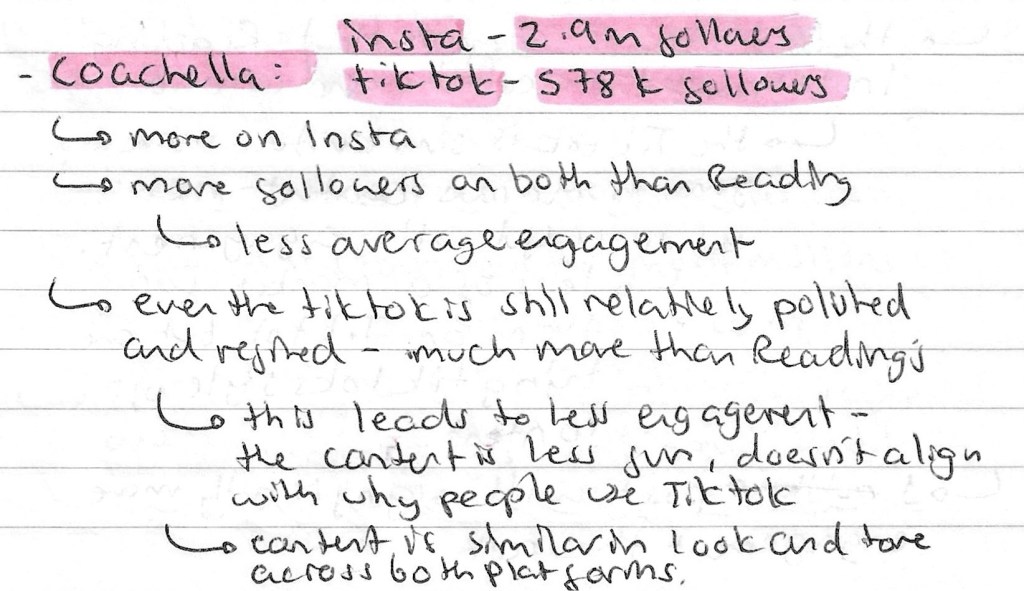
Comparing different social media platforms: Coachella Instagram vs Coachella TikTok:


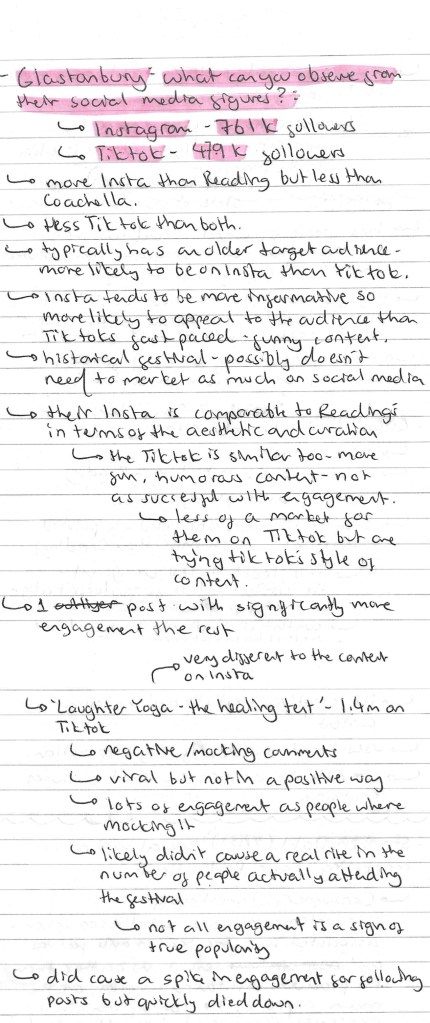
Comparing different social media platforms: Glastonbury Instagram vs Glastonbury TikTok:
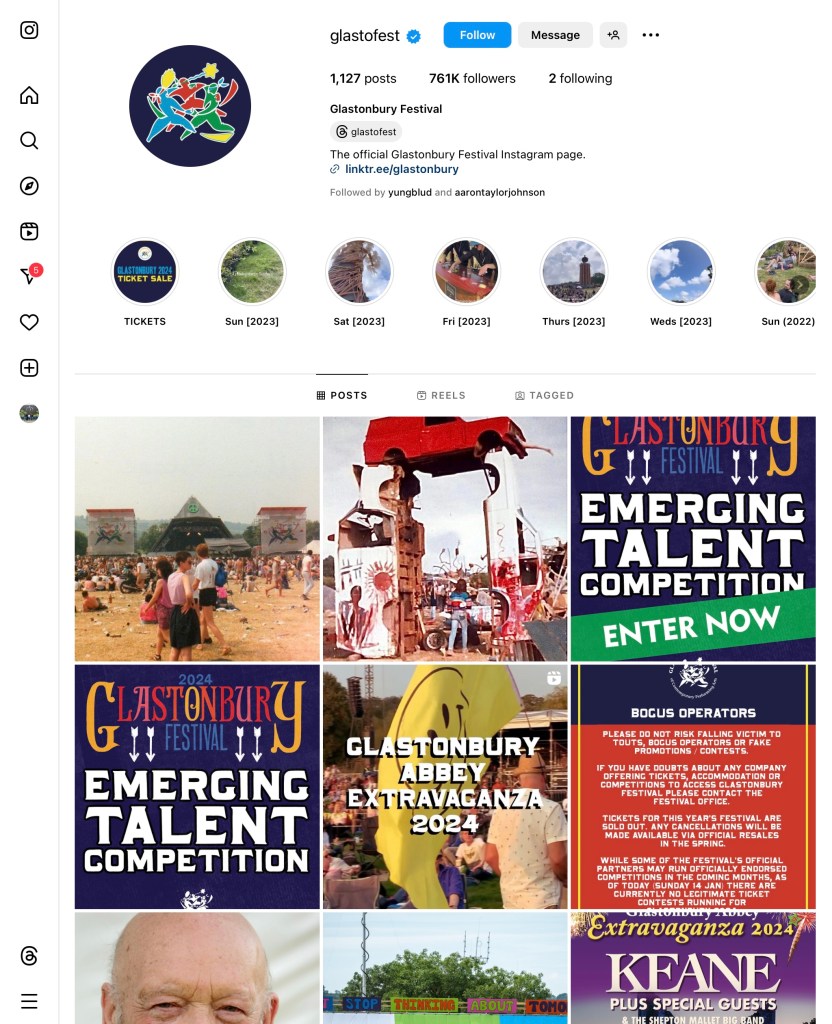
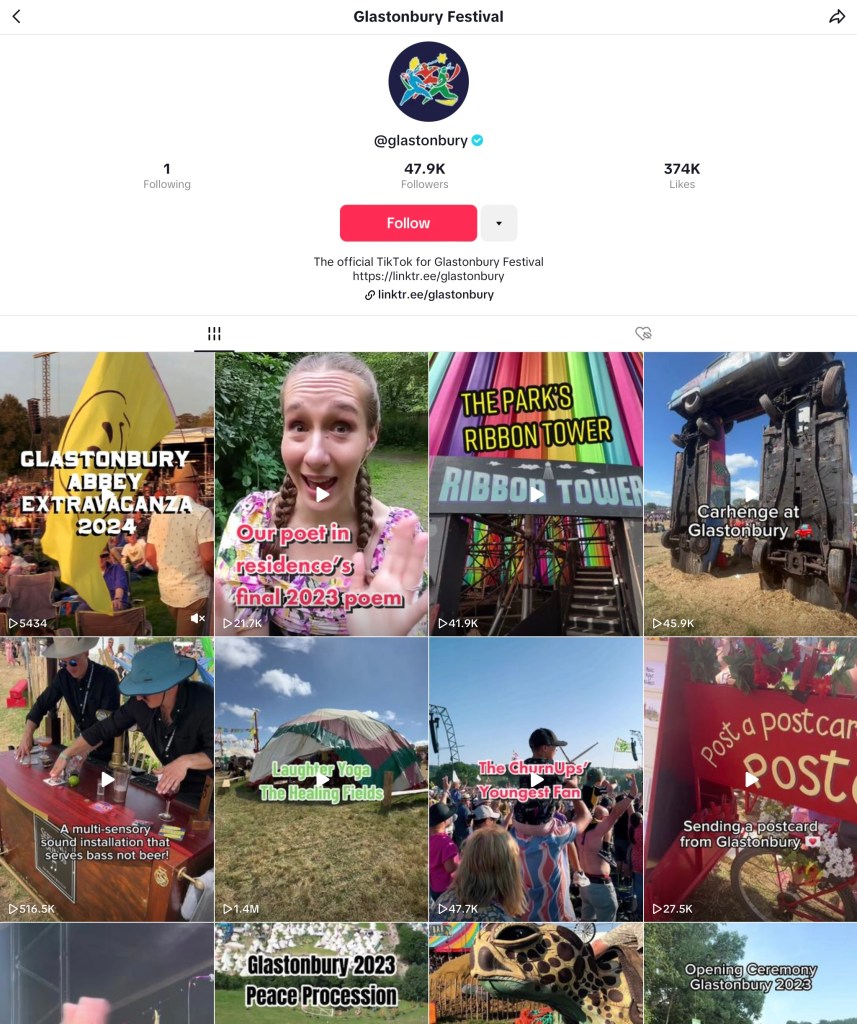
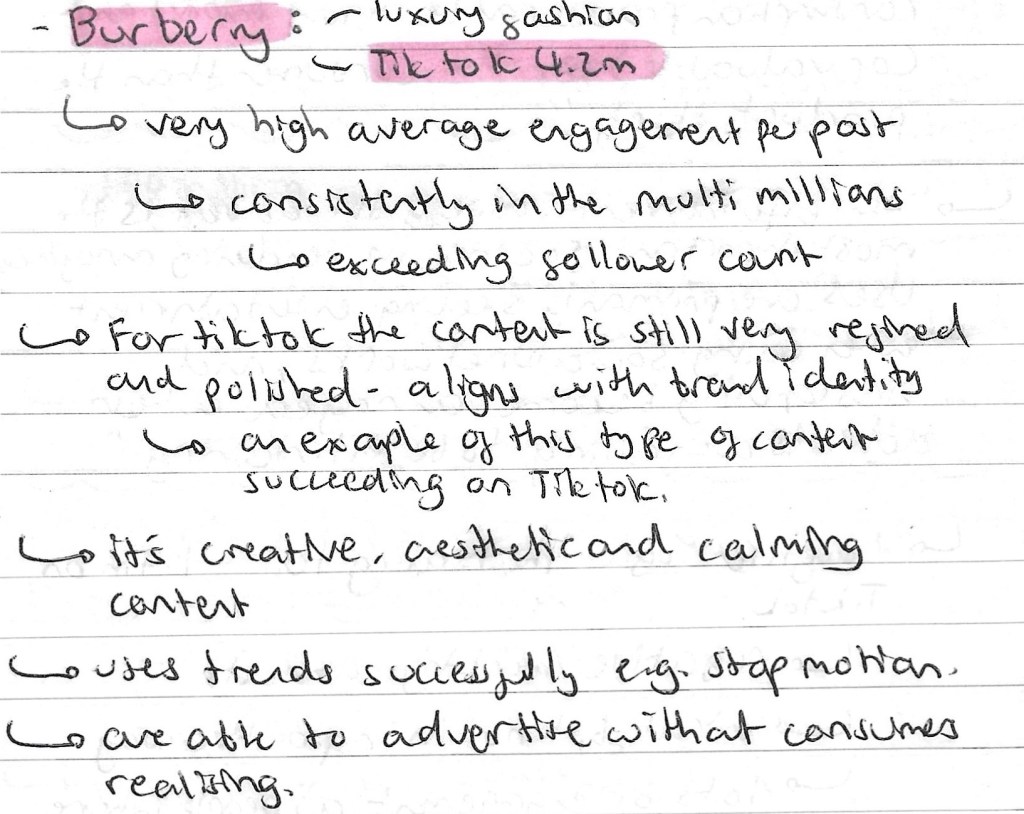
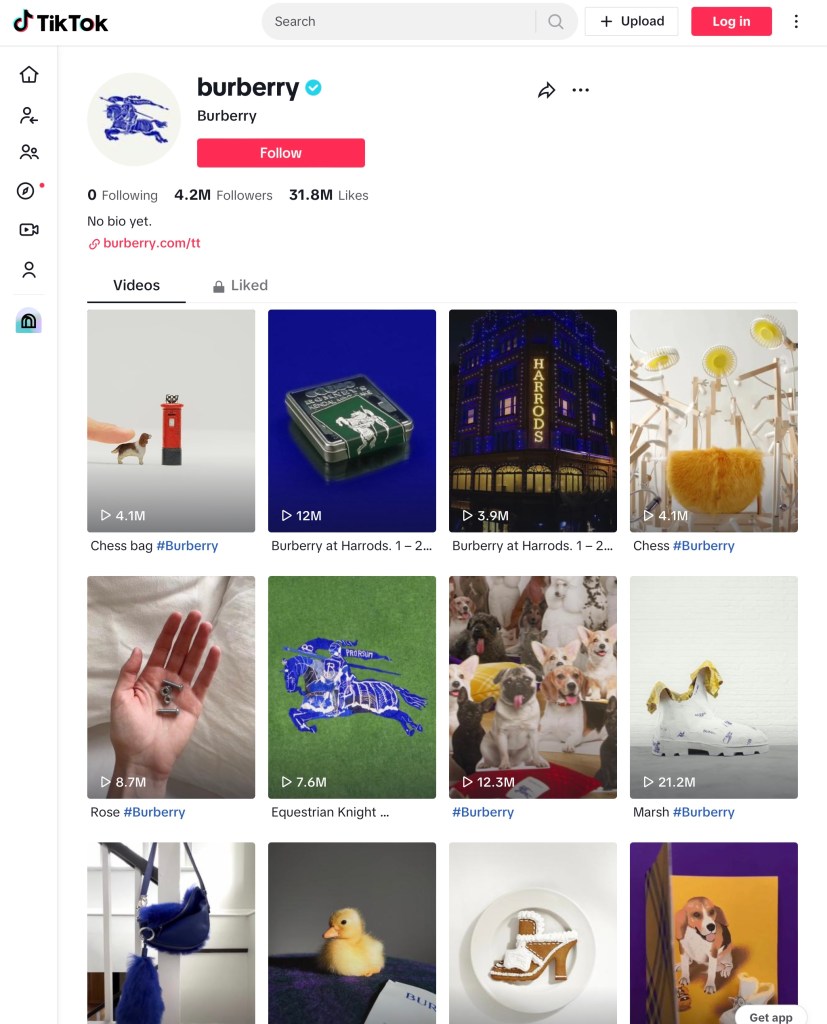
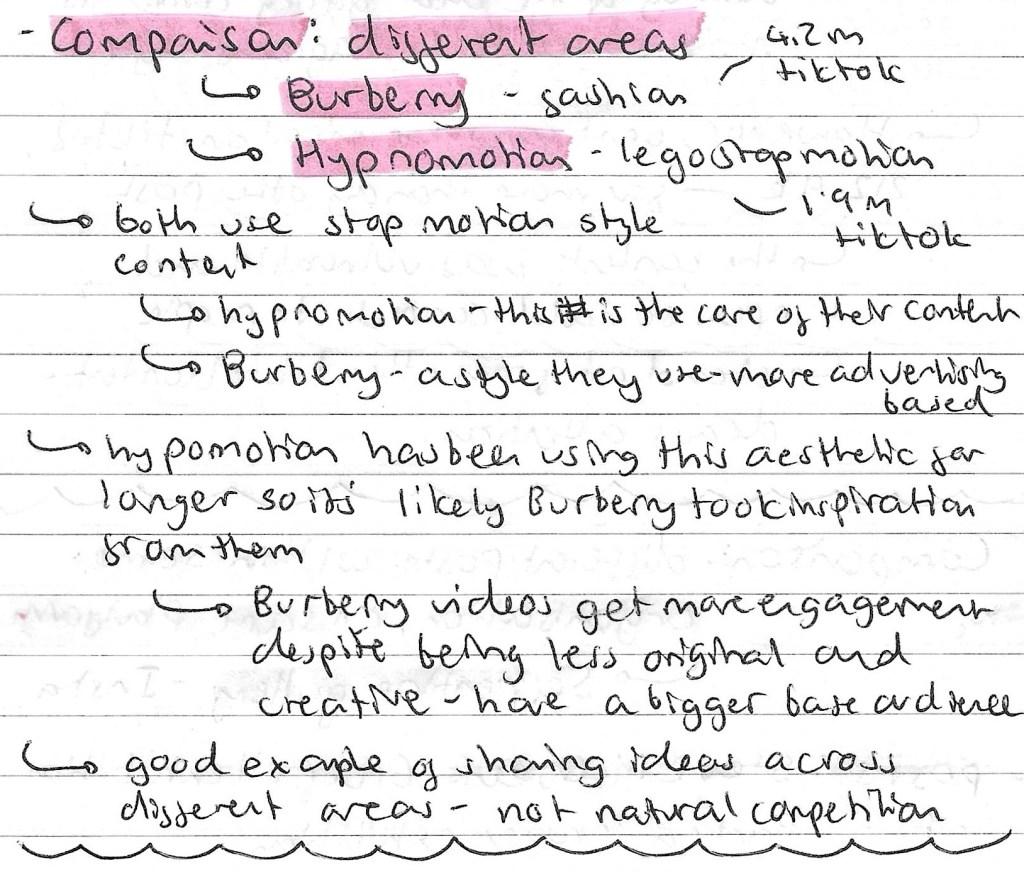
Comparing different areas: Burberry TikTok vs Hypnomotion TikTok:

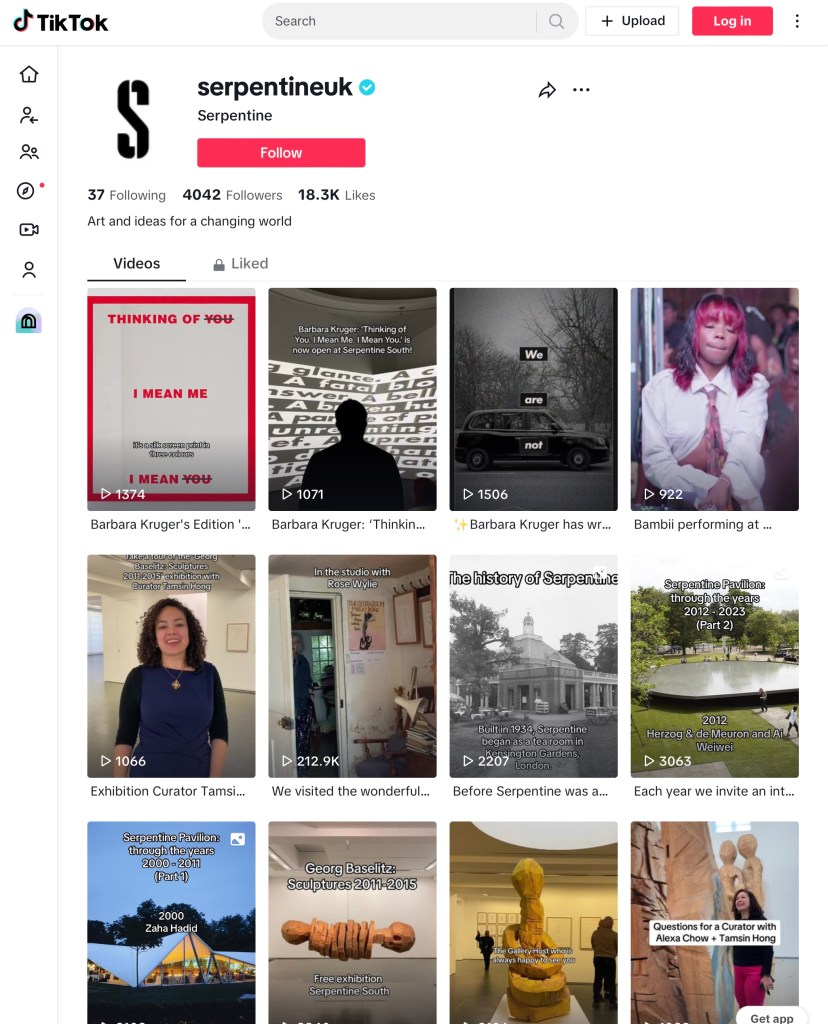
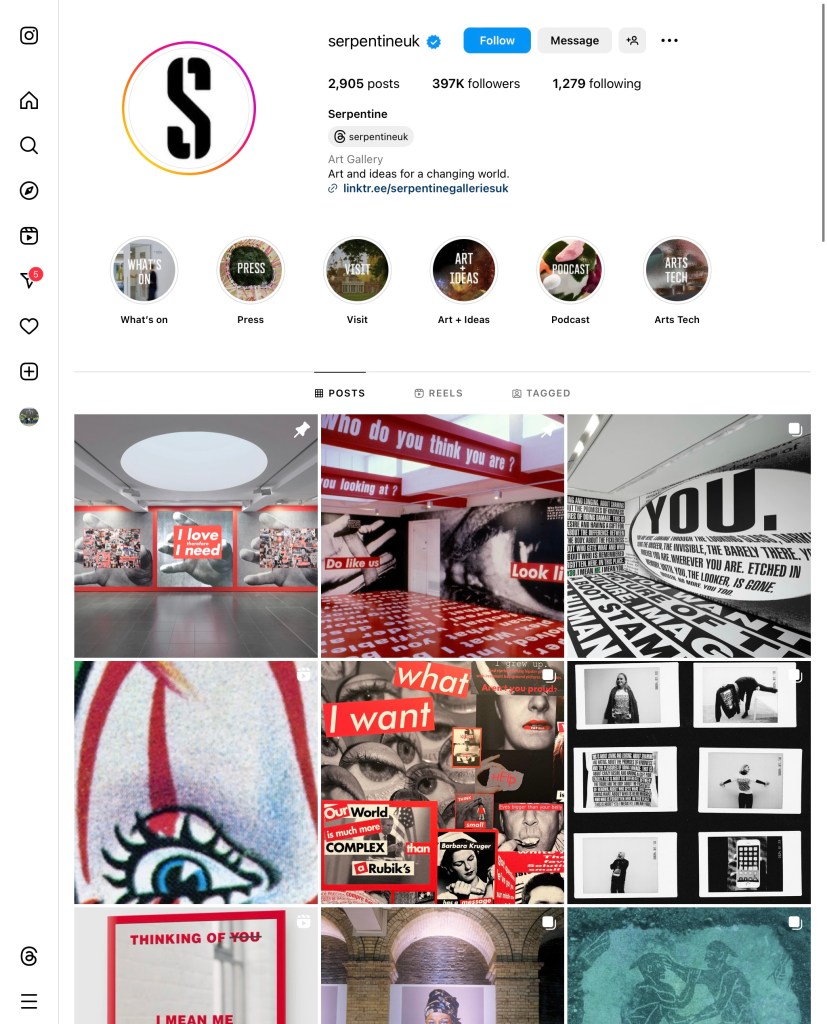
Comparing different social media platforms: Serpentine Gallery Instagram vs Serpentine Gallery TikTok:


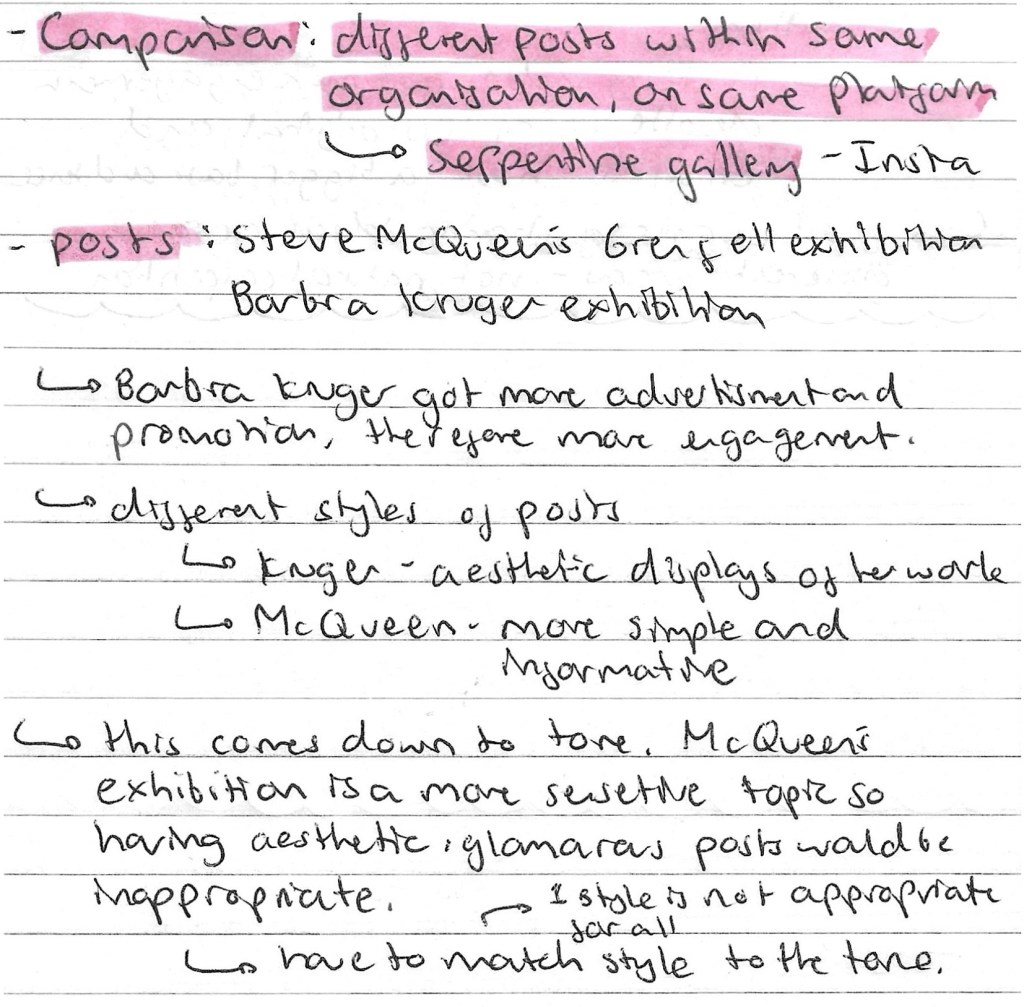
Comparing different posts within same organisation: Serpentine Gallery Instagram:
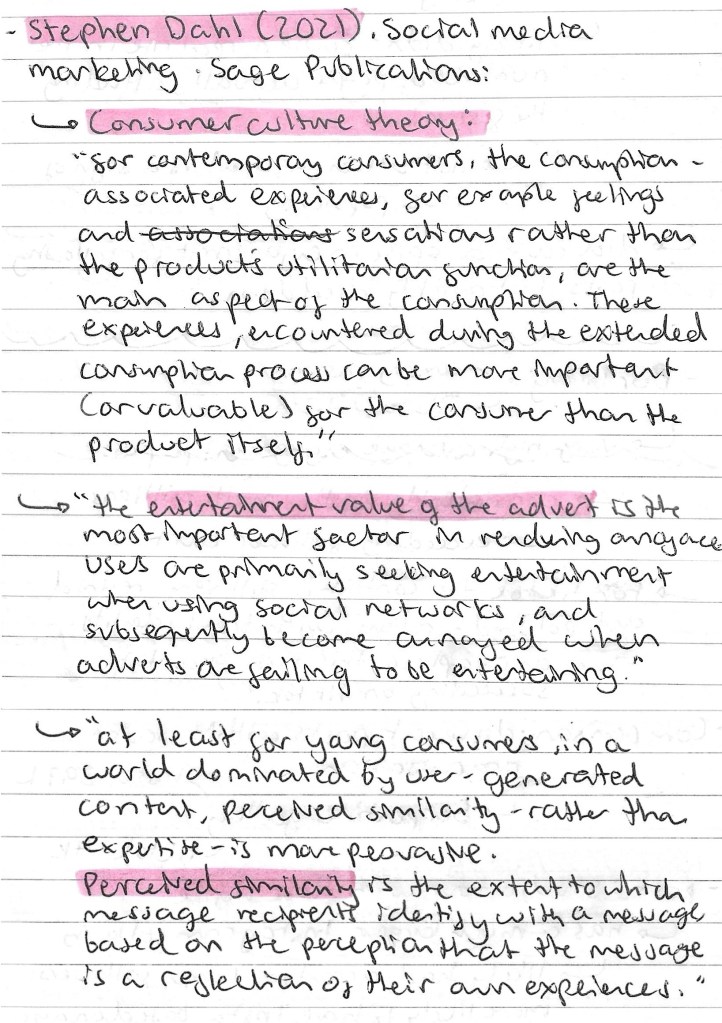
Stephen Dahl: he works in social media marketing at Sage Publications. Below are some of quotes from him about consumer culture theory:
Reflection: this session was interesting and has taught me lots about social media marketing. I learnt about the companies we looked at but more importantly I now have a better idea of how to research social media platforms in order to inform my creative decision making in the project. This type of research will help me better target my work to the relevant audience for a specific industry, product or event.
 Samuel Green Illustration