We were given a choice of Enterprise Projects to work on for this module, the one I chose was creating a 1:10 scale Model of the Great Hall. This is a live project so will push me to work collaboratively for a client to deadlines. The Great Hall was used in the 19th century to display new inventions and celebrate the advancements of science and technology during the Victorian times. I spent a lot of time over the summer working on some figures for this project so I wanted to continue with it. It will be a hands on project and I’ll get the chance to learn lots of new skills such as prop/ set design, woodwork, sculpting, 3D modelling/ scanning and electronics as well as improving my skills with model making. I think this will be a very rewarding project especially when we can see it all come together and be displayed. The client for this brief is the University of Westminster and more specially Peter Bonfield for the Universities 185th Birthday celebration. It is a piece designed to celebrate Westminster’s’ rich history and the historical importance of the Great Hall. The model is also being made to be viewed by students and staff at the university and potentially the general public.

I’ve done some research into the techniques and materials used in professional model making. I think it’s important when taking on a project to look at industry standard work so I’ve looked at some companies that make 3D models such as Phoenix Force and TPD Creative to see their process and what they use.
Model making has many uses across a range of industries, it is very important in the fields of design, engineering and architecture. It is crucial in the process of creating products and structures that function as intended and meet specific requirements. A model is a 3D representation of an object that can be used to test a range of things such feasibility, functionality, and performance. It’s used for prototypes, testing and analysing, visualising concepts and communicating ideas.
The main areas of interest in this project for me are making the figures, building the set/exhibits and post production such as lighting and arrangement. At this point in time there is a laser cut flat pack of the overall shape of the Hall, which is 3 meters long when built. There are also 15 completed figures which I worked on during the summer. They are wearing bright coloured modern clothing as we wanted the model to be as if modern day people had gone back in time and visited the Hall. This is a way of making the model more interesting and relatable to the audience. Also it will contrast the muted colours around the Hall to make the model more visually engaging. These are the figures I completed during the summer ( see blog roll titled ‘3D models summer work’ for detail on this process.)
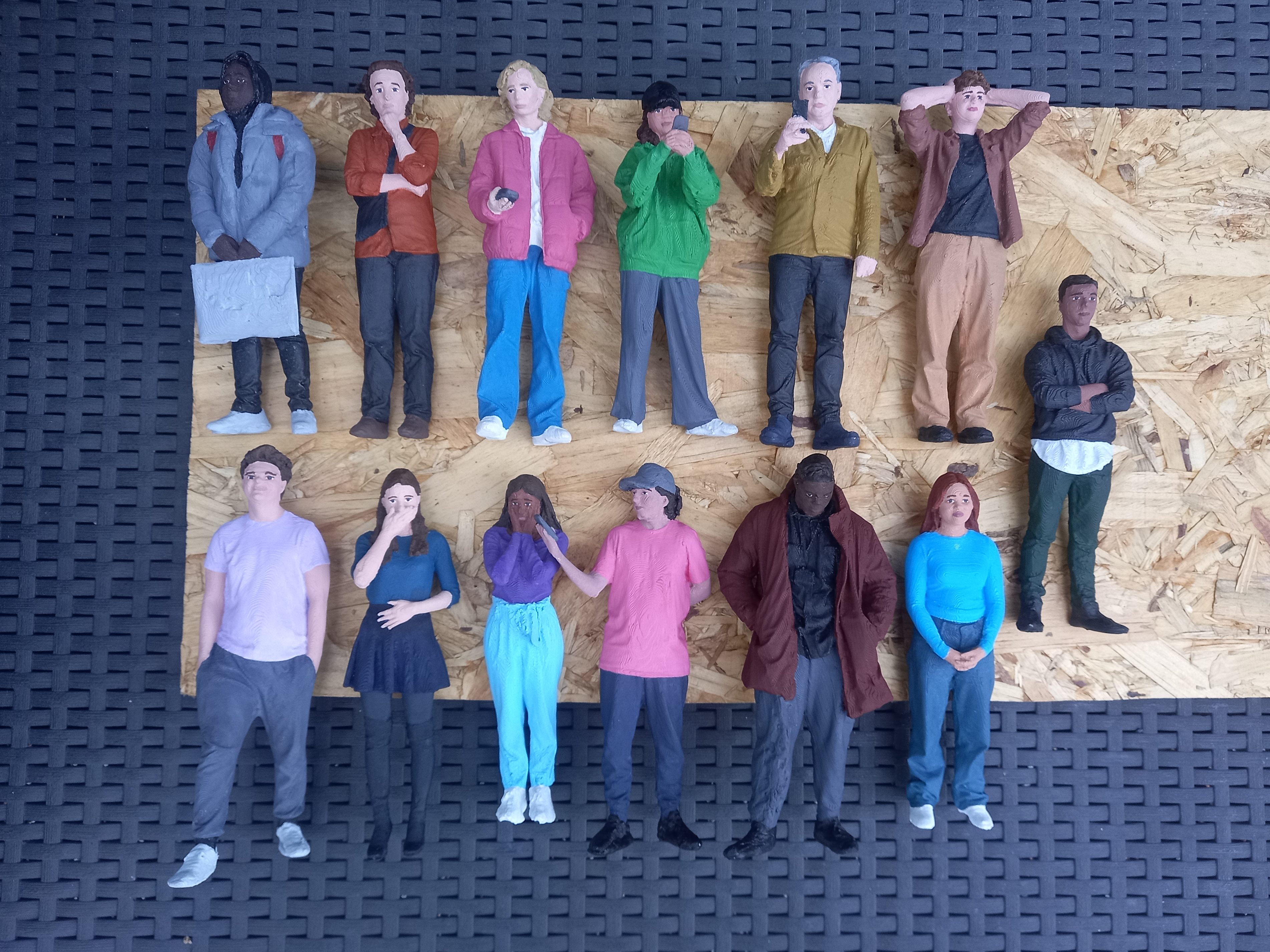
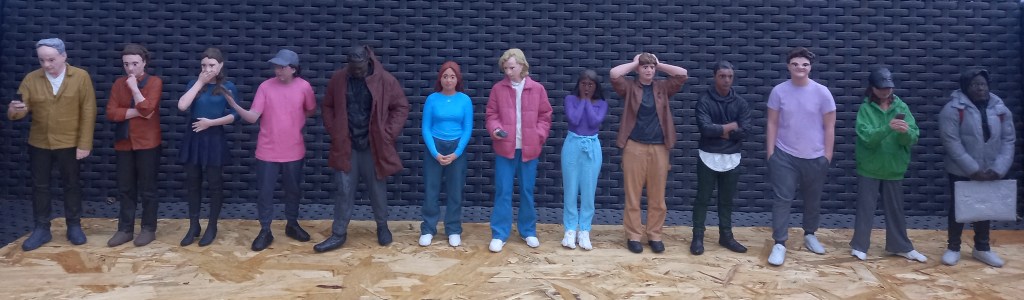
The first thing I will be doing is making more figures to populate the Hall. This will involve 3D scanning, editing the scans, 3D printing and finally painting. I will aim to produce a minimum of 10 more to make the Hall feel more busy. The figures I’ve already made have lots of general walking and looking around poses so these will be perfect to generally having around the Hall but now I want some more specific poses such as people interacting with the exhibitions and each other. This will make the model more interesting for viewers as there will be lots of little interaction within the model happening. Also it has been documented that there was live music in the Hall so I will aim to reproduce this. I will scan and print people in the poses then model the instruments by hand. After the figures are completed I will move onto finishing up the base of the Hall and modelling some of the exhibits using a combination of 3D printing, 3D modelling and hand modelling. Due to the time constraints during the module we will be aiming to completed all the figures and begin creating the exhibits.
The Polytechnic Institution was opened in August 1838 to provide the public with a practical knowledge of the arts and sciences. The institution opened in 1839. Public attractions included exhibitions, working machines and models, scientific lectures, rides in a diving bell and demonstrations of photography. John Henry Pepper was its most famous showman, someone who we want to recreate for this model.
These are reference images of the Great Hall:
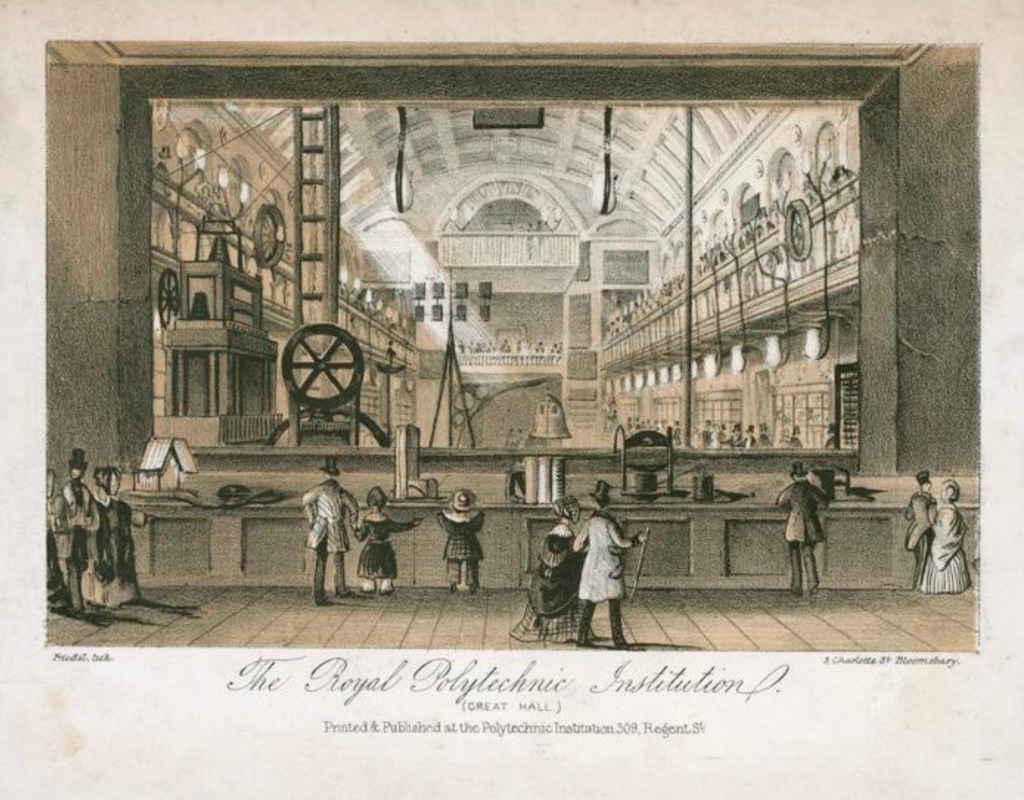

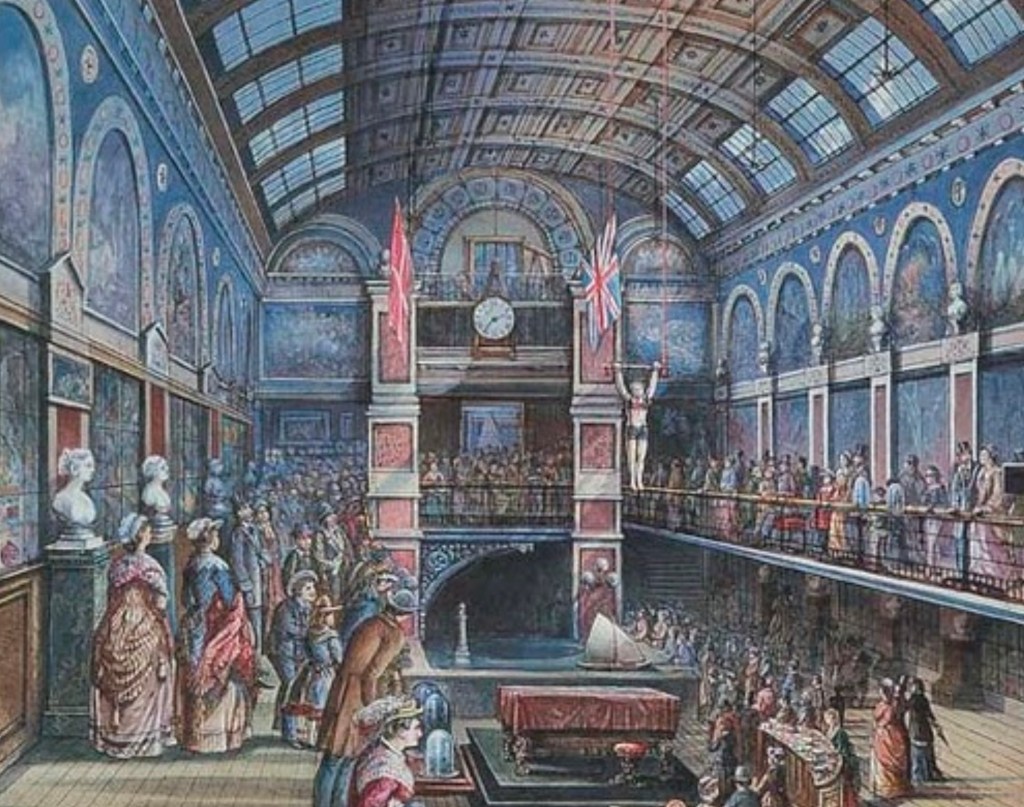

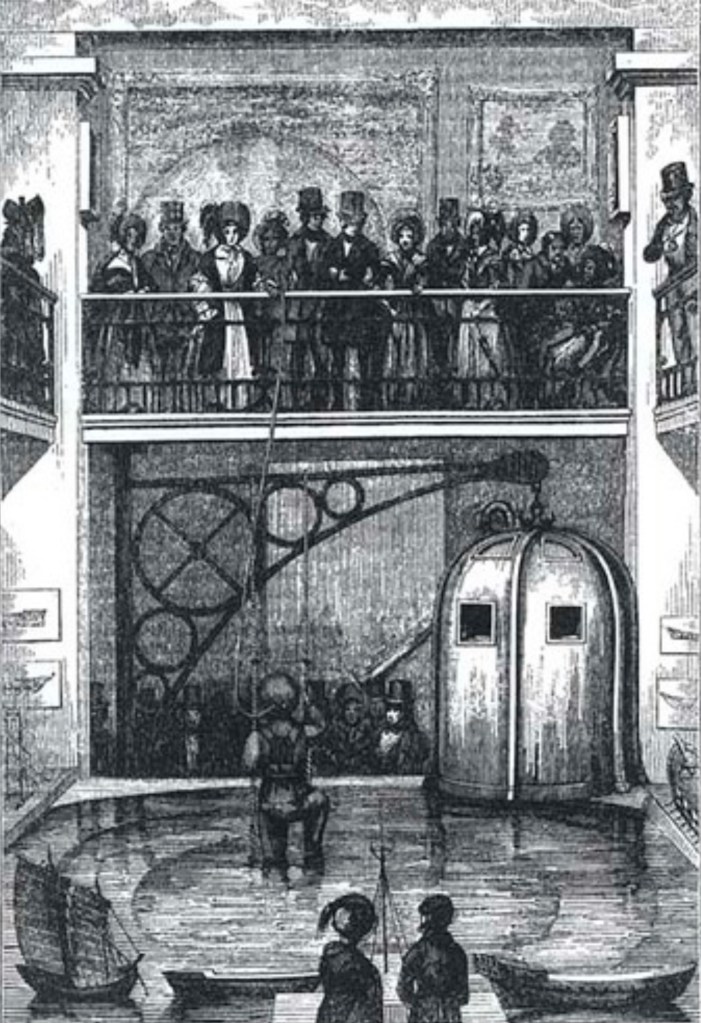

The next 2 provide a good list of the exhibits on display in the Great Hall:
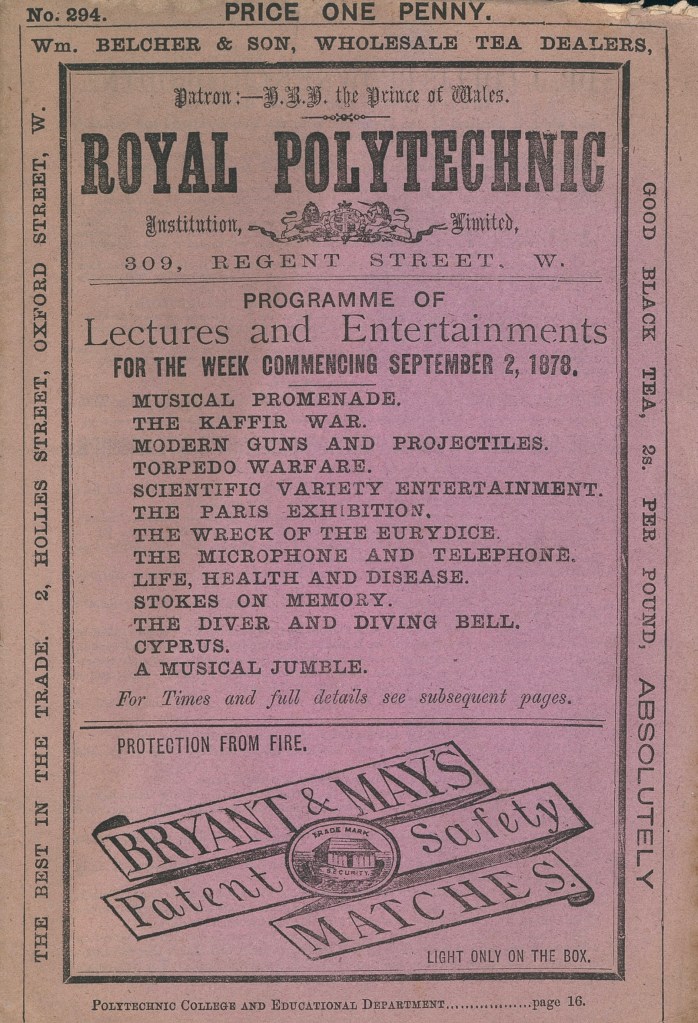
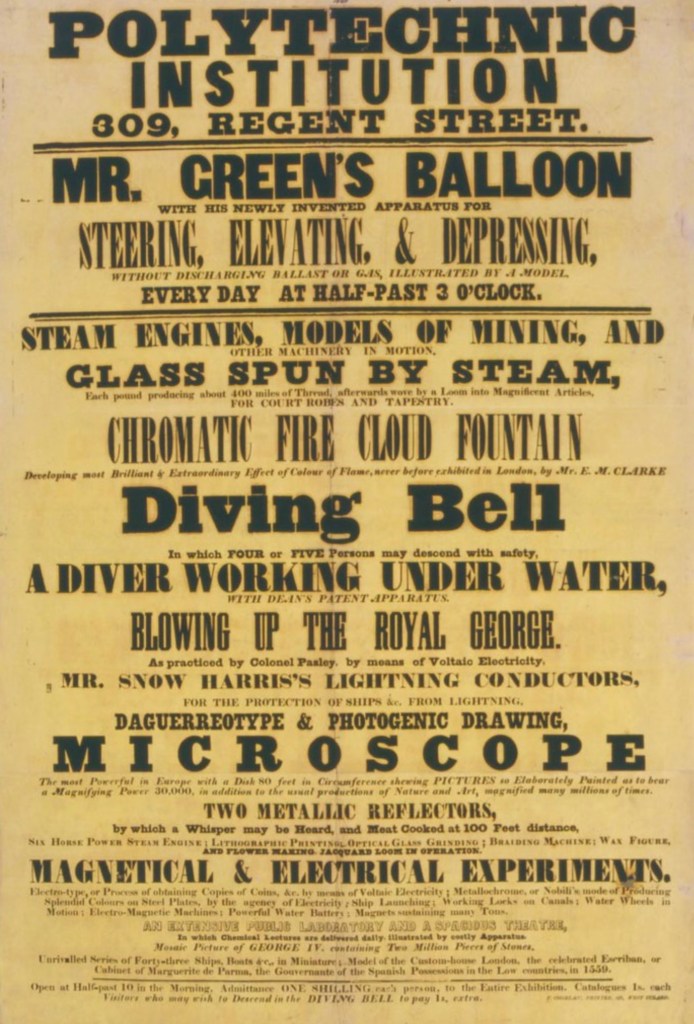
This is a reference image we used to help create the laser cut flat pack of the Hall:
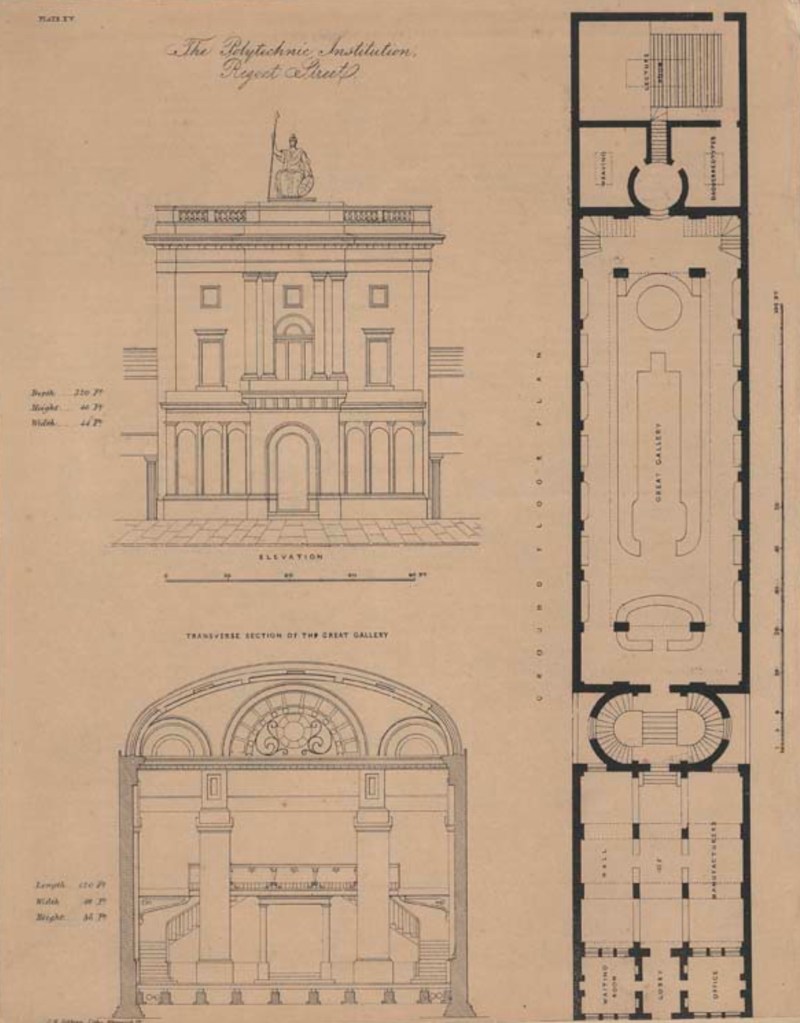
For this project I will be working as a model making so I did some research into this industry. The responsibilities will vary depending on their specific job and industry. Model making is a process that combines manual and digital techniques to accurately represent the desired object or design. Some tasks will require more detail than others.
Below are some key skills that a model maker needs:
- Reading and interpreting technical drawings such as blueprints and floor plans.
- Selecting appropriate materials for the project. Some options are wood, plastic, and metal.
- Using a range of tools and equipment, such as saws, drills, laser cutters and 3D printers.
- Applying finishes or coatings such as paint to the model.
 Samuel Green Illustration