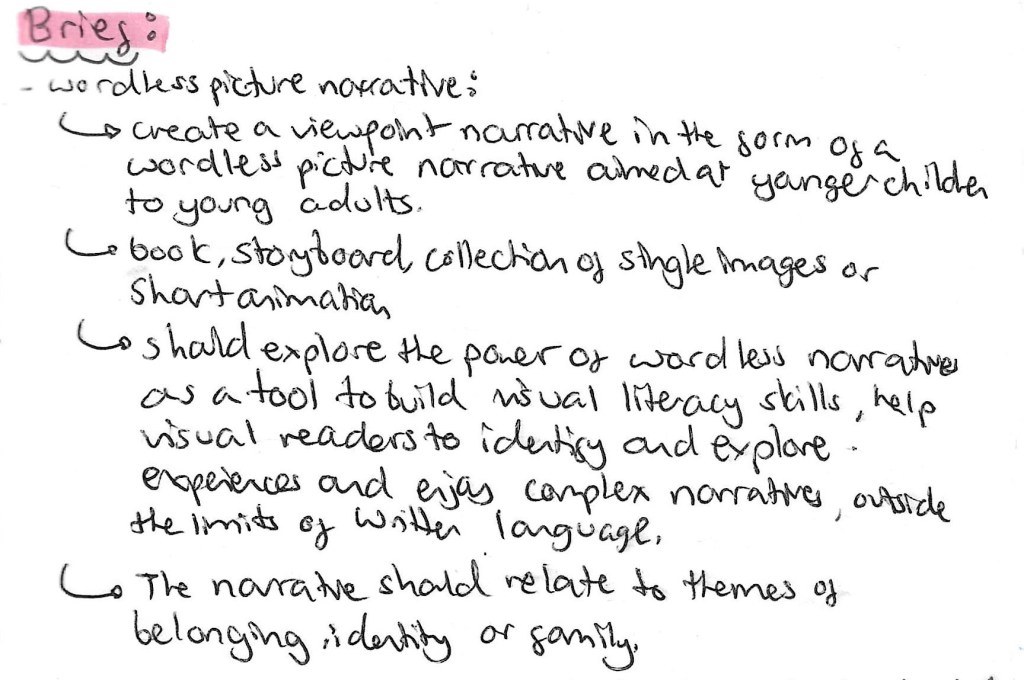
The third potential brief we where introduced to was about creating a wordless picture narrative, this is a narrative that is entirely expressed through illustrations. In summary it is to create a viewpoint narrative in the form of a wordless picture narrative exploring the themes of identity, belonging and family. From the beginning of this module I’ve had a stronger interest in this brief compared to the other as it’s more something I general enjoying creating and engaging with. Below is the criteria for this brief.
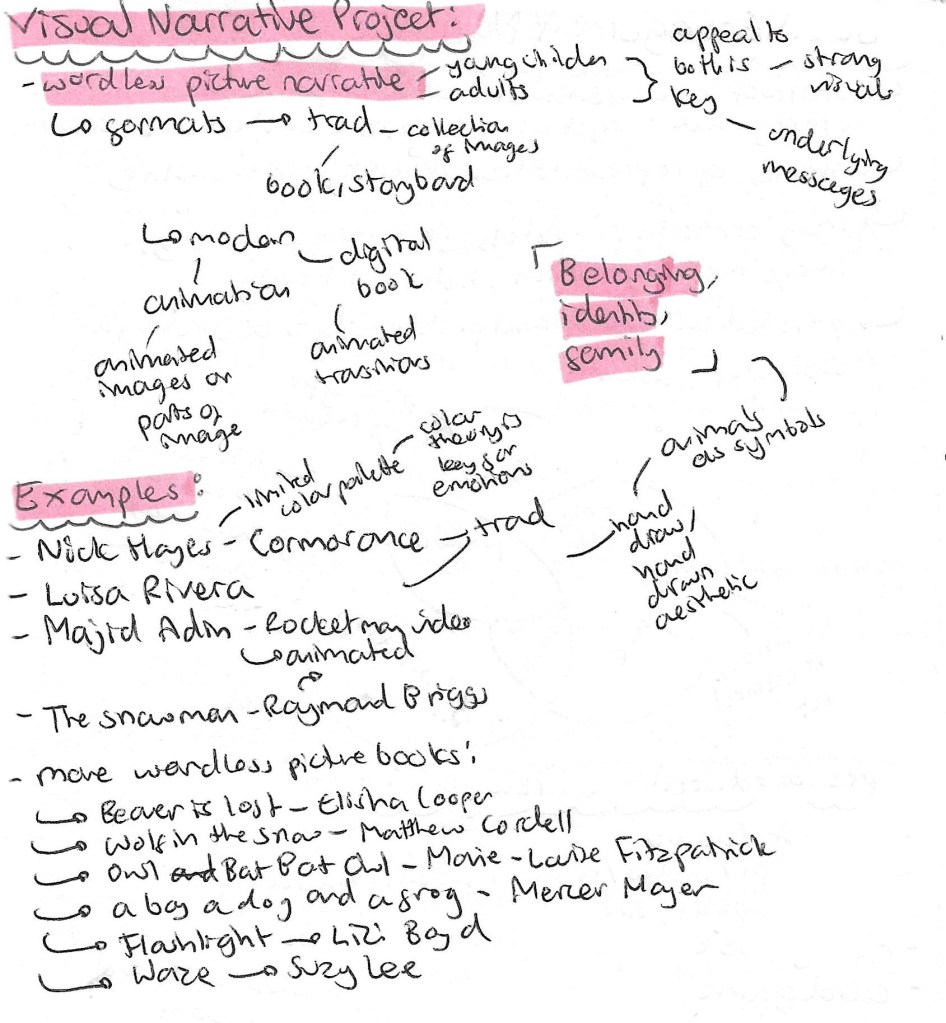
This page contains some of the research I did before the session to familiarise myself with the topic and some of the examples I looked at to get a sense of the style. Wordless picture narratives is a style of illustrated book I really admire as it takes great artistic and storytelling skills to convey an entire narrative solely through images.
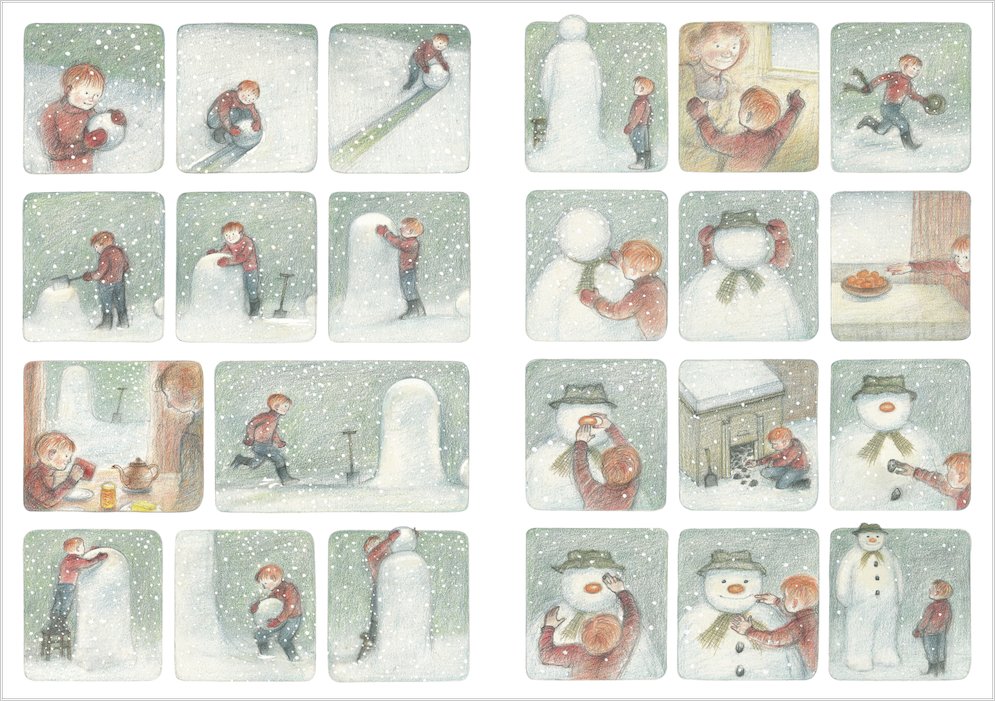
‘The Snowman’ is a wordless picture book by Raymond Briggs made in 1978 and was adapted into an animated television film in 1982. This is a childhood favourite of mine as I always loved how to story was told through just beautiful visuals and well chosen music. Following a night of heavy snowfall, a young boy named James wakes up and plays in the snow, eventually building a large snowman. At the stroke of midnight, he sneaks downstairs to find the snowman magically comes to life. The story has a sad ending as James wakes up and finds the snowman melted in the morning. The story has similar themes to that of our brief such as family and belonging. My favourite thing about this piece is the hand drawn quality of the visuals.

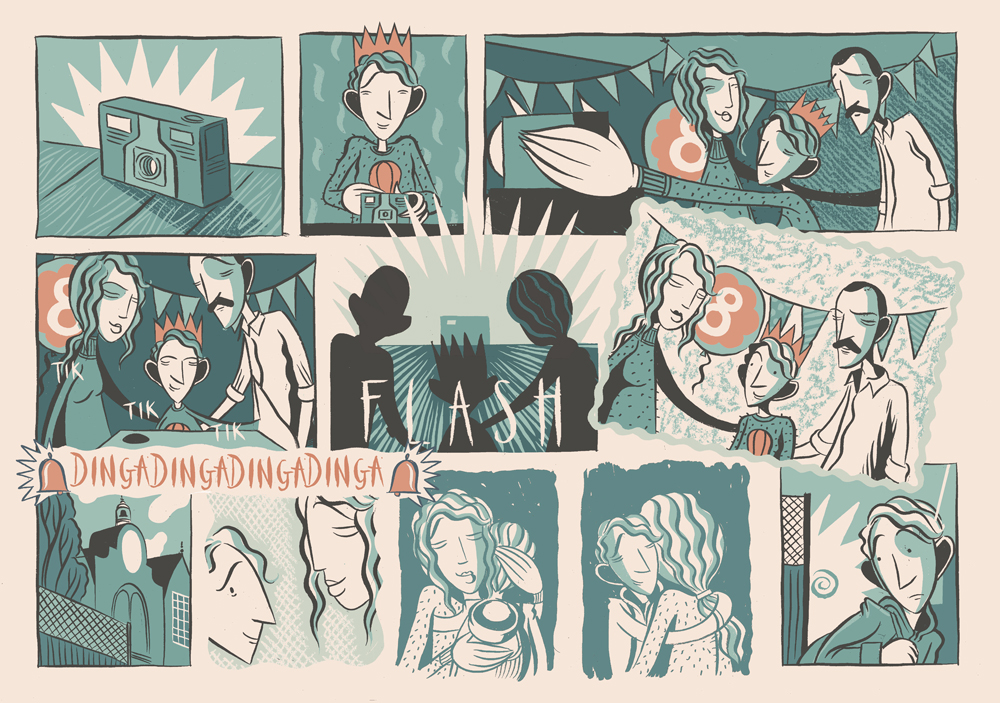
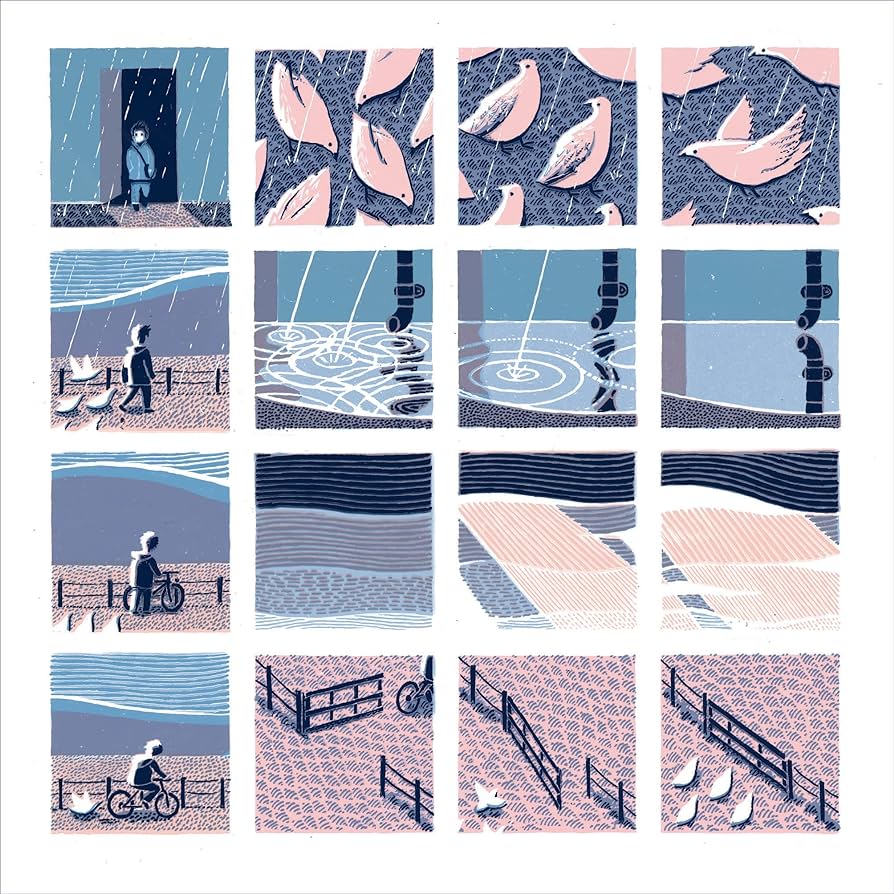
Another example of a wordless picture narrative is ‘Cormorance’ by Nick Hayes. This is the story of a girl and a boy and and a deserted reservoir. The girl wants only to impress her mother, and finds the perfect challenge to prove herself. The boy suffers a tragedy, becomes fixated with a lost memento and makes it his mission to find it. The water is where, one day, the two will meet. What I particularly like about this example is the strong use of colour. Hayes has picked a very simple colour palette of just 2 complementary colours, blue and orange. This helps create the mood of the piece and is a technique I will consider using.
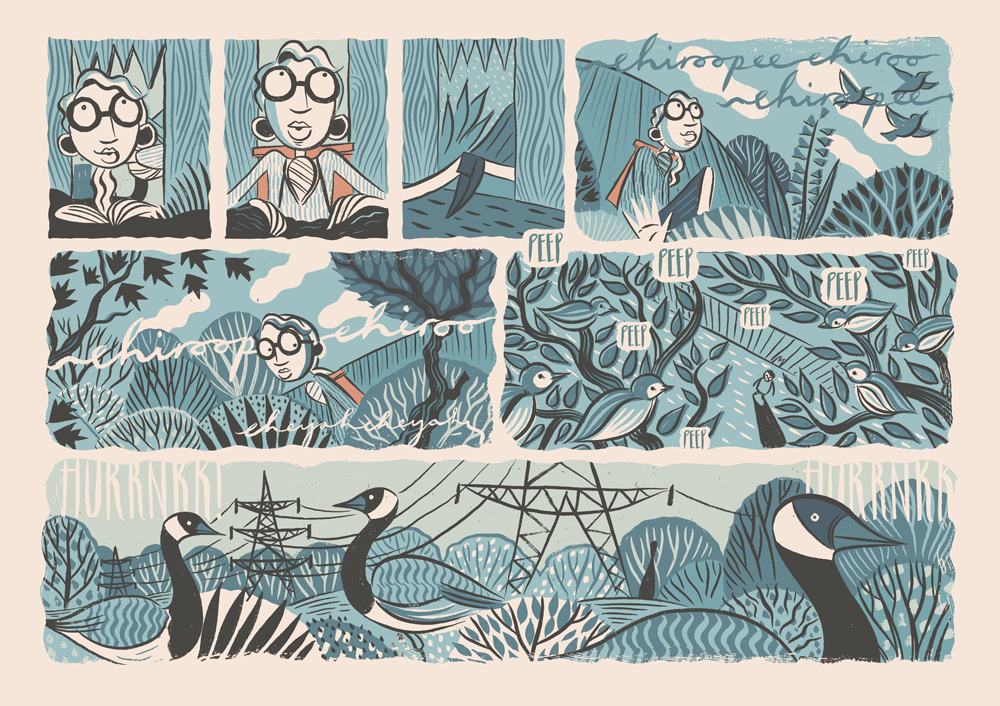
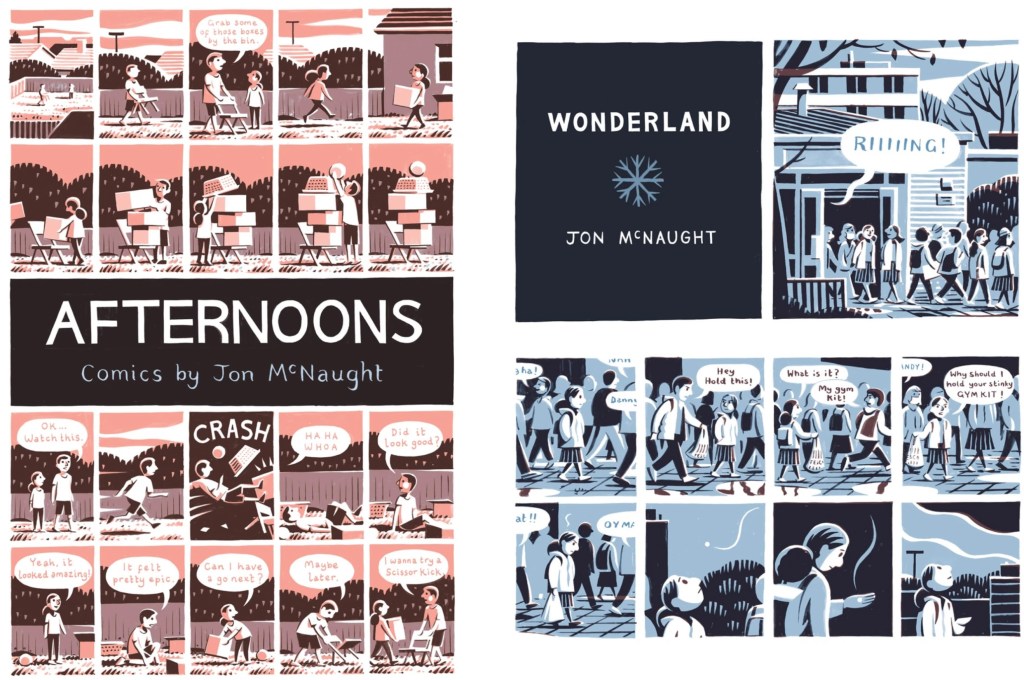
John Mcnaught has a similar visual style for his wordless narratives, very minimal colour palette and cartoonish characters. I think for wordless narratives, reducing the colour palette to 1 or 2 colours with lots of variation is shades is very effective as it easily translates mood and emotion to the visual reader.
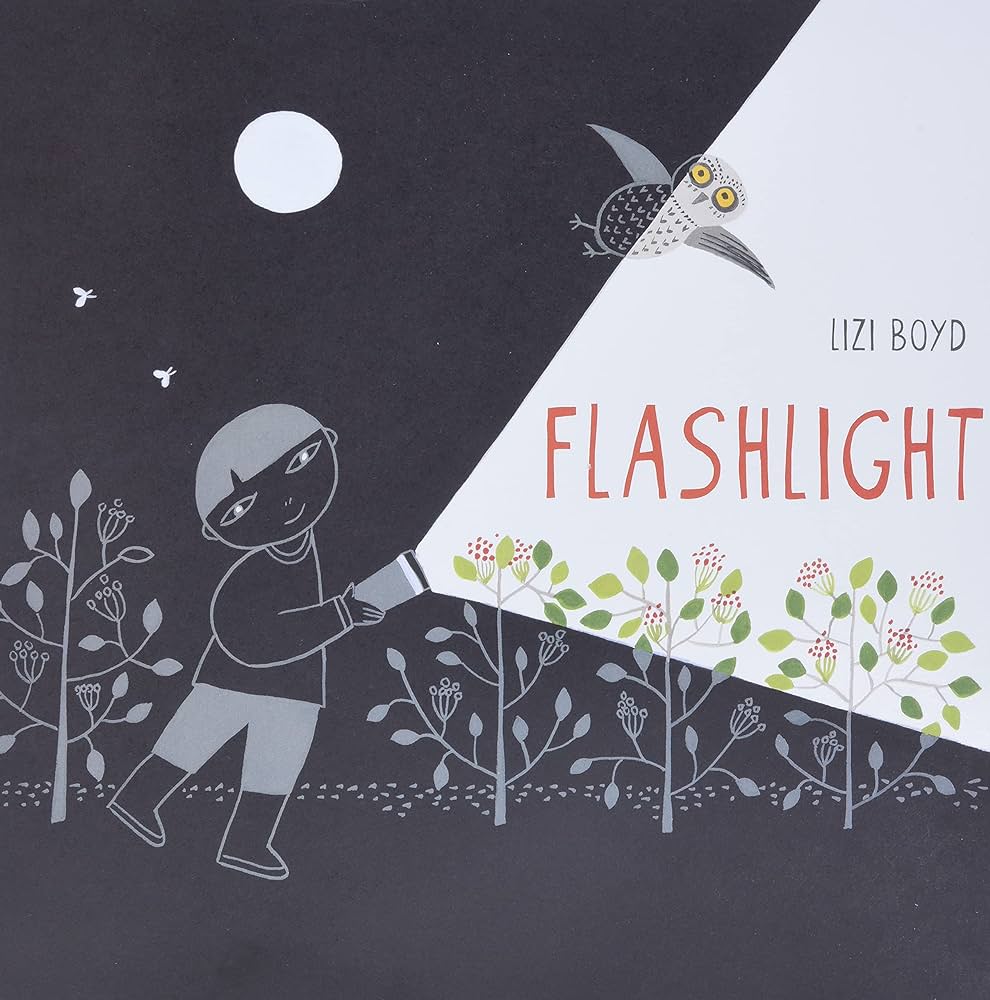
This is the cover from Liao Boyd’s story titled ‘Flashlight’. She uses colour in a very interesting way. We usually associated lots of bright and warm colours with children’s books but Lizi Boyd takes it in the complete opposite direction. The majority of the book is black with just simple white outlines. Only small sections are in colour, these are the bits the character is shining his flashlight onto. I think this is a really clever way of controlling and limiting your colour use to engage children with your narrative
For the session we had Luisa Rivera come in to speak to us about the topic of wordless picture narratives and her work. She is a London-based artist originally from Chile, working primarily on paper with water-based media, exploring our relationship with the environment through multiple layers of interpretation. She draws on storytelling to create narratives that are inhabited predominantly by women and natural elements, covering themes such as ecology, feminism, and personal memory.
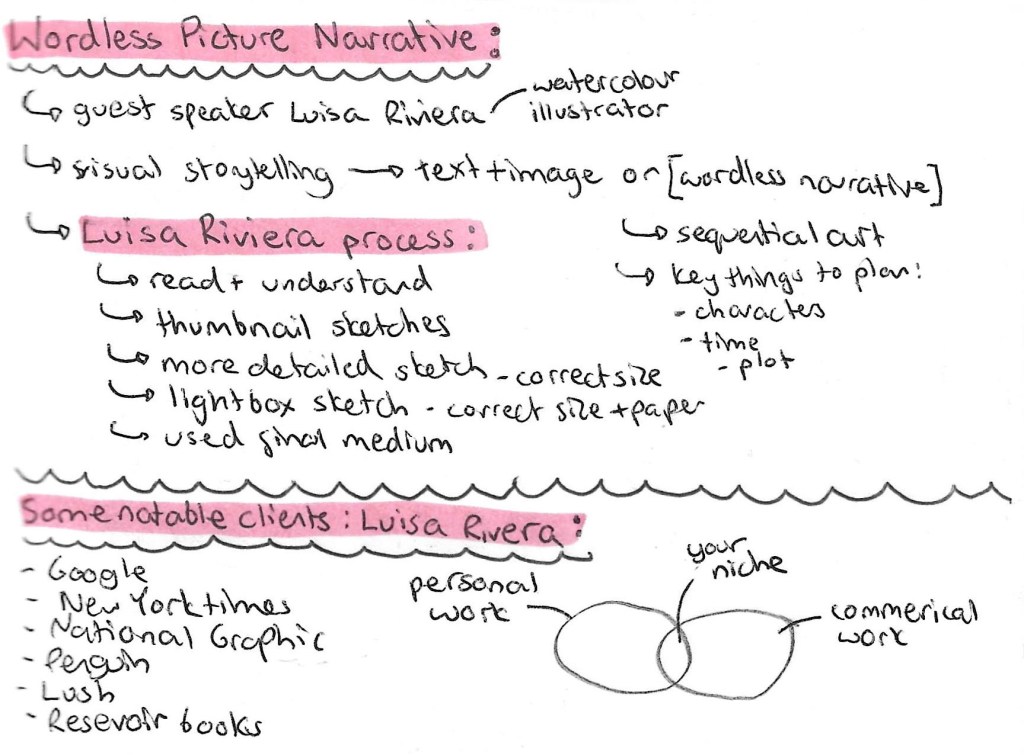
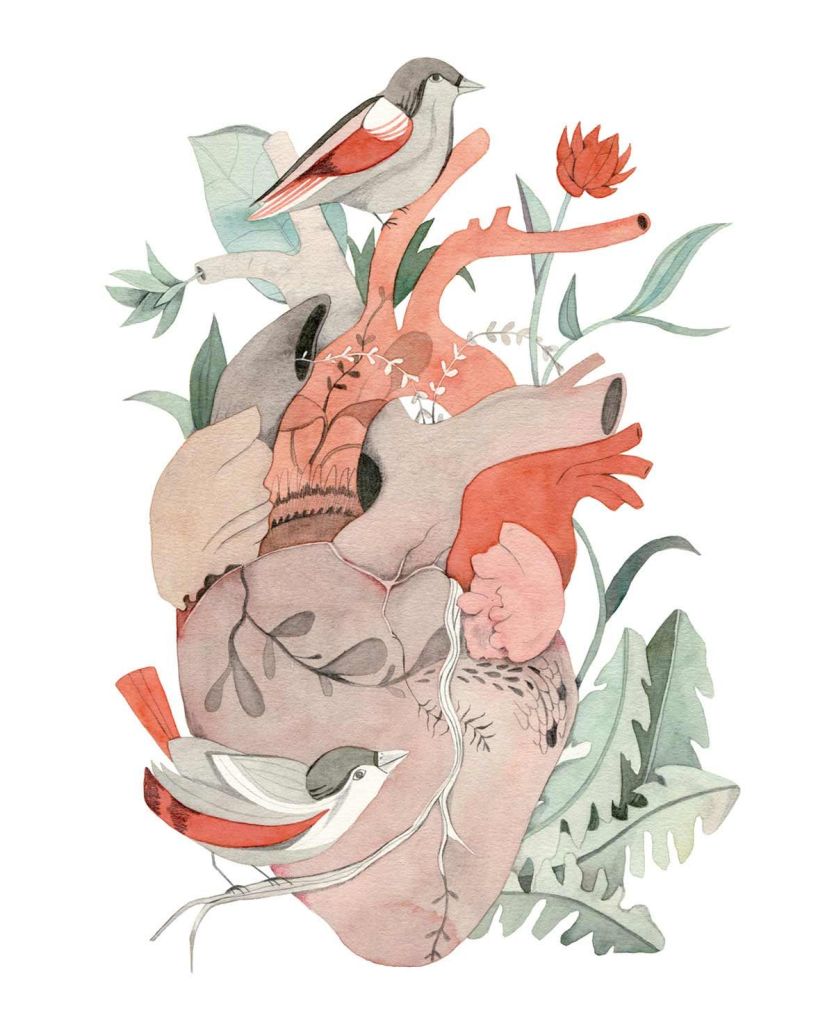
These are 2 of Rivera’s pieces that I particularly like. I love the delicate water colour style combine that she uses and is able to get intricate details it’s. The colour aren’t too bright, they have a nice muted look. I like the thematic combination between fantasy and reality with all natural and real elements but combined in an almost magical looking way.

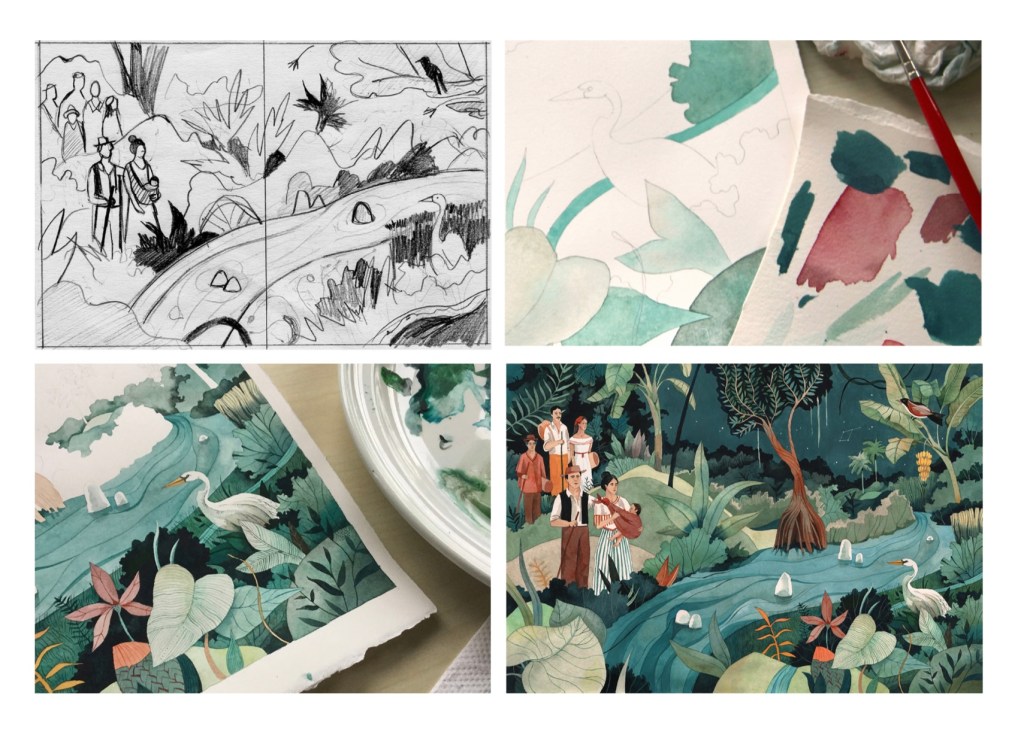
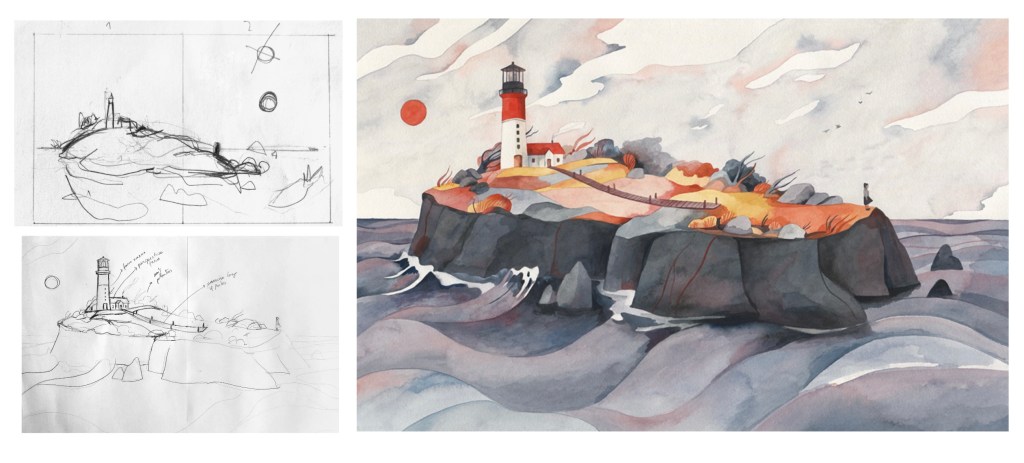
Luisa Rivera also took us through her creative process from when she is applying to get the work from the client to its final submission. The images below show the progress from a rough thumbnail sketch to the final outcome. She starts with a thumbnail sketch for ideas then moves onto slightly more detailed sketches, mapping out placement. Then she tests out colour and finally uses a light box to transfer the sketch onto the right type of paper and starts using her medium of choice, usually water colour.

These are some of the things that Rivera said are the key things to think about when planing a wordless picture narrative.
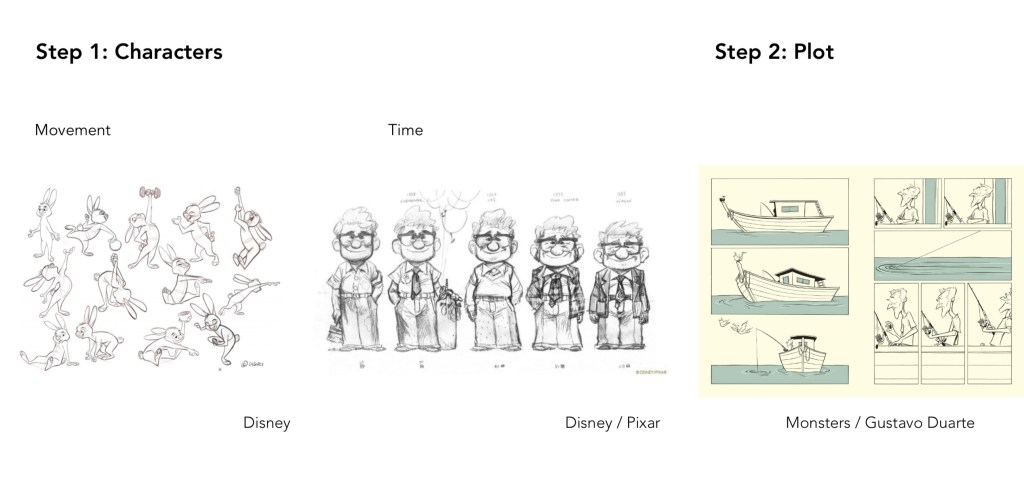
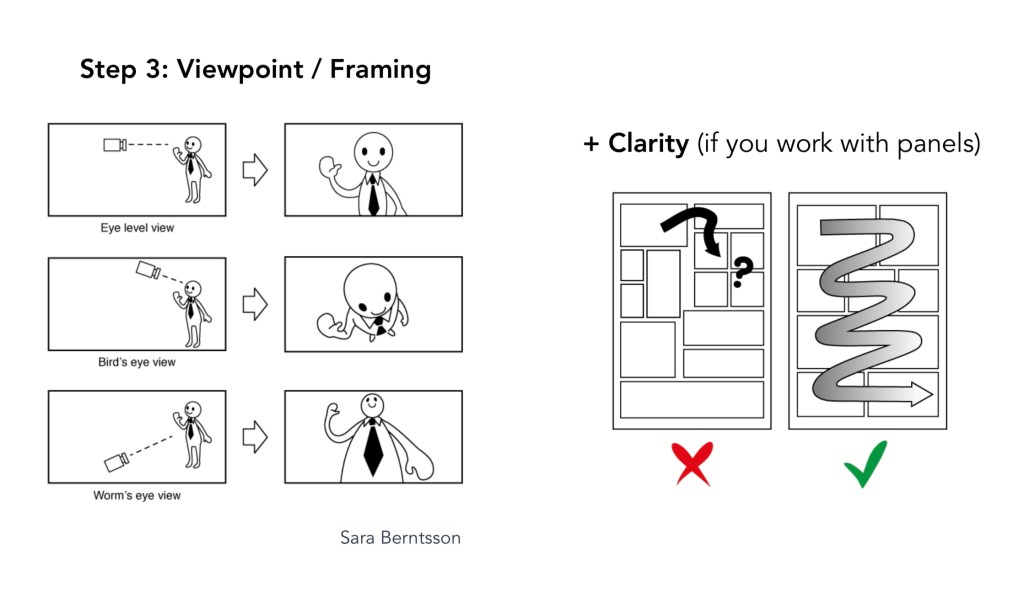
These are some examples of wordless narratives in other forms, editorial illustration and animatics. I will look into these as they will all be helpful in enriching my knowledge of wordless picture narratives so I’m able to construct my own.
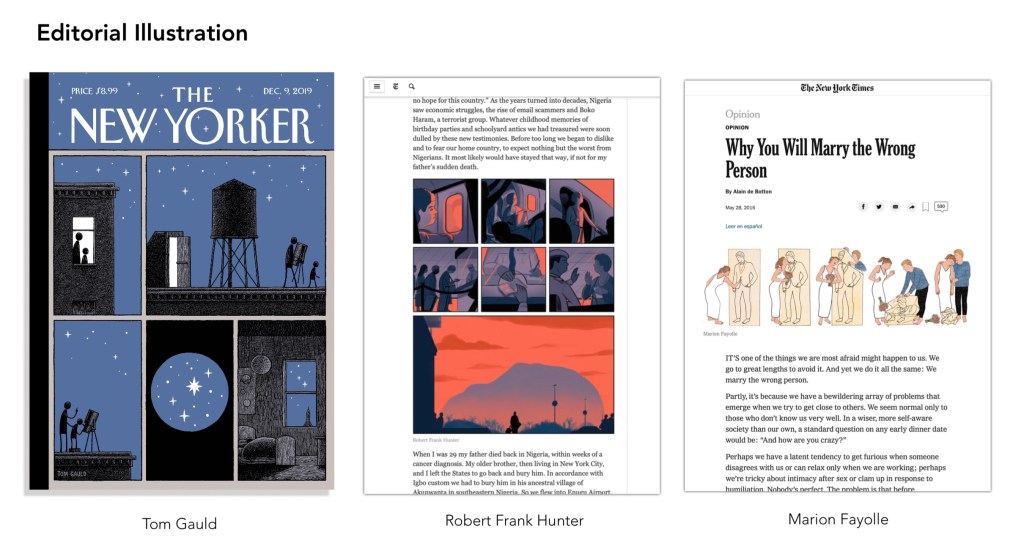
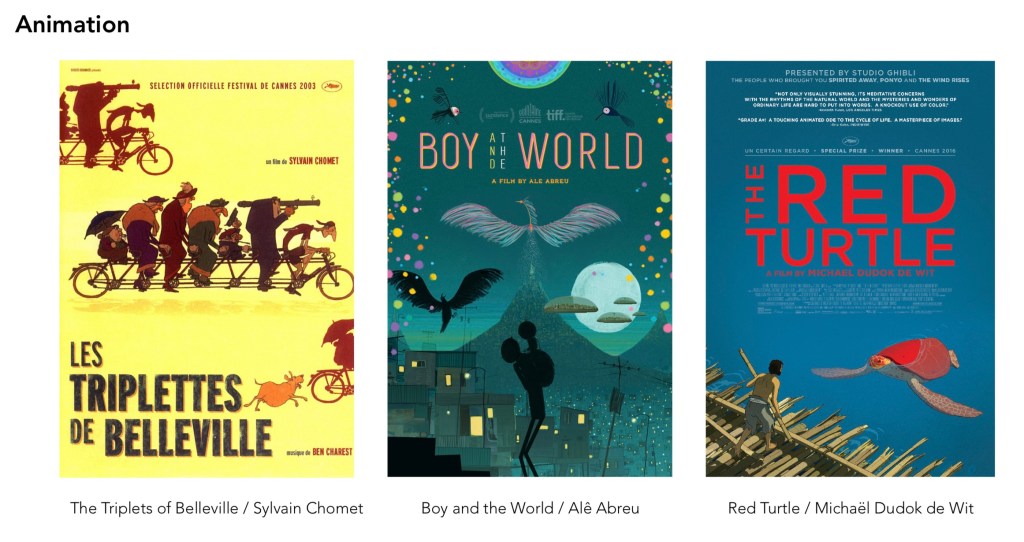
I really enjoyed this session and learnt a lot about this type of narrative from my own research and the talk we had with Luisa Rivera. The next step is to choose which of the 3 briefs to develop on.
 Samuel Green Illustration