The second of the 3 choices of briefs is about Expanded Narratives. This is a term I wasn’t very familiar with prior to this session so I was able to learn a lot. An Expanded Narrative challenges linear narrative structures such as Joseph Cameron’s ‘Hero’s Journey’ that we looked at in week 1. Another traditional linear structure is the 3 act structure, act 1 the setup, act 2 the confrontation and act 3 the resolution.
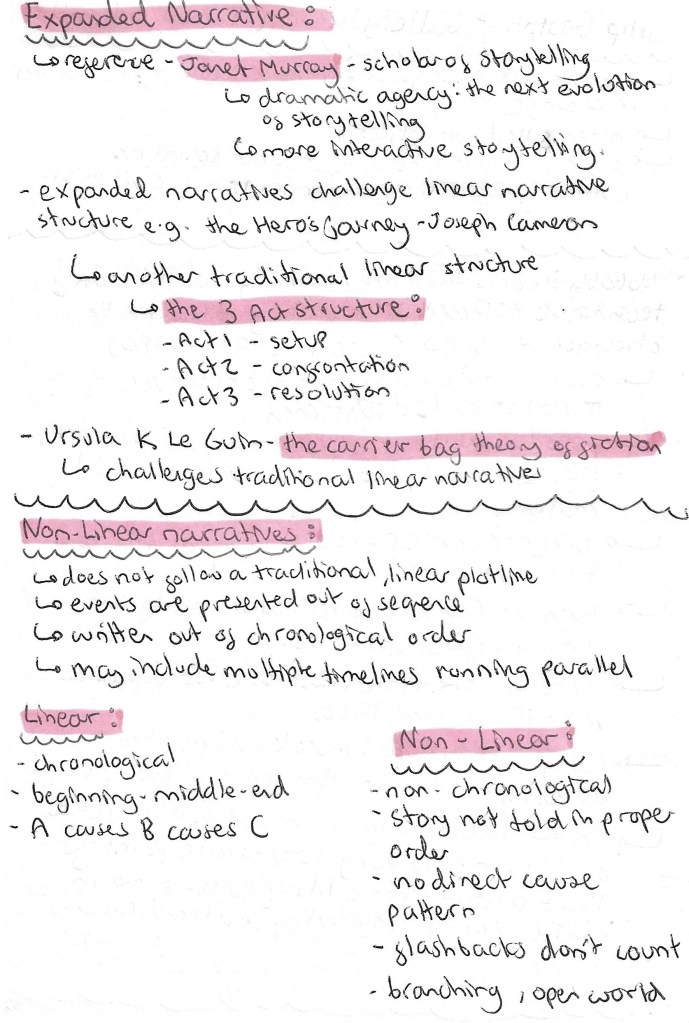
Expanded Narratives have a non- linear structure. The events are presented out of sequence, sometimes out of chronological order and may include multiple timelines running parallel. Above are some of the differences between linear and non-linear narrative structures.
Below are some simple diagrams illustrating the structure of a linear and non-linear narrative.
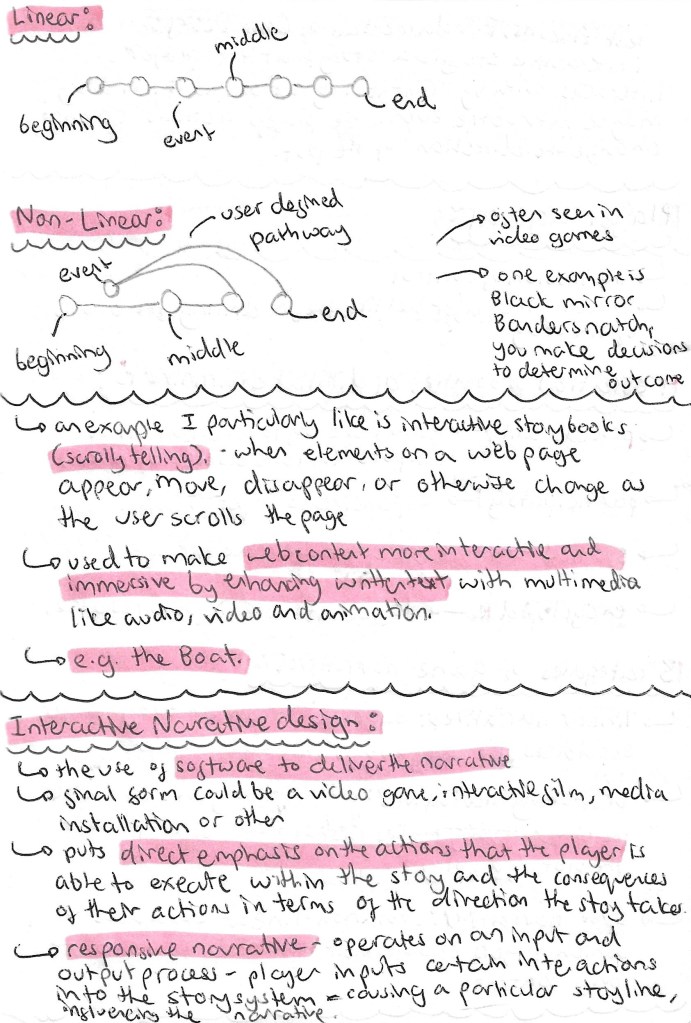
One format for expanded narratives is an interactive storybook, sometimes referred to as scrollytelling. A great example of this is The Boat by Nam Le created using digital software. As you scroll and move around the page the images appear, move and disappear, putting emphasis on the actions of the reader. This is a modern way of enhancing the traditional storybook into a digital and interactive format.

An important term that I learnt was player agency. This is where an Expanded narrative gives the illusion of control to the player/viewer. This makes the players feel like they’re driving events although their actions aren’t actually having an impact on the end result of the narrative.

When looking at Expanded narratives its important to consider digital games as these this type of narrative is commonly seen in video games such as Red Dead Redemption and Minecraft.
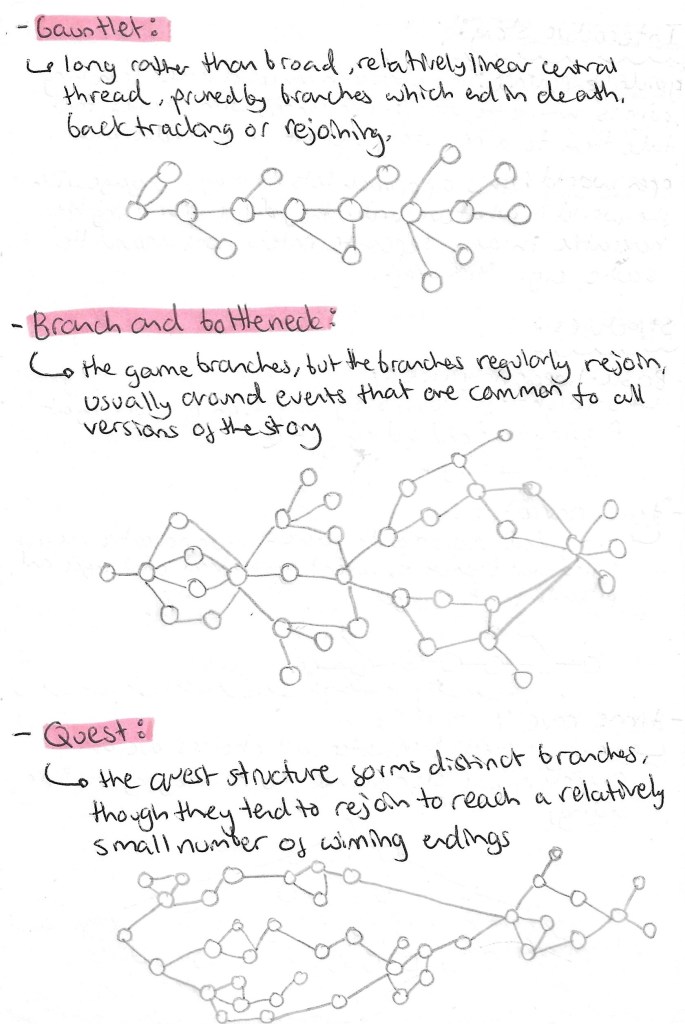
Then we looked in more detail at different interactive story structures. There are 2 broad categories for interactive stories, guided experience and open world. A guided experience gives the user choices at certain times to define the path but the choices are limited but an open world gives the user the freedom to engage with the narrative in any order. Within these 2 broad categories there are many different structures which are listed and drawn below:

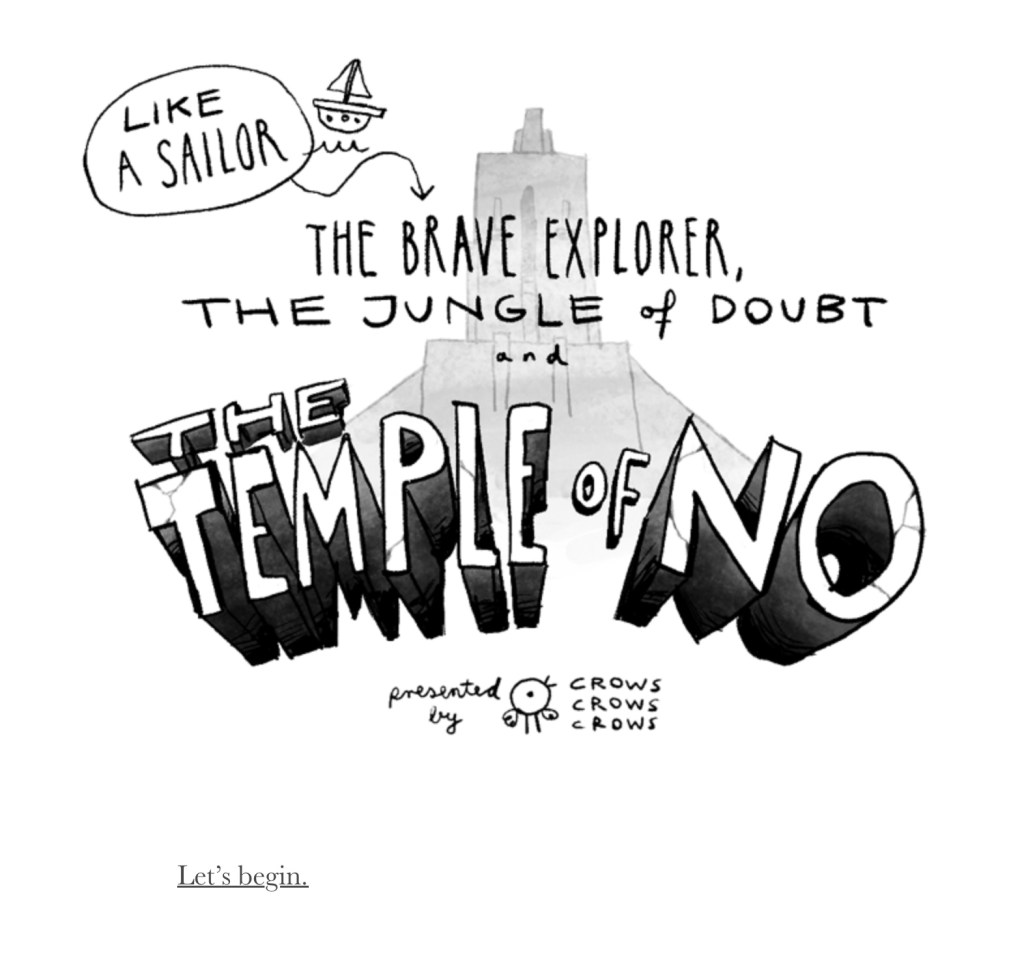
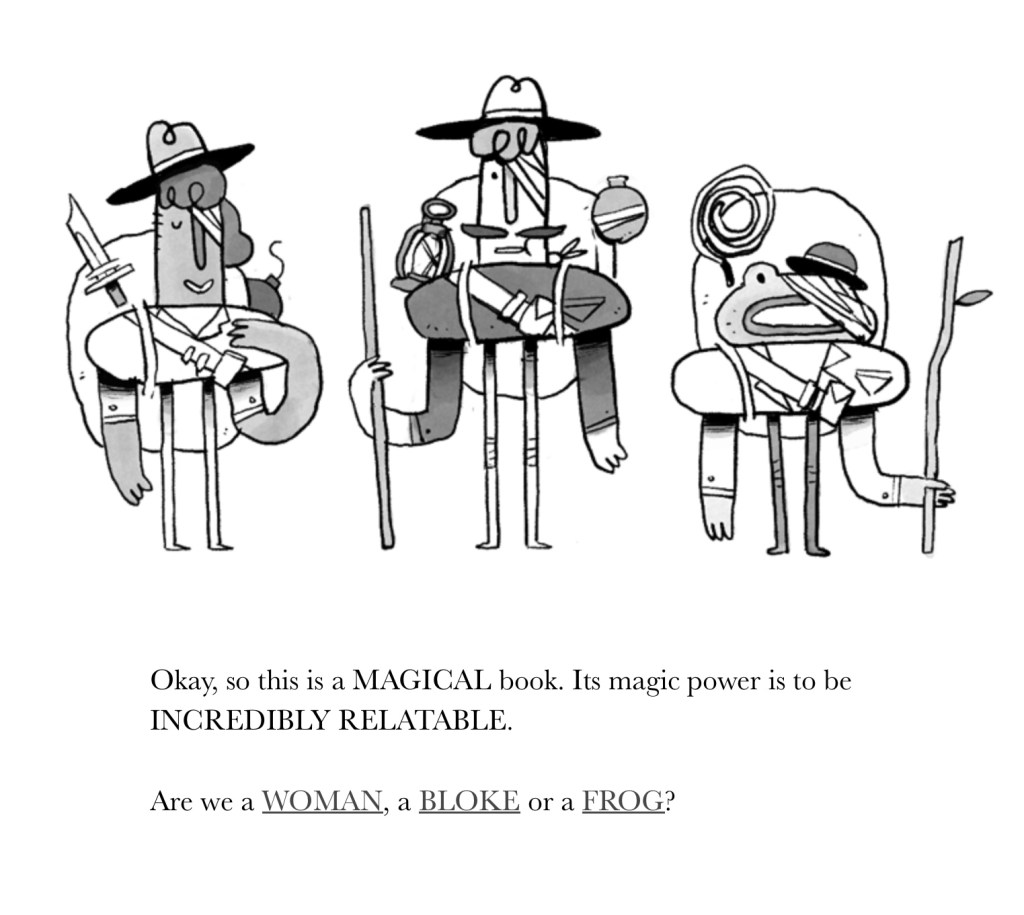
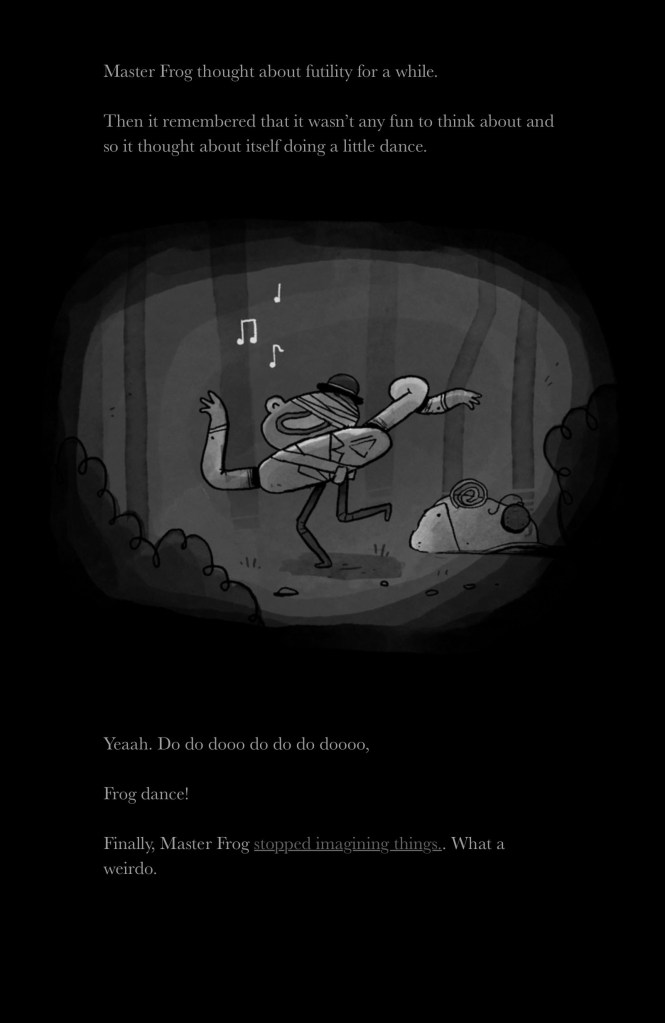
In groups we where given different Expanded Narratives to explore and then review. I was given the interactive story ‘The Temple of No’ by Crows Crows Crows.
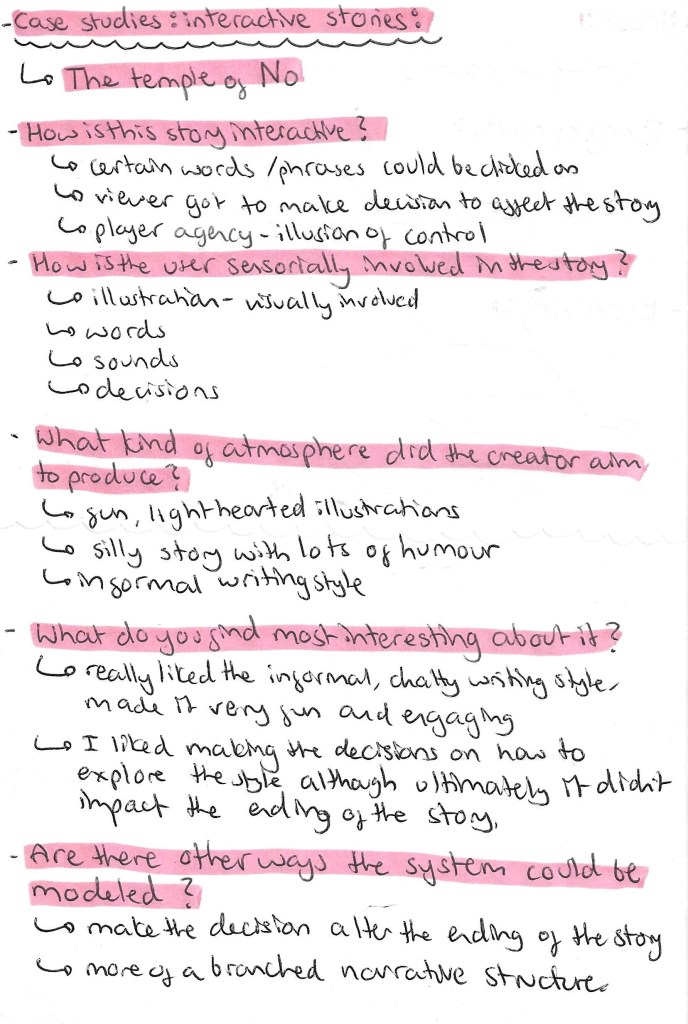
We then looked at all the other ones and ‘The Temple of No’ was my favourite one. I really like the silly and light hearted atmosphere of it couple with the fun illustrations. My main criticism is that no matter your decisions it always ended the same way and I would’ve liked to have multiple options of endings.’ It would give the reader more control of the narrative and cause more people to revisit the story to see the other possibilities.
Now it was our turn to design a non-linear narrative structure. We made a map on one in classes in groups but I decided to do another one at home because it was a fun exercise. The map has to highlights the major plot points and show a non-linear structure.
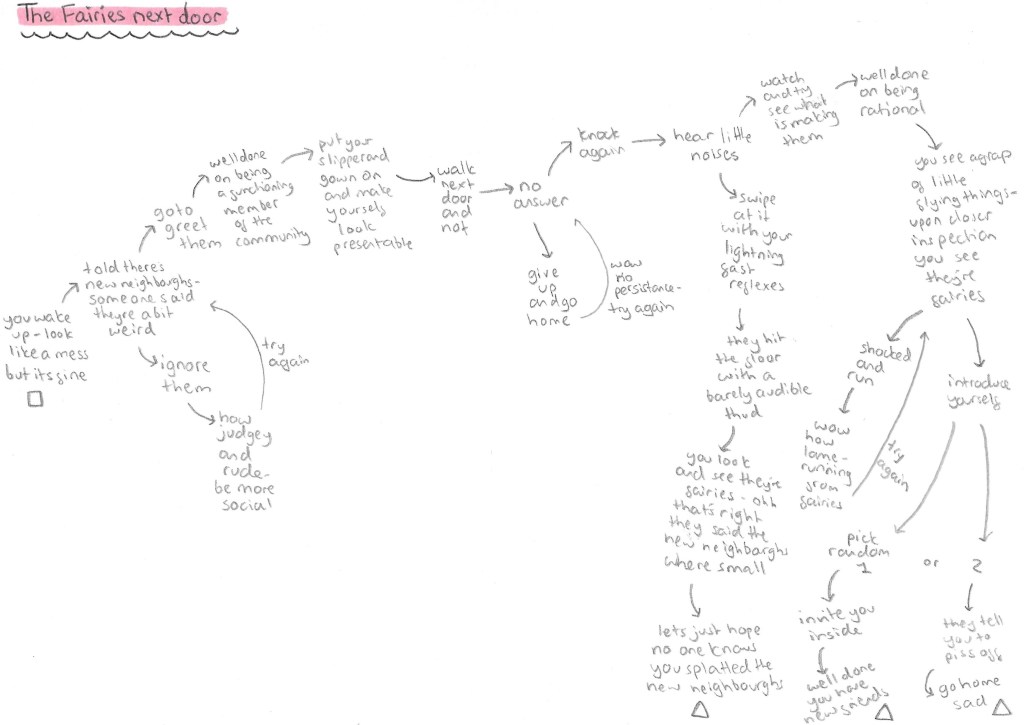
My interactive story focus on one a main character who’s actions the viewer gets to control. The main plot of the short story is that he goes to visit his new neighbours and find out they’re fairies. Below is the complete map of the plot points. The story has a branched structure. Some decisions are irrelevant to the ending of the story, I did the as I enjoyed this element of The Temple of No. However, unlike that story this will have multiple endings so some of the decisions really do affect the outcome of the story. I wanted the story to have a humorous and silly tone.
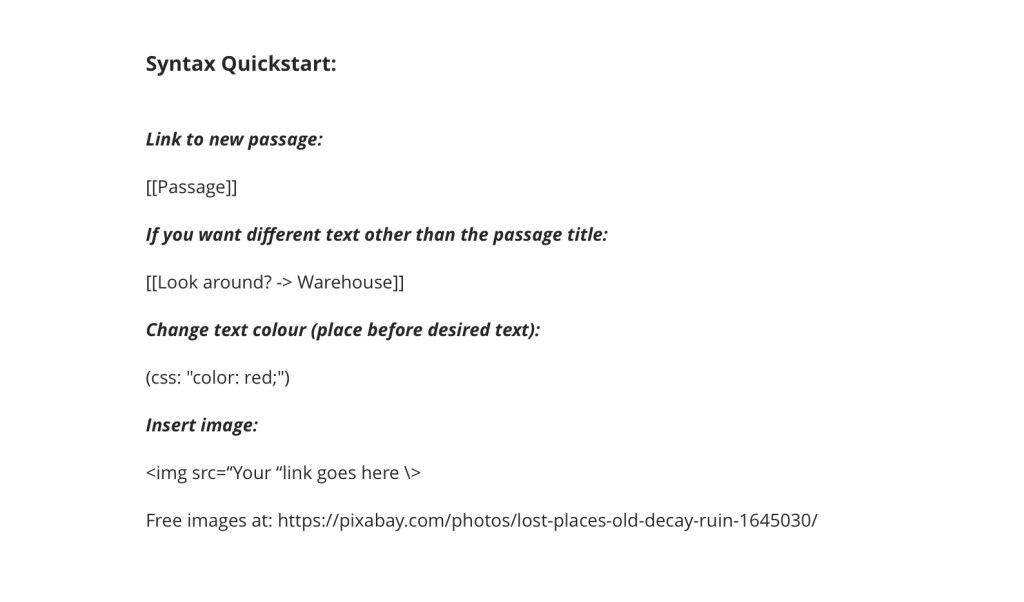
Then we used an interactive story telling software called Twine to create our narratives. I had never used a software like this before but I didn’t find it too complicated. They key thing to remember was the syntax listed below. These act as a coding system to allow you to create different functions.
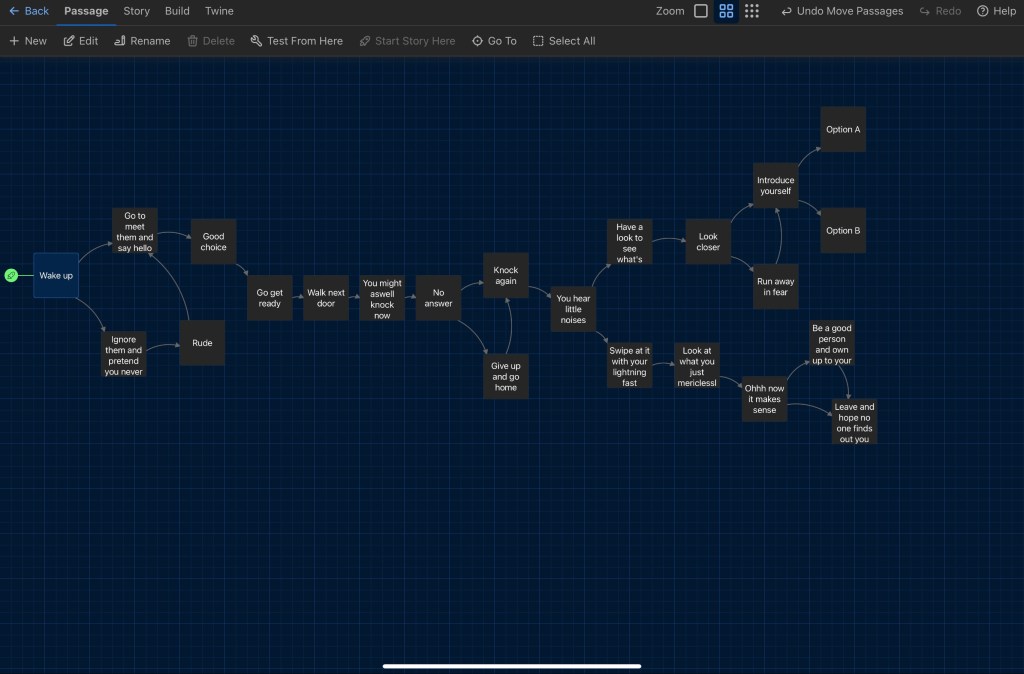
Then I stared creating the story with the statement parts and the different options. You can see clearly that the narrative has 3 possible endings depending on which choices the reader makes. You can also see the options which don’t really affect the story and just loop back into the main narrative.
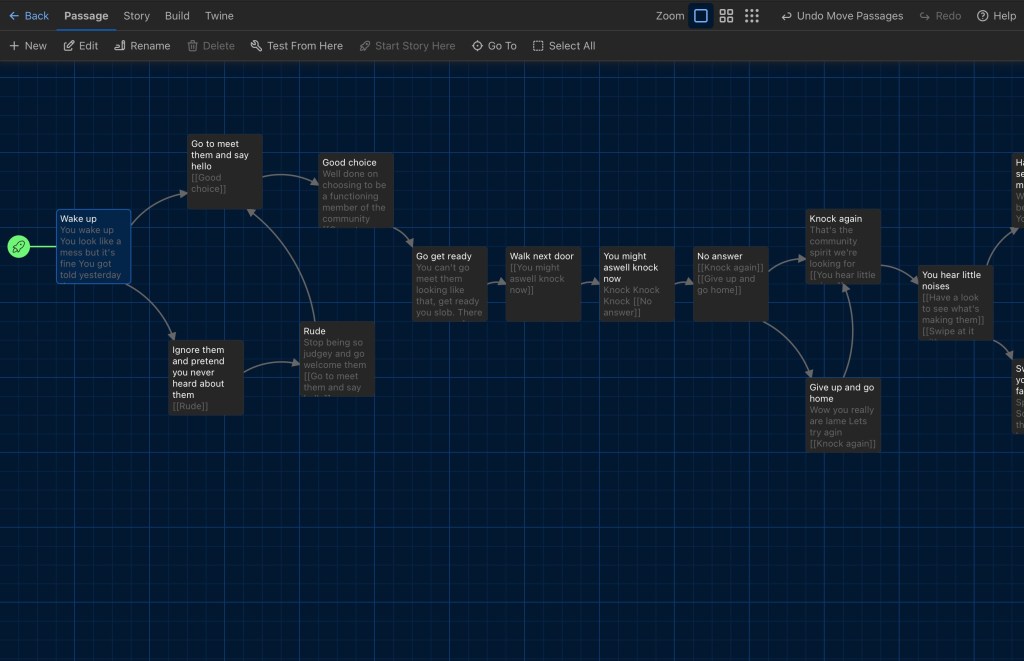
In these images you can see in more detail what I put into each statement and choice.
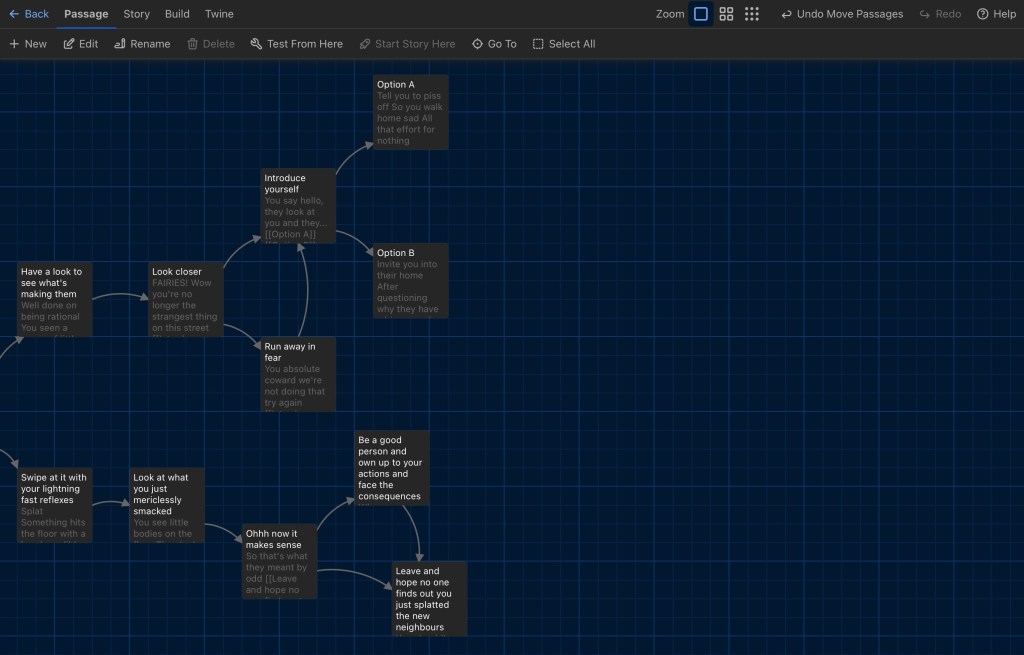
I enjoyed using this type of software and would like to explore it further in the future. Although my interactive story was short, I’m happy with how it flowed and the narrative structure worked well. To improve it I would include more images and more detail to the story.
 Samuel Green Illustration