This weeks session was all about Propaganda, which is information of a biased or misleading nature used to promote a cause or viewpoint. We learned the definitions of key terms, the different types of propaganda and the different techniques used to persuade people. Propaganda originally possessed a neutral interpretation but has since come to represent the idea of manipulation in the 20th century.
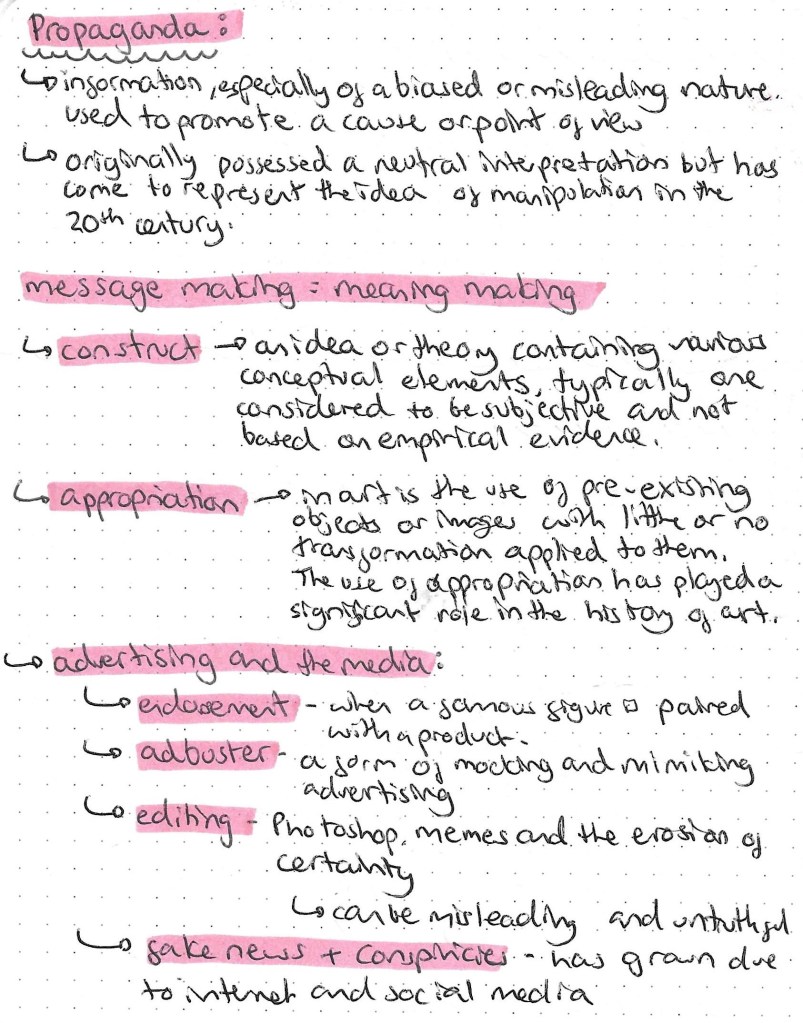
There are different types of propaganda used for advertising in the media including endorsements, adbusters, editing and fake news/conspiracies.
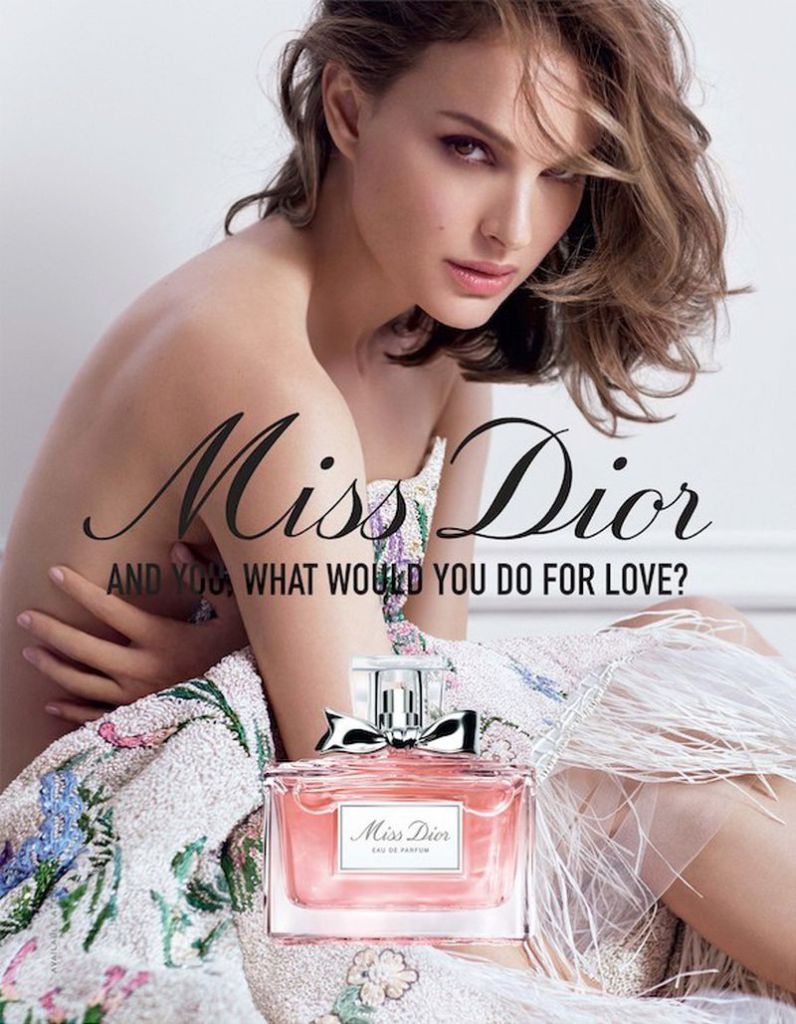
This is an example of endorsement. Natalie Portman, a famous actress, is being paired with a Dior perfume to try and encourage people to buy the product. By associating Natalie Portman with the brand, people who are fans of her are more likely to purchase the perfume in an attempt to be more like her.
This is an example of an adbuster. It’s mocking an established brand by altering their product and slogan. In this case it Absolut Vodka and is changing its slogan to suggest the product causes impotence. They’ve emphasised this point by deforming the shape of the bottle.

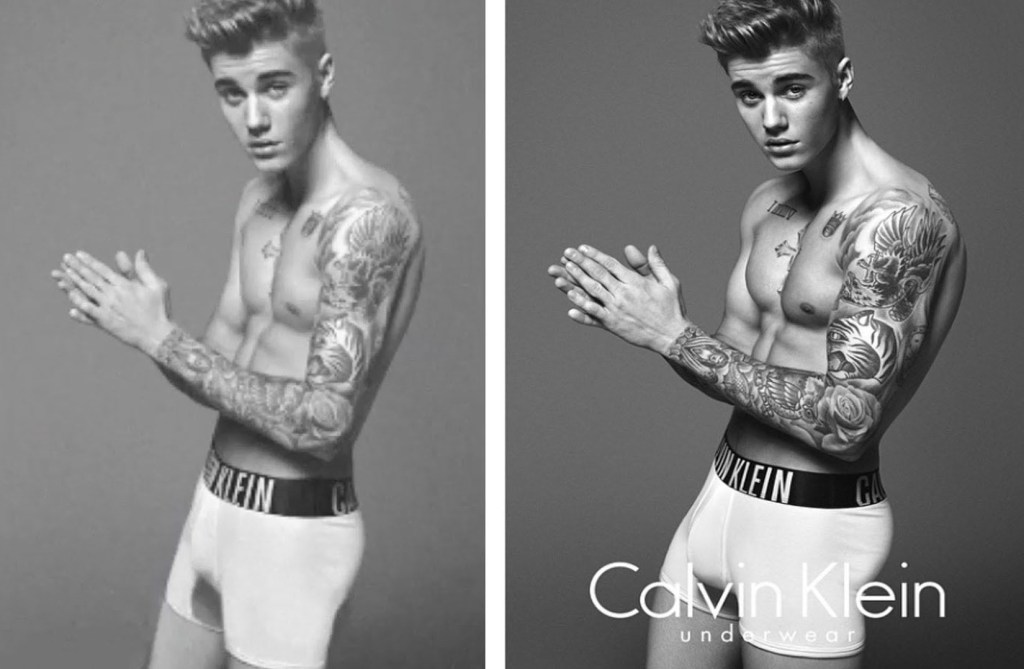
Since the invention of digital editing there has been an erosion of certainty, making it more difficult to tell what is real and what is edited. The main software used for this is Photoshop. This is seen regularly in advertising especially when working with models. Here is an example from a Calvin Klein advert. Many of Justin Biebers features have been digitally edited. This example is done well so it’s difficult to tell it has been edited, making it misleading and dishonest.
Editing can also be used in a less subtle way. This is an example of someone dramatically editing the same photo to the point where it becomes obvious. This is often used in memes to make fun of something.

Digital editing has become so advanced that it’s now difficult to tell if something is real or not. This has led to a growth in conspiracies and fake news as the line between real and edited has become harder to distinguish.
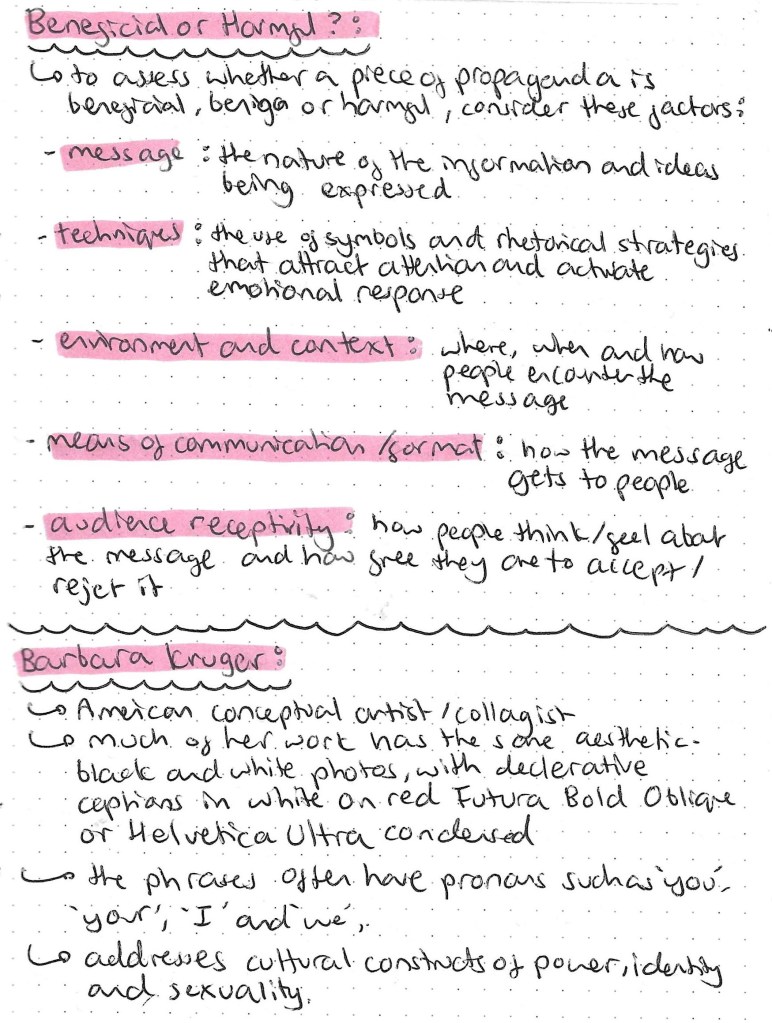
We looked at factors you need to look at in order to distinguish if a piece of propaganda is beneficial or harmful. The word propaganda has grown to have negative connotations but not even piece of propaganda is inherently harmful.
I really like Kruger’s style as it has a simple yet easily recognisable look. The red combined with the bold white text contrasts the grainy, dark images making them very eye catching even from a distance. Her work is propaganda as it in pushing an idea of message onto the viewer. These are some examples of Barbara Kruger’s distinctive aesthetic:
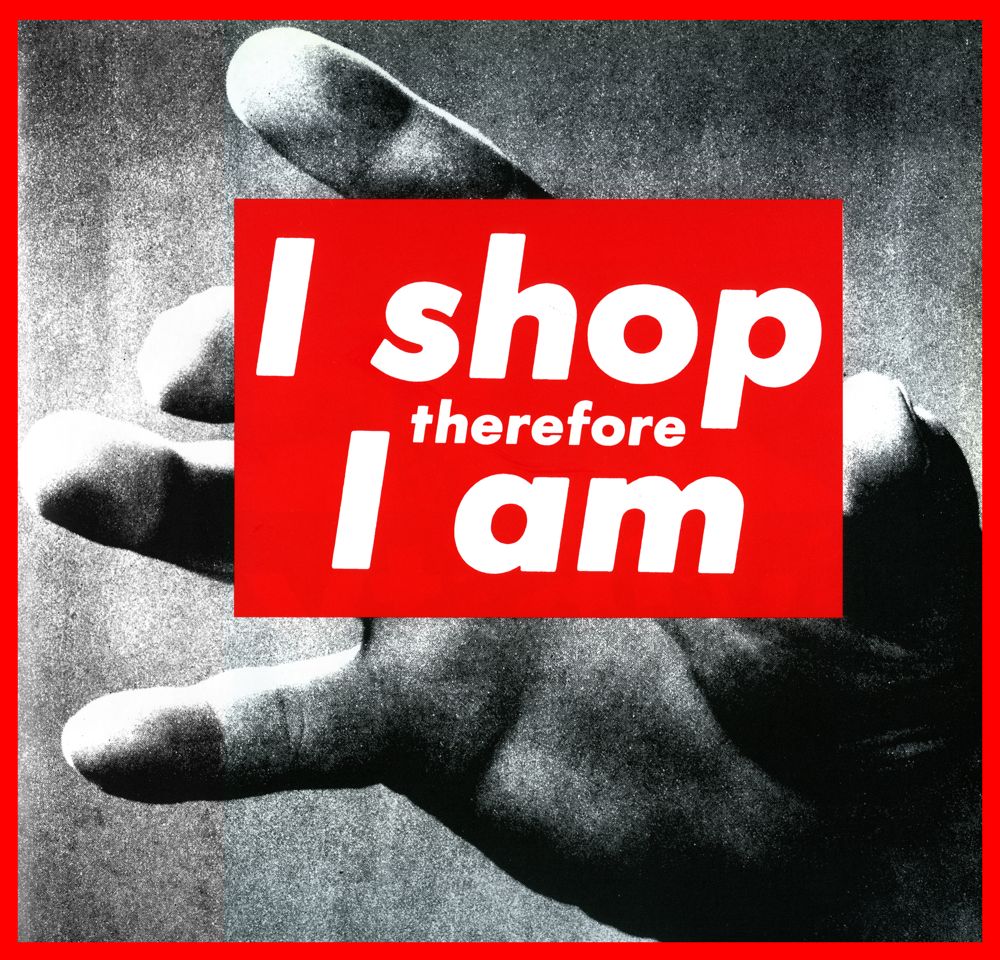
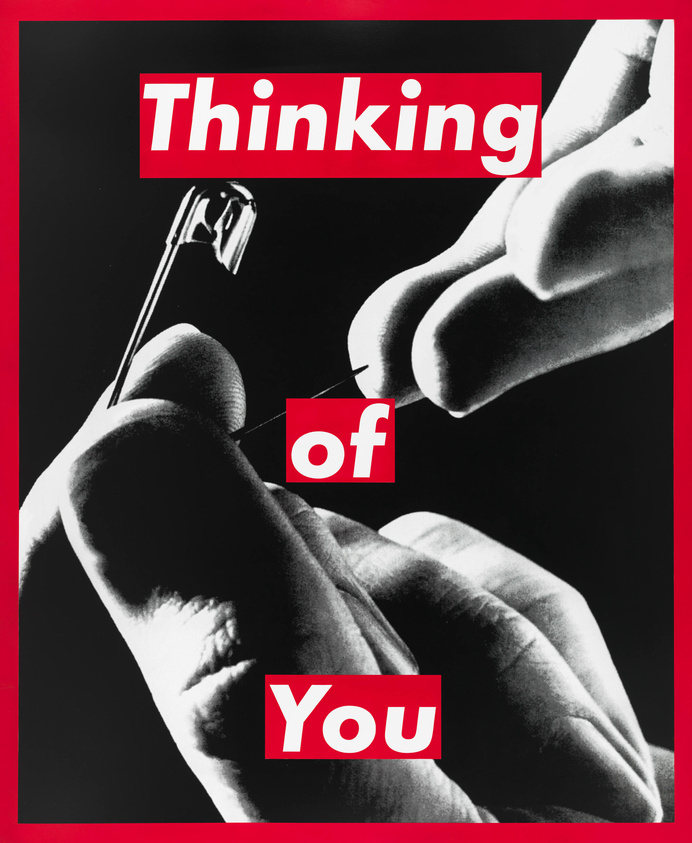
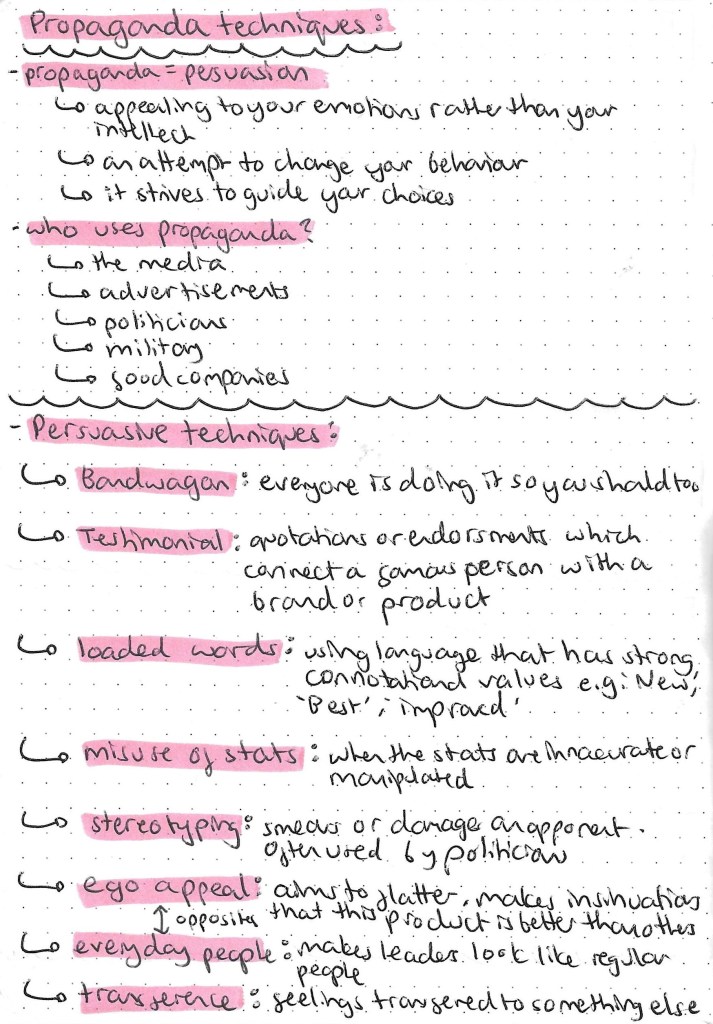
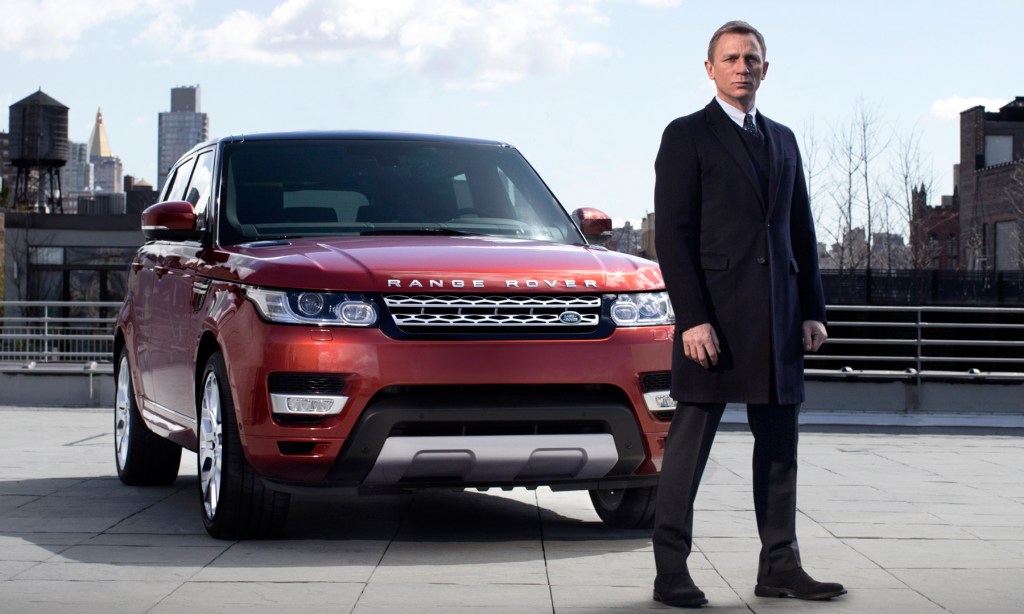
We looked at lots of different persuasive techniques used in propaganda and did an exercise where we had to identify which techniques are being used in different pieces of propaganda. There’s often lots of overlap between techniques and certain techniques lend themselves more to particular types of propaganda. Politicians often misuse statistics and use stereotyping and loaded words to push their campaign and bring down their opponents. For example testimonial and ego appeal are often paired to sell products from car and perfume brands.
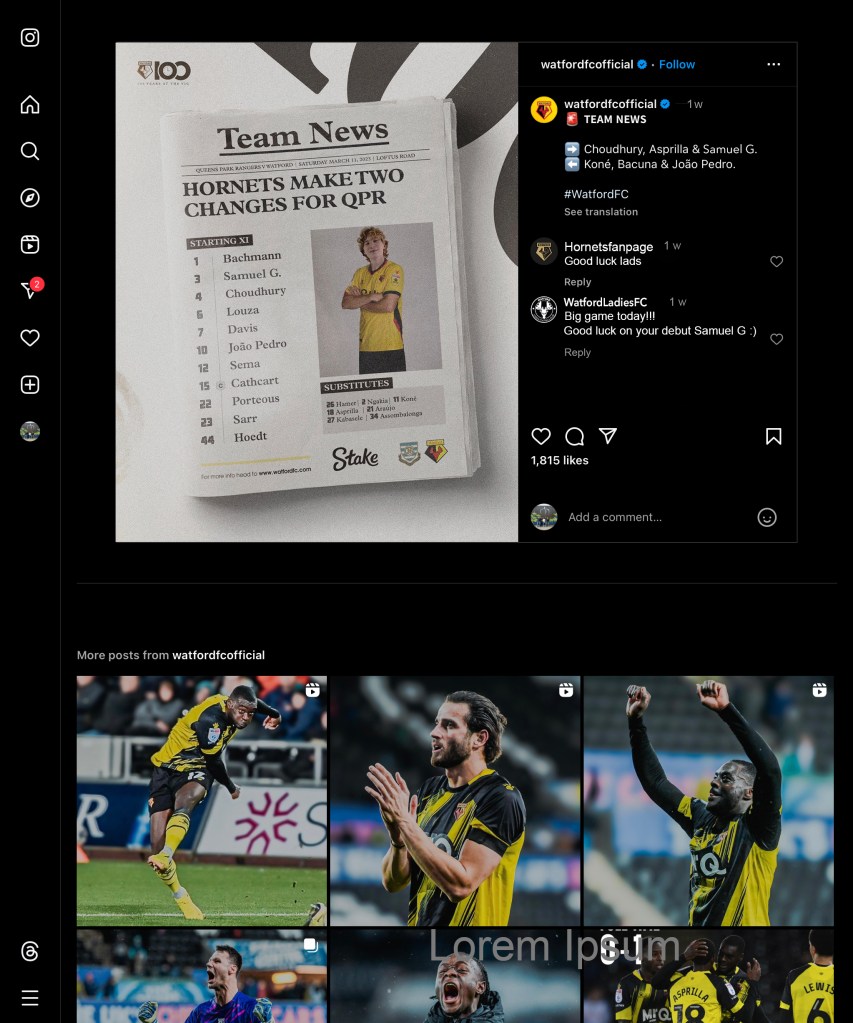
Our homework task for this week was to use Photoshop to create a fake version of ourselves. We had to produce 2 pieces of propaganda, a social media post and a promotional poster of a fake version of ourselves. I decided to create a version of myself that is a professional footballer. I decided that I was going to make a version of myself that plays for Watford FC. I did play for Watford’s college team so there was some photos to work from. Physically the fake me is not much different from the real me.
Once I decided on the idea I looked on the Watford FC instagram and saw these team sheets that they post before each game. I thought they looked cool so chose to edit these to be my fake social media posts. I used an image of myself, cut out the head and neck and put in on the player. I spent a while editing the images to try get my head to blend with the body. I also removed one of the players names from the team sheet and put my name on it. I edited the name to try get the same colour, size and font. I found it difficult to try and make it convincing so did 2 for practice. I will continue to try advance my skills on Photoshop but am happy with my progress.


I made one of them look like it had been officially posted by Watford Fc. It was fun changing the details of the post and trying to make it look legitimate.
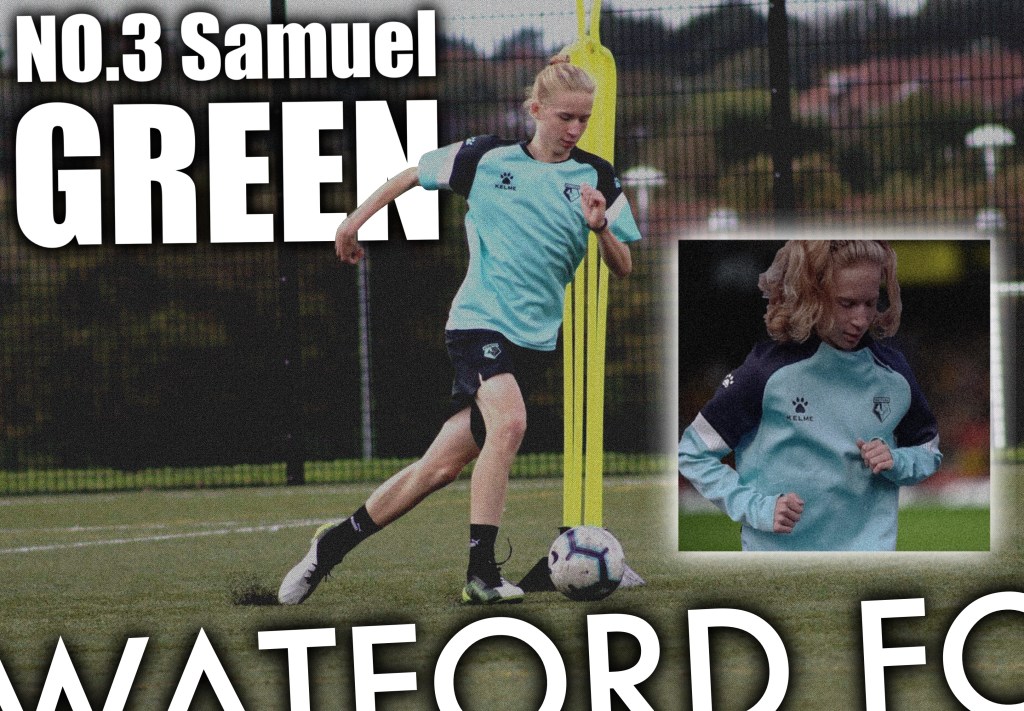
This is the poster I made for the fake me. I focused more on the composition and graphic design elements for this one rather than Photoshop skills. As someone who likes football I’ve always liked the the graphic poster you can get off the different players. I think the composition works well with the bold white font highlighting key details, my name and the team name. I particularly like the dynamic placement of the text at the bottom which complements the angle of the main photo. For the smaller image I Photoshopped myself in front of a crowd, I used multiple selection tools to get myself out of the original image.
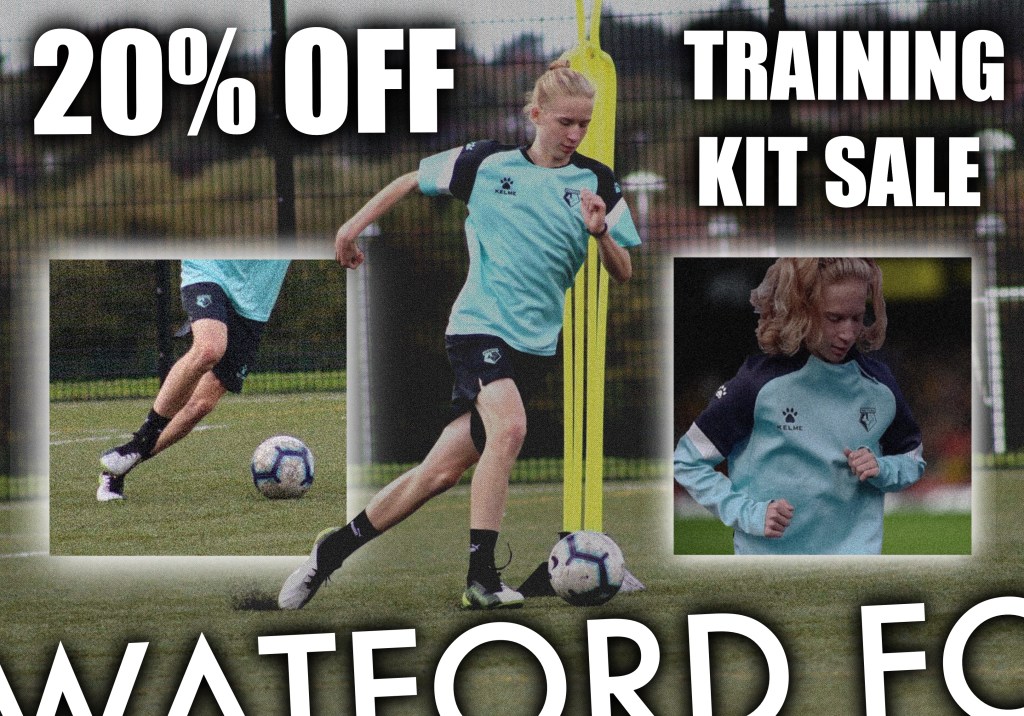
I made a second version to be a poster advertising a merch sale. This links back to the work we did on advertising. The fake version of me is a professional footballer so this would be an example of an endorsement. I used bold lettering to draw the viewers attention to the sales points and added multiple images of the product being worn.
This exercise was all about making us think about easy it is the create personal branding that is at least in part not true. Also it pushed me to practice my Photoshop skills which will be helpful for the main brief.
 Samuel Green Illustration