This week we visited the Philip Guston exhibition at the Tate Modern. Guston was a Canadian-American painter, print maker, muralist and draftsman. He predominantly worked using oil paints. His worked has been a part of many artistic movements such as abstract expressionism, modern art, figurative art, neo-expressionism and social realism. Prior to visiting the exhibition I didn’t know of him but did recognise a couple pieces of his work.
Guston links into the visual storytelling module as his work usually presents a narrative. His artwork often functions as a tableaux, this is a term I learnt in the first week. A tableaux is a narrative presented in a single image. This makes his work useful to study for this module.

One of the things about the exhibition that really stood out to me was how it was presented. As you walked through it you viewed his work in chronological order. This was interesting as I was able to see the changes and developments in his style and approaches. I certainly like some sections more than other. The images below are in chronological order staring from his earliest work.
The piece, ‘Female Nude with Easel’ from 1935 is one of his early pieces. The first 4 images are all from the same period and have a similar style. I really like the technical quality of these, the forms and shading are all perfect and you can see the start of themes that become more common in his later work such as the human figure and clusters of objects. I really like this style, it’s one of my favourite periods from his career.
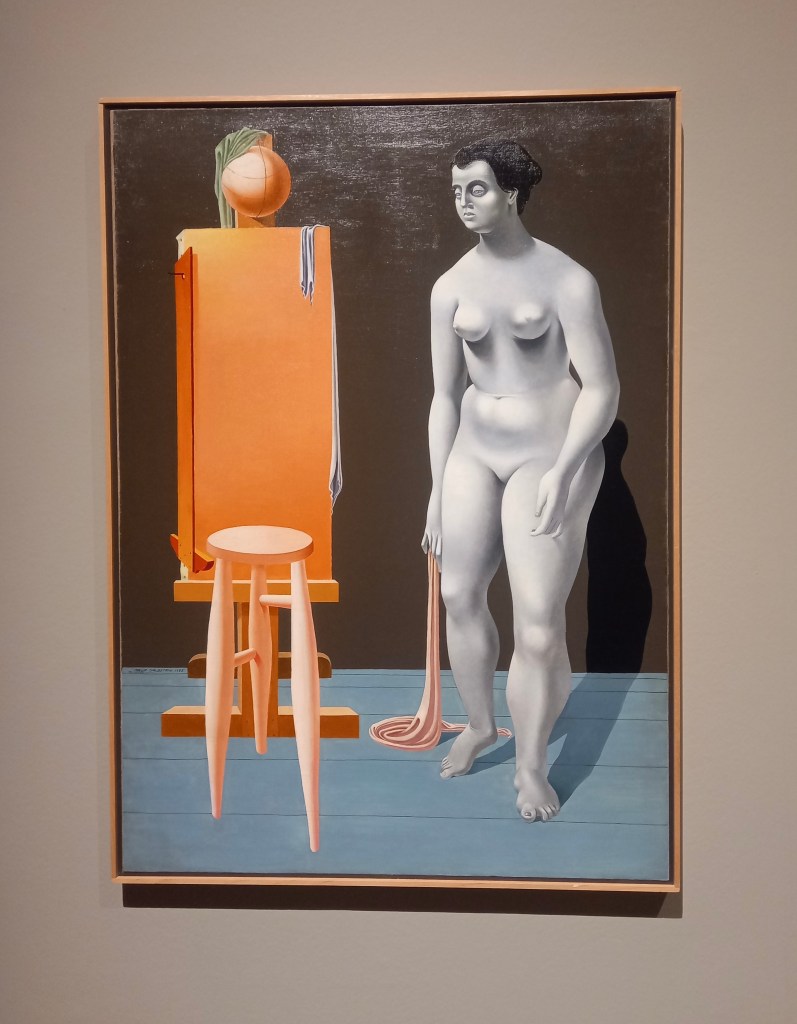
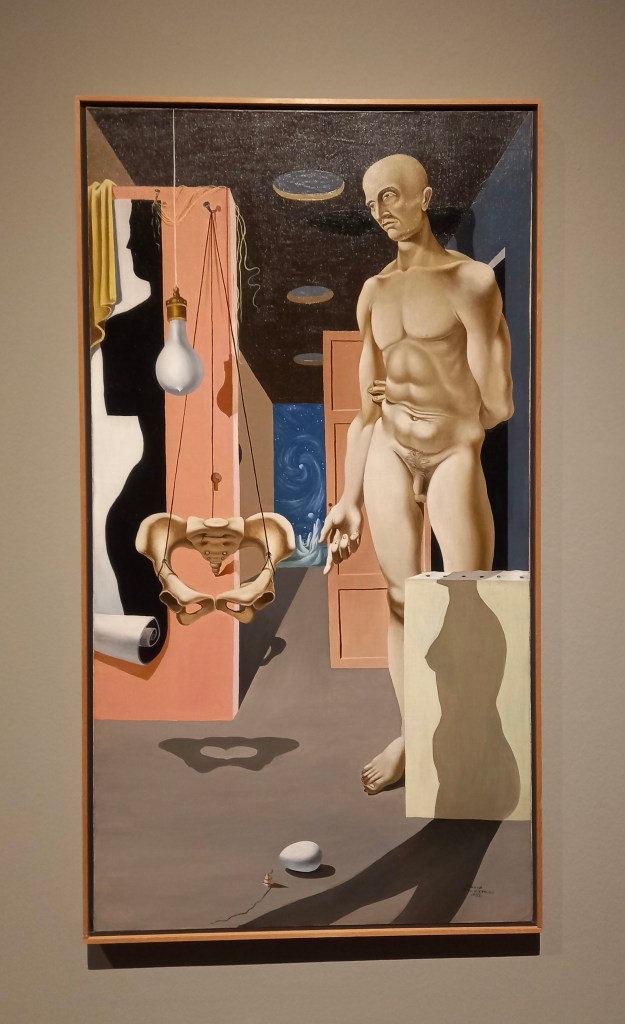
This piece titled ‘Nude Philosopher in Space-Time’, 1935, draws inspiration from surrealist painter Lorser Feitelson whose influence can be seen in the dreamlike image. Similar to the image above, a nude is partnered with an array of objects. At first glance the objects may appear random with helps to make the viewer more intrigued. Upon closer look the objects suggest the form of a person. This idea of deconstructing the human form into seemingly random objects is seen in the image above as well. With the legs of the stool representing legs, the easel being the body and ball being the head. The atmosphere of these paintings in dreamlike and almost eerie as they are made up of normal everyday objects yet feel really unnatural. Also it’s marks the beginning of Guston’s exploration into playing with objects and composition.
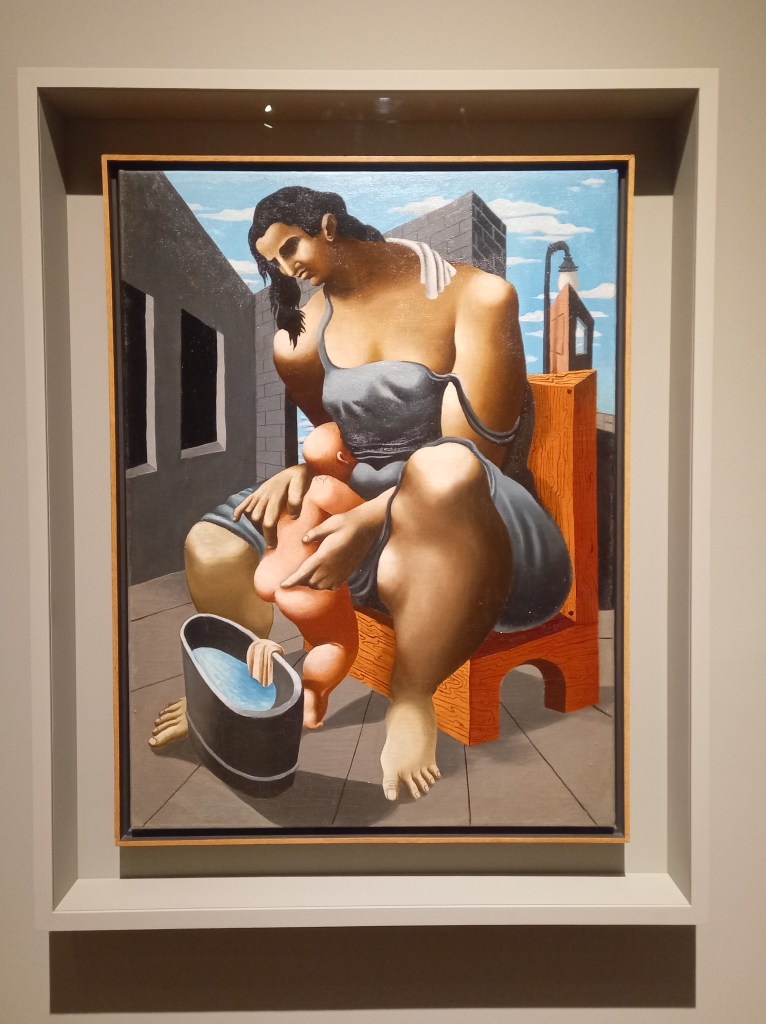
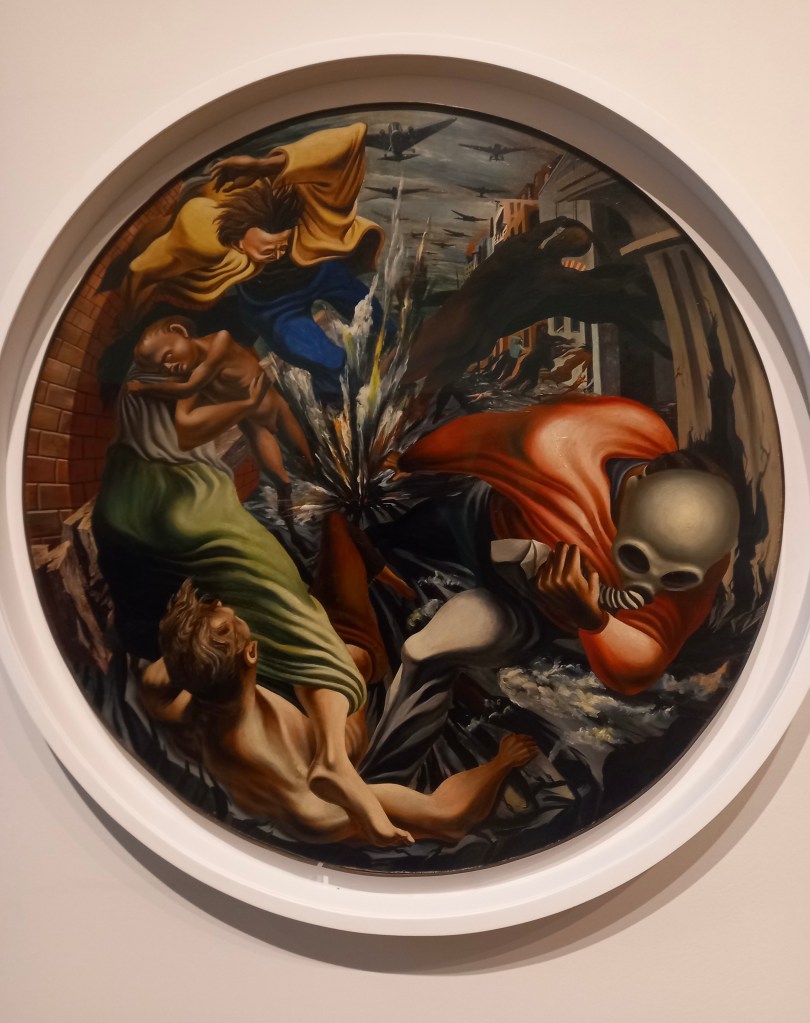
This piece called ‘Bombardment’ from 1937 is a particular favourite of mine. It has the same style as the previous pieces but it far more dynamic so there’s a lot more to take in. I like how clustered in appears and the choices of a circular canvas helps make the subjects feel like they’re leaping towards you. Guston really began to create narratives in his images. From a technical perspective it’s a brilliant example of foreshortening and using a vanishing point.
This piece from 1940 called ‘Gladiators’ shows a slight shift in style. It still has the chaotic composition of people and objects but has taken a slightly more abstract approach. I actually really like this style and think by reducing some of the detail and realism it becomes more dynamic and eye catching.

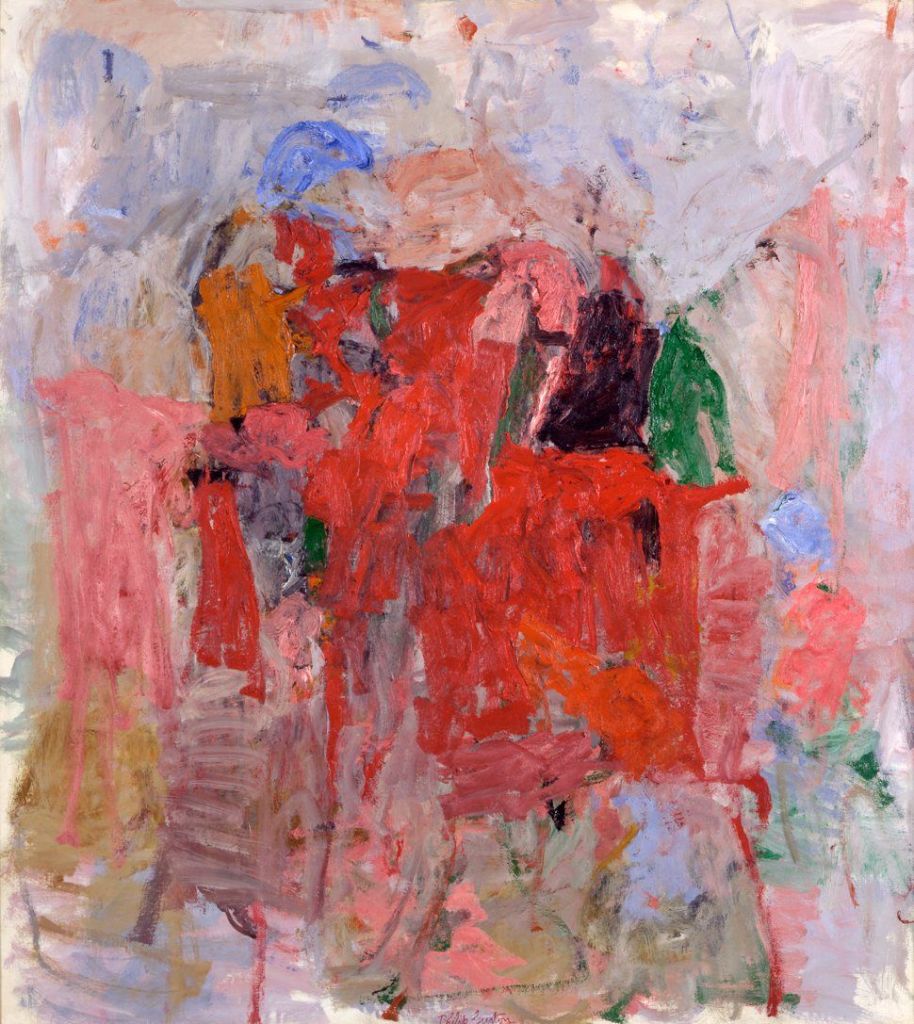
This piece from the 1950s shows the dramatic change in style. The work lost all realism and themes of people and objects. It became all about colour. I personally am not a fan of this period of his work as it doesn’t have the elements that I enjoy about his other work. It doesn’t have the same sense of storytelling and narrative. The one part I do like about it is that you can see this experimentation with colour aided his later work.
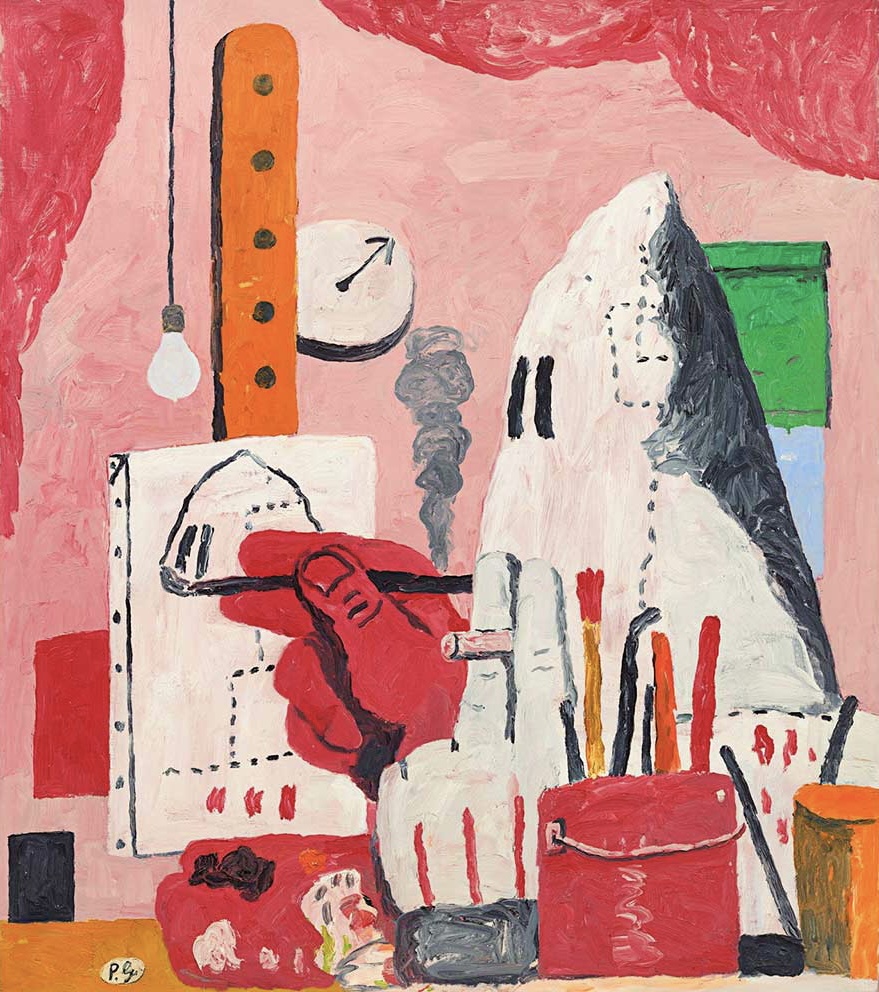
This piece was made in 1969 and is titled ‘The Studio’. This marked the move away from abstraction and back to the depicting figures. However the style had almost completely changed. It’s a far more cartoonish and technically simple painting style. The colour are more bold and forms less precise. This painting is widely recognized as an early meta-self portrait, in which Guston presents himself, laboring at his easel in the hood that he will continue to employ as a motif in future Klansmen works. As with a lot of his work, this is a response to a social/ political narrative, in this case the Civil Rights Movement and the racism seen in America. In many of the paintings features the hooded figures, Guston depicts them doing regular things, highlighting how racism is all around and while it’s obvious people let it go unnoticed.
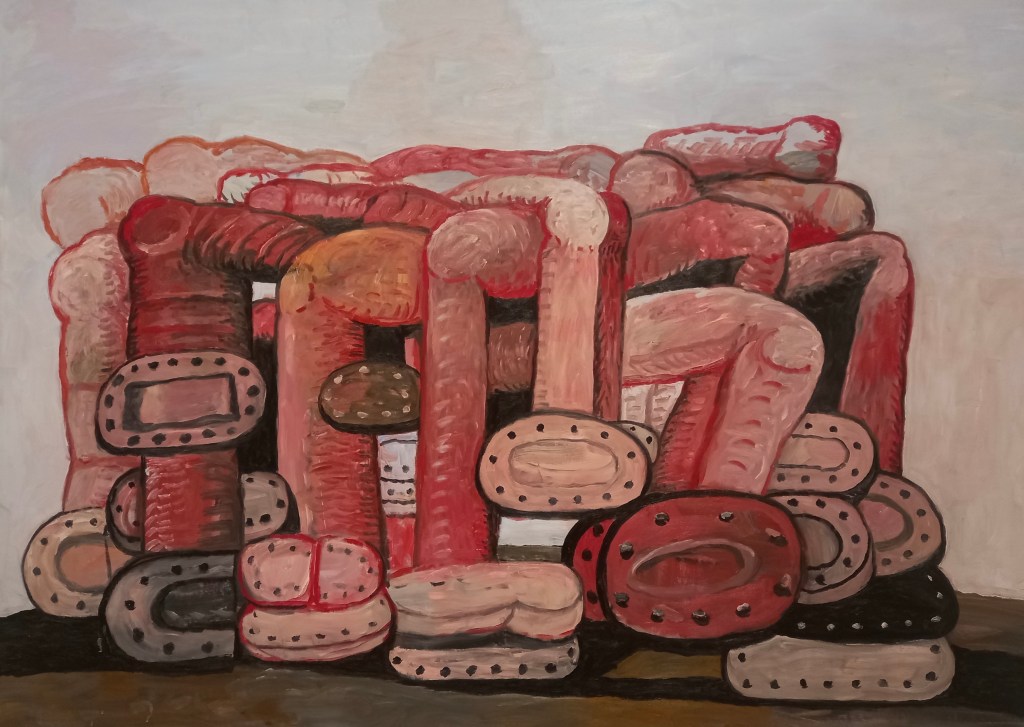
‘Painting, Smoking, Eating’ from 1972 is done in the same style. You can clearly see how this new style has evolved from his previous ones. It has the themes of people, objects and narrative storytelling from his early work combined with the chaotic use of colour from the abstract experimentation. I find this style interesting but still prefer the early work simply because it’s more refined and detailed.

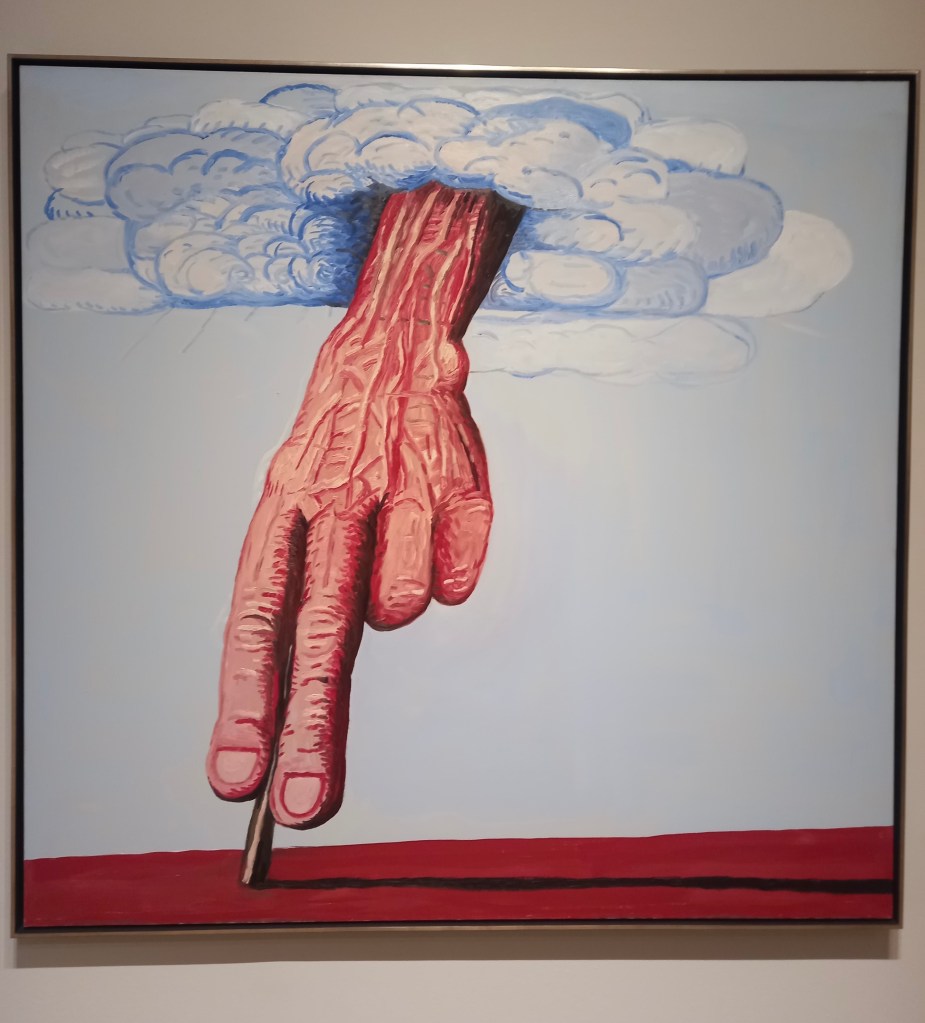
’The Line’, made in 1978 is my personal favourite of his later works. This piece is an example of a tableaux as it tells a story in just 1 image. It’s composition is less busy and has a more reserved colour palette than many of his other pieces but I think this helps you focus on the key parts of this painting. The hand is descending from the clouds, resembling a lightning bolt. It’s drawing a single straight line with what appears to be a stick of charcoal. To me it seems to represent the power of art and artistic creation. The hand appears to either by guided by something powerful or a God like being as it descends from the heavens. I think this piece has the right amount of detail without being realistic.
Overall I found visiting the Guston exhibition a good experience as I was able to learn about another artist and enrich my understanding of narrative storytelling in images. His work was interesting as it went through many different styles which are all visually very different but in some way are connected. I personally like his early and late work but am not so keen on the work in the middle.
 Samuel Green Illustration